Regional Action Roadmap for Extreme Heat and Wildfire Smoke From the South-Central Puget Sound Climate Resilient Communities Accelerator

58 minute read

Summary

The Regional Action Roadmap for Extreme Heat and Wildfire Smoke is a collaborative framework to help communities, businesses, and governments in Washington’s South-Central Puget Sound region build resilience to worsening climate hazards. The Roadmap is the outcome of the first year of C2ES’s Climate Resilient Communities Accelerator— a two-year program that activates public and private partners around shared hazards and high-impact resilience strategies—and serves as the foundation for coordinated implementation in year two. It synthesizes six key action areas—spanning community-led disaster preparedness, energy resilience, catalytic policy, business continuity, nature-based solutions, and built environment upgrades—that enable regional leaders to coordinate cross-sector strategies and advance a shared vision of a safer, healthier, more equitable future. The Roadmap was informed by insights from and codeveloped during the 2025 South-Central Puget Sound Accelerator convenings, which engaged more than 90 participants across 72 organizations spanning government, Tribes, nonprofits, academia, and the private sector.

*See PDF download for footnotes

Download Key Action Areas:

Figures are available for download here.

Roadmap Summary

The South‑Central Puget Sound Climate Resilient Communities Accelerator is a two‑year initiative to strengthen regional resilience to extreme heat and wildfire smoke through cross‑sector collaboration. This Regional Action Roadmap reflects insights and codesigned strategies from the Accelerator’s first year (2025), which convened a cohort of leaders from government, Tribes, businesses, nonprofits, and community organizations across King, Kitsap, Pierce, Snohomish, and Thurston counties in Washington state.

This Roadmap highlights shared priorities to advance the cohort’s vision of a resilient region: one that connects communities, provides equitable public health access, prioritizes nature-based solutions (NbS), and delivers clean and abundant air and water. These priorities are reflected in six key action areas, which, along with actionable strategies, were identified by participants through a series of convenings held in 2025.

The six key action areas to advance the South-Central Puget Sound’s resilience to extreme heat and wildfire smoke are:

  • empower community-led disaster preparedness
  • foster energy resilience and independence
  • leverage catalytic local and state policies
  • prepare local businesses
  • prioritize nature-based solutions
  • upgrade the built environment

These action areas are further built out into action plans, which provide clear, regionally coordinated next steps to implement high-priority strategies, emphasizing collaboration across governments, community organizations, businesses, and other partners. In the Accelerator’s second year (2026), C2ES and the cohort will select one or more action plans to refine and begin implementing together.

Drawing on insights from more than 90 participants across 72 organizations, this Roadmap is designed to spark collaboration and innovation, empowering the South‑Central Puget Sound region to lead on building a safer, healthier, and more resilient future. It serves as a shared framework for regional action that is coordinated, high-impact, and multi-sectoral, intended to complement existing efforts and inspire locally driven solutions. It offers a flexible menu of strategies to inform decision-making, rather than a complete or final authoritative solution.

Introduction

Washington state is one of many in the United States that is already contending with worsening climate impacts: from intensifying heat and wildfires to drought, flooding, and severe storms.The physical impacts of these hazards affect local economic systems, community safety, and public health, often disproportionately impacting communities who experience historical and ongoing marginalization and disinvestment.

Local leaders and community members—bolstered by the Pacific Northwest’s strong culture of collaboration, clean energy leadership, and community-driven problem solving—are actively planning for and responding to climate hazards. The region is focused on developing solutions that reflect both community and business priorities. By building on Washington’s talents and advantages and recognizing common challenges across neighboring communities, a regional, multi‑sector approach can support resilience and coalition-building for a stronger, more equitable future.

The Center for Climate and Energy Solutions (C2ES) launched the Climate Resilient Communities Accelerator in 2023 to advance regional action by coordinating local leaders through two years of flexible support and targeted, hazard-specific, and action-oriented convenings. The program was piloted with communities in Colorado’s North Front Range in 2023 to identify community-led resilience solutions for extreme heat and wildfires.

In 2025, C2ES brought the Accelerator to Washington’s South-Central Puget Sound region, where local governments and communities identified an opportunity to align perspectives around a regional conversation on extreme heat and wildfire smoke resilience. The region is actively preparing for disasters and building resilience, but it faces increasing risks to public health from these two hazards, at a time when federal funding and technical support for implementing solutions is uncertain. Despite these challenges, resilience practitioners can design multi-benefit solutions that extend the value of a single investment—supporting climate resilience, emissions reductions, public health and safety, local jobs, economic growth, and stronger preparedness—helping communities and businesses thrive on many levels and multiply investment impacts.

In Washington, the Accelerator aims to support the region’s existing commitment to an equitable and just future by providing leaders from government, Tribes, communities, and businesses with additional capacity to collaborate. This Roadmap captures collaborative discussions from the Accelerator convenings held in 2025, inspired by extensive engagement with local leaders and their existing initiatives across the region. It outlines the engagement process, current and projected heat and wildfire smoke impacts, the shared regional vision for a safe and prosperous future, key action areas for resilience, and opportunities and resources to accelerate action. The action plans outlined in this Roadmap were brainstormed by participants at a forum in September and then refined during a review period in late 2025 and through subsequent conversations with participants.

Using the action-oriented Roadmap as a guide, the Accelerator will transition from collective learning to coordinated implementation, accelerating progress toward a common vision and defined outcomes for heat and smoke resilience across the five-county region. In 2026, the Roadmap will help participants select one or more action plans to refine and begin implementing together.

Launching the South‑Central Puget Sound Accelerator

C2ES launched the South-Central Puget Sound Accelerator in spring of 2025, following expressed interest from government, nonprofit, academic, business, and Tribal leaders in the region. In preparation for the Accelerator’s first year of convenings, C2ES reviewed local demographic data, climate hazard projections, economic sectors, and existing adaptation and resilience efforts. The C2ES team then kicked off the first year of the Accelerator by mapping local actors to identify organizations that are either engaged in climate and economic resilience or that represent communities and businesses experiencing climate impacts (see Figure 1 for a general timeline of the Accelerator’s two-year process).
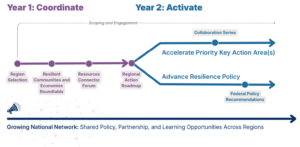
FIGURE 1: ACCELERATOR PROCESS TIMELINE


General timeline of the Accelerator’s two- year process for coordinating and activating local resilience, economic development, and community leaders.

Between May and July 2025, C2ES conducted scoping calls with over 100 local leaders, which informed the South-Central Puget Sound Accelerator’s focus on extreme heat and wildfire smoke, and guided the design of the first year of convenings to build this Roadmap.

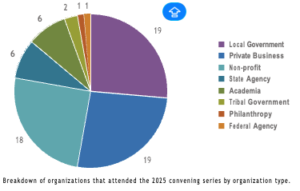
The Accelerator then convened two meetings of cross-sector leaders in the summer and fall of 2025. In this Roadmap, the meeting participants and their organizations are collectively referred to as the cohort (See Figure 2 for a breakdown of organization types; see Appendix A for a list of attending organizations). The Resilient Economies Roundtable—the Accelerator’s kick-off event—took place in July in Seattle. The Roundtable included discussion of the physical impacts of extreme heat and wildfire smoke, visions for a resilient future, practical paths to resilience, and opportunities for accelerating collaborative action in ways that center equity.
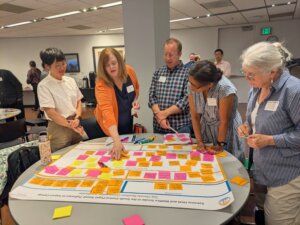

Participants at the July Roundtable in Seattle, Washington.

Takeaways from the Roundtable:

  • Representatives from a broad range of public, private, and community organizations brainstormed 141 strategies for building heat and wildfire smoke resilience for communities and companies across the region.
  • Participants approached extreme heat and wildfire smoke from a public health perspective and identified key action areas and strategies related to policy, the built environment, operational practices, and community programs—such as emergency response systems, cooling center operations, and public health outreach.
  • Throughout the session, participants emphasized the importance of designing and implementing strategies in an equitable way.

The Accelerator later reconvened participants in Tacoma for a Resources Connector Forum in September to build on the Roundtable discussions. Attendees explored the resource landscape for resilience efforts and learned about examples of projects taking innovative approaches to resilience.

Attendees also collaboratively developed Action Plans for the six key action areas and reflected on goals, opportunities, and priorities for the Accelerator to drive impact in 2026.


Takeaways from the Forum:
  • State and local governments at the Forum expressed commitment to continue supporting climate resilience work, even with uncertainty about the availability of federal funding.
  • Interest in innovative financing mechanisms is growing, including social impact funds, bonds, and partnerships with the private sector; participants explored existing examples.
  • Equitable access to community-led disaster preparedness resources is crucial, especially for communities that speak English as a second language or do not speak English.
  • Resources from both public and private sectors highlighted at the Forum and identified through research are compiled in a Living Resource Database,10 which will continue to be updated over the course of the Accelerator.

FIGURE 2: COHORT ORGANIZATIONS BY TYPE


Climate Hazards: Why Heat and Smoke

Washington state faces growing threats of extreme heat and wildfire due to climate change.11 Designed under a historically mild climate and coastal breezes, the region’s infrastructure is not prepared for future conditions,12 such as temperatures consistently exceeding 80 degrees F, and recurring poor air quality events caused by wildfires in the Cascade and Olympic mountain ranges and the western United States and Canada (see Figure 3).
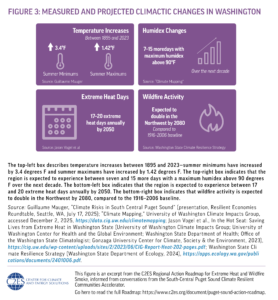
FIGURE 3: MEASURED AND PROJECTED CLIMACTIC CHANGES IN WASHINGTON


Health and Economic Impacts

Extreme heat and wildfire smoke act as “threat multipliers” that exacerbate existing vulnerabilities and disproportionately affect frontline communities.13 Together, they pose significant risks to the South-

Central Puget Sound through impacts on air quality and subsequent effects to public health and business operations.

Increases in extreme heat and wildfire smoke paired with underprepared infrastructure can negatively affect public health, including heat- and smoke-related illness and mortality. The humidex, which combines temperature and humidity, is a strong predictor of heat-related illness. A daytime humidex above 90 degrees F and nighttime humidex above 65 degrees F correspond to higher risks of hospitalization and death. With the region expecting one to two additional weeks with maximum humidex above 90 degrees F, many more people face risk of heat-related illness and mortality, and the healthcare system may become especially strained.

Nighttime heat events are rising more rapidly than daytime highs, posing risks in areas with limited access to air conditioning because cooler nighttime temperatures are supposed to bring humans’ core temperatures back down after a hot day. Additionally, the fine particulate matter (PM2.5) in wildfire smoke poses serious threats to respiratory, cardiovascular, and cognitive health, as well as maternal and infant health during pregnancy, because PM2.5 particles penetrate deep into the lungs where it can enter into the bloodstream. Frontline communities and others, including low-income residents, older adults, children, outdoor workers, and people experiencing homelessness face the greatest exposure and health impacts.

These health impacts are compounded by economic consequences. Heat and smoke disrupt business operations, strain critical infrastructure, and reduce workforce productivity, posing significant challenges for Washington’s economy. One year of heat-related productivity losses in Washington can lead to $760 million in losses to industry sales, $376 million in lost gross state product, and 1,481 full-time equivalent jobs lost.

Because extreme heat and wildfire smoke impact public health, infrastructure, and economic systems, integrated resilience strategies can yield multiple benefits. Solutions such as green infrastructure, urban greening, and community resilience hubs not only mitigate heat and smoke exposure but also address related hazards such as drought and flooding, helping communities extend the benefits of resilience investments.

Activating for Resilience

Resilience can be defined on various scales and through multiple perspectives. In other words, resilience can mean one thing for one group or region and mean something entirely different for another group. To ensure the cohort worked under the same understanding of resilience, the Accelerator helped communities and businesses in the South-Central Puget Sound craft a definition for the region by envisioning how a resilient future would look and feel. A shared vision—developed by a diverse group of participants—helps to inform the desired outcomes and priorities that would make up a resilient region.

For Accelerator participants in the South-Central Puget Sound, a resilient future connects communities to provides equitable public health access, prioritize nature-based solutions, and deliver clean and abundant air and water (see Figure 4).
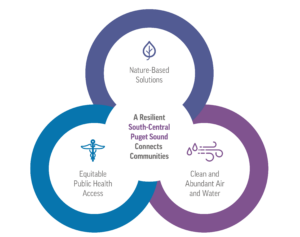
FIGURE 4: THE SOUTH-CENTRAL PUGET SOUND ACCELERATOR’S VISION OF RESILIENCE


Identifying Key Action Areas

The 2025 Accelerator convenings elevated topics that are top priorities for the region, grounded in the cohort’s vision for a resilient future. With the cohort’s input, C2ES summarized these topics into six key action areas, which capture strategies to build resilience to extreme heat and wildfire smoke (see Figure 5).
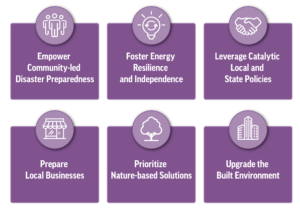
FIGURE 5: THE SIX KEY ACTION AREAS FOR THE SOUTH- CENTR AL PUGET SOUND


Six key action areas for building resilience to extreme heat and wildfire smoke in the South-Central Puget Sound.


These key action areas served as the foundation for the September Forum, where participants explored resilience resources and developed action plans by identifying priority strategies, next steps, and enabling partnerships. In a follow-up virtual session, participants revised the priority strategies and action plans, which are summarized in Six Key Action Areas to Advance Heat and Smoke Resilience in the South-Central Puget Sound on page 18.

Cross‑cutting themes

Several themes emerged consistently during Accelerator conversations across all six key action areas. Regional leaders emphasized the importance of integrating these five values regardless of the key action area or strategies being pursued.

  • Center public health: The most pressing impacts of heat and smoke in the South-Central Puget Sound region are on public health. Both preparation and response strategies can be informed by public health data and implemented in coordination with public health leaders. Doing so can ensure investments reach communities with higher vulnerability and consider comorbidities, avoiding the pitfalls of siloed approaches.

Learn more about the importance of centering health and incorporating public health data into climate planning, including examples from the region (page 47).

  • Further a just transition: The Just Transition Framework—used to various degrees by organizations both within the South-Central Puget Sound and around the world—aims to ensure that the transition to a “green” economy is fair, inclusive, and intentionally just. Accelerator participants used the principles of a just transition to creatively reimagine how decisions are made, how economies grow, and how communities adapt to a world impacted by a changing climate.

Learn more about the Just Transition Framework and organizations leading this work in the South-Central Puget Sound (page47).

  • Prioritize equity: Leaders and communities in the region have made significant progress toward ensuring that climate mitigation and adaptation strategies are equitably designed and implemented. Resilience strategies that are community-led and advance the priorities of frontline communities help ensure equitable outcomes, while also building community capacity to prepare for and respond to future hazards.

Learn more about existing efforts that prioritize equity and tools for designing more equitable processes and outcomes, developed by South-Central Puget Sound organizations (page 48).

  • Explore innovative financing: To ensure the sustainability and longevity of resilience initiatives, leaders are exploring innovative financing tools that go beyond traditional funding mechanisms, like grants and general budgets. Projects with blended funding portfolios—merging both traditional funding with philanthropic and private-sector financing—are more likely to weather larger shifts in the broader funding landscape.

Learn more about innovative financing mechanisms and resources specific to the South-Central Puget Sound (page 48).

  • Maximize cobenefits: Regardless of resource availability, communities and practitioners can find creative ways to make each project go further. By designing efforts that deliver multiple benefits at once, a single initiative can support climate resilience, emissions reductions, public health and safety, local jobs, economic growth, and stronger preparedness—helping communities and businesses thrive on many levels.

Learn more about examples of projects that maximize cobenefits and the regional leaders spear-heading this work (page 48).

Opportunities to Accelerate Key Action Areas

The following section presents practical opportunities for advancing the six key action areas identified through the 2025 Accelerator convenings. Each action area includes one to two high-priority strategies refined with participant input, paired with action plans outlining concrete steps, partners, and examples of existing efforts. While these action plans will guide the Accelerator’s next phase, they are also designed to work together—complementing and reinforcing one another to help communities, businesses, and governments build resilience.

In 2026, C2ES and regional partners will collaboratively select and implement one or more action plans, using participant-informed criteria to identify high-impact, feasible, cross-sector opportunities for year two. The remaining action plans will continue to serve as a flexible menu of options to guide future investments, partnerships, and locally driven initiatives beyond the Accelerator’s second year. Together, these opportunities form a scalable, adaptable roadmap that supports coordinated regional action while building on the strong momentum, expertise, and relationships across the South-Central Puget Sound.

Anatomy of an action area

Each of the six key action areas in this section follows a consistent structure, with the defining elements outlined below.

  • The need: This explains why the key action area fills crucial gaps and is a critical pathway for building heat and smoke resilience across the region.
  • Action plans for high‑priority strategies: Participants at the September Forum selected one to two high-priority strategies within each key action area to further refine and develop into step-by-step implementation The action plans included in this Roadmap reflect those developed at the Forum and subsequently refined by C2ES in collaboration with the cohort. Each action plan includes the following components:
    • steps: clear, actionable steps for implementing the high-priority strategy
    • essential leaders and partners: key nonprofit, public, and private organizations to lead or collaborate on implementing the high-priority strategy
    • examples and existing efforts: programs, projects, and initiatives—within Washington and beyond—to inspire and inform implementation of the action plans and illustrate the strong foundation of resilience expertise that guided local leaders in developing them (see the Living Resource Database for additional information on examples and existing efforts).
  • Additional strategies to accelerate impact This includes a list of additional strategies for each key action area, developed by participants at the July Roundtable. They reflect the region’s expertise in crafting high-impact strategies for building resilience to extreme heat and wildfire smoke and provide a foundation for the action plans developed at the September Forum.

Six Key Action Areas to Advance Heat and Smoke Resilience in the South-Central Puget Sound

The Key Action Areas in this section are presented in alphabetical order and do not indicate ranking or priority.

KEY ACTION AREA: Empower community‑led disaster preparedness

The need

Extreme heat and wildfires—which contribute to smoke events—are growing more frequent and severe in the Puget Sound. Community members are often the first and most trusted responders when disasters strike. However, many communities—particularly low-income, immigrant, rural, and Tribal communities—lack access to clear and language accessible emergency information, cooling and cleaner-air resources, and coordinated support networks. Empowering community-led disaster preparedness not only saves lives during emergencies, but also strengthens social connections, builds trust in response systems, alleviates strain on public emergency response services, and ensures that resilience strategies reflect the lived experience of those most at risk. By investing in the capabilities, leadership, and communication networks already present within communities—as well as identifying opportunities for cross-sector solutions not yet mobilized—the region can achieve more equitable, efficient, and culturally-responsive disaster response that reduces harm and accelerates recovery.

Action plans for high-priority strategies

The following action plans outline steps to implement selected high-priority strategies and identify key partners and existing efforts to build on.
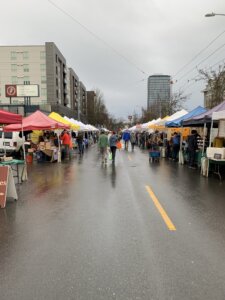

Street Market in Seattle, Washington

HIGH-PRIORITY STRATEGY: Build and activate a regional, cross‑sector trusted partner network for locally led disaster preparedness, response, and recovery.

Communities and businesses increasingly rely on trusted local resource providers—both formal and informal—during disasters. This action plan aims to align and coordinate a regional, cross‑sector network that can be activated during heat and smoke events to provide disaster support, guidance, and information, while building local capacity across communities and businesses to respond to these hazard events.

STEPS:

  1. Engage neighborhood and business networks to identify the existing disaster management landscape, including community-specific needs, assets (including funding, tools, data, and local knowledge), and
  2. Map trusted community partners by identifying community-based organizations, nonprofits, cultural groups, local businesses, and informal community leaders who already serve as trusted messengers and points of support during emergencies. To maintain the safety of trusted community partners, develop a data management plan for how information on trusted partners will be collected, stored, and used.
  1. Conduct a strengths‑and‑needs survey with these trusted partners to uncover existing skills, language assets, and outreach channels—while pinpointing resource and capacity gaps that limit disaster
    • Inventory public resources available, such as emergency and safety training programs offered by localities and
    • Mobilize private‑sector support by convening business leaders to identify partners who can help fill resource and capacity gaps.
  2. Establish a regional community resilience network charter by codeveloping a clear structure outlining roles, communication pathways, activation triggers, shared responsibilities, and existing regional resource hubs to ensure coordinated and equitable response during heat and smoke
  3. Expand emergency training for community members by partnering with the public health sector, healthcare providers, and emergency management agencies to train the trusted partners in preparedness and response functions—building on models like Seattle’s Community Safety Ambassadors program.

ESSENTIAL LEADERS AND PARTNERS:

  • Nonprofit: community‑based organizations, faith‑based organizations, chambers of commerce, business associations, community foundations
  • Public: emergency management departments and agencies, public health organizations, public health departments at the local and state levels
  • Private: local businesses and business networks, health insurance providers, hospitals, and health clinics

EXAMPLES AND EXISTING EFFORTS:

HIGH-PRIORITY STRATEGY: Improve equitable access to regional disaster information through community‑driven outreach and engagement.

Delivering accurate, timely, and actionable information to residents and businesses is essential during disasters, such as extreme heat and smoke events. This action plan aims to design more effective and equitable disaster information and communications informed by the experiences and perspectives of local communities and businesses.

STEPS:

  1. Assess communication networks and gaps by mapping existing emergency communications channels across public agencies, utilities, schools, media, workplaces, and community organizations to identify where messaging does not reach frontline communities.
  2. Elevate existing models by identifying culturally inclusive, community-led, and sector-specific emergency and disaster communication materials for both communities and businesses and using them as templates for regional
  3. Codesign culturally resonant and sector‑specific messaging with trusted partners by working with community-based organizations and local businesses to host creative workshops—such as through participatory methods36 —that generate trusted, accessible communication formats, including visual, storytelling-based, multilingual, non-digital, and culturally specific
  4. Test and refine communication concepts with community members and business leaders to assess clarity, trust, and accessibility, and refine messaging based on real-world feedback and
  5. Create a regional disaster communication playbook for developing accessible, inclusive, and culturally tailored messaging resources, including:
    • pre‑disaster preparedness checklists and outreach tools
    • during‑disaster rapid alert and safe‑space communication templates
    • post‑disaster recovery and resource navigation
  6. Activate grassroots distribution networks by equipping trusted messengers (e.g., community leaders, school staff, health workers, local businesses, or the Trusted Partner Network established under the high-priority strategy described on page 20) with tools to expand the reach of communication materials—particularly in areas identified as having gaps in Step 1. These tools could include:
    • the regional disaster communication playbook developed through step five
    • ready‑to‑use communication kits informed by findings from step

ESSENTIAL LEADERS AND PARTNERS:

  • Nonprofit: community‑based organizations, community foundations
  • Public: public‑information officers, academic institutions (particularly those focused on art and communications)
  • Private: communications experts and firms, academic institutions (particularly those focused on art and communications), businesses

EXAMPLES AND EXISTING EFFORTS

Additional proposed strategies to accelerate impact

The following example strategies—brainstormed by Roundtable attendees—could enable and further strength community-led response and activation to a range of disasters and emergencies, including heat and wildfire smoke events.

  • Expand resilience hubs—prioritizing existing trusted spaces and community-serving facilities—as safe gathering points during heat and smoke events.
  • Deliver public health, emergency preparedness, and response training at the neighborhood level.
  • Provide incentives and direct support for cooling and air-filtering
  • Establish collaborative governance agreements (e.g., memoranda of understanding [MOUs]) between community-based organizations, public agencies, and private actors.
  • Launch public education campaigns on heat and smoke readiness and resilience using communication materials, including resources on low-tech, low-cost solutions (e.g., cooling blankets, evaporative cooling techniques, box fan filters).

Additional considerations

  • Community-led disaster preparedness depends on recognizing and activating the skills, resources, and expertise that already exist within communities. To ensure this work is equitable and effective, community members must be fairly compensated for their time, leadership, and lived experience as essential contributors to disaster response capacity.
  • All training and communication materials must include translation and interpretation services to ensure equitable reach and impact.

KEY ACTION AREA: Foster energy resilience and independence

The need

Reliable and affordable access to energy is essential for health, safety, and economic well-being; climate change is putting that access at risk. Increasing occurrences and severity of heat waves and wildfires could lead to more frequent and prolonged power outages and power shutoffs across the South-Central Puget Sound, particularly impacting communities with high energy cost burdens or limited access to alternative cooling and cleaner air. As extreme heat intensifies, greater reliance on air conditioning becomes a critical public health protection—but also significantly increases electricity demand, straining an already stressed grid. At the same time, deploying energy-intensive infrastructure, including data centers, further heightens grid instability and reliability challenges. When the power goes out, medically vulnerable residents may lose access to lifesaving equipment, essential community services shut down, and businesses face costly disruptions. Investing in energy resilience—through community-owned renewable systems, decentralized backup power, and modernized infrastructure—helps ensure residents can stay safe during extreme events while strengthening long-term energy independence and economic resilience.

Action plans for high-priority strategies

The following action plans outline steps to implement selected high-priority strategies and identify key partners and existing efforts to build on.
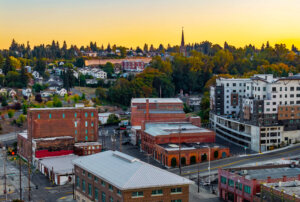

City scape of downtown Tacoma, Washington.

HIGH-PRIORITY STRATEGY: Build a network of trusted community energy hubs that provide clean, reliable power and essential services during outages and heat or smoke emergencies.

Communities and businesses rely on trusted local spaces during disruptions. This action plan advances a regional network of clean energy-enabled community hubs that serve as reliable anchors during power outages and extreme heat or smoke events. The strategy aligns public, private, and community partners to invest in hubs that strengthen local energy resilience, reduce energy burdens, and provide power, cooling, clean air, information, and support during emergencies while building long‑term community capacity and trust.

STEPS:

  1. Determine the most trusted and accessible spaces for hub locations—such as libraries, faith organizations, local businesses, housing complexes, or cultural centers—by hosting workshops and listening sessions with communities, with particular attention to neighborhoods facing higher risks for power outages, heat, and
  2. Map regional needs and opportunities using shared data and public-sector expertise by partnering with emergency managers, utilities, public health agencies, and planners to overlay indicators of vulnerability (e.g., outage frequency, energy insecurity, household medical device dependence, heat exposure) with existing facilities that could serve as energy hubs capable of providing reliable access to energy during
  3. Assess site feasibility and resilience design requirements for two or three pilot hub locations by conducting building-level evaluations to understand power needs, structural considerations, and the potential for incorporating solar + storage and microgrids. Assessments should prioritize clean, independent energy systems that enable hubs to operate and maintain power during grid outages.
    • Explore at least one pilot that reflects a public‑private partnership, such as a community‑serving business that can support nearby residents while also protecting business continuity and workforce safety.
  4. Launch a public‑private energy hub investment and matchmaking program by creating a regional mechanism to connect trusted community facilities with utility programs, philanthropic funders, and private-sector partners willing to support clean energy, efficiency, and resilience Emphasize investments that deliver everyday energy savings and reliability benefits while also enabling emergency response.
  5. Equip local hub operators and grow long‑term community capacity by identifying existing resources for training, technical assistance, and operational support.
  6. Launch a regional awareness campaign highlighting energy hub case studies that demonstrate everyday benefits (e.g., lower energy costs, community services, workforce protection) and emergency Elevate private-sector champions and community hosts to build momentum and replicability.

ESSENTIAL LEADERS AND PARTNERS:

  • Nonprofit: community‑based organizations, faith‑based facilities and organizations, health and community service providers
  • Public: public energy utilities, libraries, health care experts and providers
  • Private: private energy utilities, health care experts and providers, community‑serving businesses, multi‑family housing

HIGH-PRIORITY STRATEGY: Expand regional job pathways to build a skilled, sustainable, and clean energy workforce.

A resilient response to rising heat and wildfire smoke depends on a robust energy system—and on the skilled workforce needed to build, maintain, and modernize that system. This action plan expands regional job pathways to grow a skilled and inclusive clean‑energy workforce prepared to deliver technologies like solar, storage, heating and cooling system efficiency, strengthening the region’s long‑term energy security and resilience.

STEPS:

  1. Review recent statewide clean‑energy workforce analyses (e.g., the Clean Technology and Energy Sector June 2025 Strategy Update and the Clean Energy Technology Workforce Advisory Committee’s November 2025 Legislative Update Report) to distill findings relevant to the South-Central Puget Sound Identify priority occupations, emerging skill gaps, and recommended training pathways to determine whether additional regional assessment is needed. If so, this may include:
    • Hosting listening sessions with clean‑energy employers and workforce partners to surface top skill needs and upcoming projects.
    • Conducting a regional skills and labor market assessment with utilities, major employers, and workforce boards to identify in‑demand roles.
  2. Partner with community colleges and technical schools to build job pathways by expanding or cocreating certificate programs for clean-energy careers, renewable systems maintenance, and climate-ready trades, ensuring stackable credentials and direct employer engagement.
  3. Identify and partner with existing local leaders and groups providing resources on careers in clean‑energy sectors to expand access to career pathway information, such as by:
    • creating a simple regional “clean‑energy careers” resource sheet that compiles existing training programs, apprenticeships, scholarships, and local contacts into one easy‑to‑share document or webpage.
  • launching a monthly “clean‑energy career spotlights” newsletter with local employers to provide brief, informal virtual conversations highlighting career paths and real job
  1. Develop a plan for ensuring equitable and inclusive workforce access, including expanded language access, wraparound support services (e.g., stipends, childcare, transportation), and paid apprenticeships and youth employment opportunities that can sustainably build a strong clean energy workforce, including by:
    • Working with K–12 educators to integrate education initiatives that build a long‑term pipeline of students interested and ready to pursue clean energy careers.

ESSENTIAL LEADERS AND PARTNERS:

  • Nonprofit: community‑based organizations, unions and labor organizing groups
  • Public: education institutions (high schools, community colleges, and four‑year colleges and universities), libraries, economic and community development departments, public utilities, Washington State Department of Labor and Industries, Washington State Board of Community and Technical Colleges
  • Private: private education institutions, local businesses, private utilities

EXAMPLES AND EXISTING EFFORTS:

Additional proposed strategies to accelerate impact

The following example strategies—brainstormed by Roundtable attendees—could strengthen energy system resilience, enabling more reliable and affordable access to energy while ensuring that energy-dependent resilience solutions, like air conditioning, are accessible to frontline communities.

Additional considerations

  • Energy upgrades and pilot projects can be expensive to undertake; with federal, state, and local budgets constrained, the region will need to consider lower-cost steps and investigate innovative financing mechanisms that can still drive impact during a funding-constrained time.

KEY ACTION AREA: Leverage catalytic local and state policies

The need

Climate-driven heat and wildfire smoke threaten human health and safety, including in the built environment. Without changes to policy, buildings will continue to trap heat, workers will remain exposed to hazardous air, and neighborhoods already experiencing health and infrastructure inequities will be disproportionally impacted during emergencies. Proactive resilience policy ensures that new development, public spaces, and infrastructure are built with climate safety in mind, while strengthening protections for workers and frontline communities. By aligning local and state rules with real community needs and lived experience, the South-Central Puget Sound region and Washington state can reduce risk, lower long-term public costs, and ensure community and business partners benefit from a safer, healthier, climate-ready future.

Action plans for high-priority strategies

The following action plans outline steps to implement selected high-priority strategies and identify key partners and existing efforts to build on.
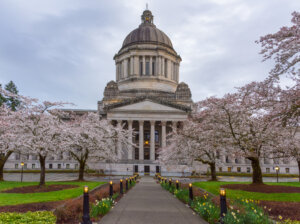

Washington state Capitol in Olympia, Washington

HIGH-PRIORITY STRATEGY: Integrate the lived experiences and priorities of local communities and businesses into state heat and smoke resilience policy and programming.

Integrating the lived experiences and priorities of communities and businesses into state policy ensures that heat and smoke resilience decisions are grounded in real‑world needs, public health impacts, and on‑the‑ground inequities. This action plan elevates community and business perspectives through coordinated engagement, shared data, and accessible advocacy tools to strengthen public health‑informed state policies and create lasting pathways for local voices to shape Washington’s heat and smoke resilience programming.

STEPS:

  1. Convene a regional working group of nonprofits, community leaders, local business owners, employers, and other private-sector partners to work with state agency staff to identify concrete opportunities for local and regional voices to inform state heat and smoke policy and programming.
  2. Identify dedicated point person(s) within an existing organization to support coordination of the regional working group, research, and advocacy on heat and smoke policy.
  3. Conduct a targeted assessment of local regulations, programs, policies, and codes across the five counties—coordinated with the state’s assessment of agency efforts—to identify how heat and smoke are currently addressed and where gaps limit preparedness and response.
  4. Collect and analyze regional quantitative and qualitative data on heat and smoke impacts by partnering with schools, universities, and community organizations, building both local research capacity and a shared evidence base for policy
  5. Translate regional priorities into actionable policy recommendations and communicate them to state agency staff and decision-makers to advance adoption of heat and smoke policies and programs that support locally informed, equitable resilience Meet with state agency staff and policymakers to identify opportunities to implement the recommendations.
  6. Synthesize outcomes from regional community engagement efforts to demonstrate the value and impact of integrating local voices into state planning, policy development, and program design and
  7. Codevelop clear, accessible, and in‑language materials that summarize engagement outcomes and resulting recommendations to advocate for state policy Equip residents, local businesses, local government staff, and elected officials with tailored materials to advocate for policy change.
  8. Advocate for a sustainable funding mechanism to support ongoing community engagement in regional and statewide policy development, ensuring underrepresented voices can consistently shape resilience policies and

ESSENTIAL LEADERS AND PARTNERS:

  • Nonprofit: nonprofits and community‑based organizations, neighborhood groups
  • Public: planning boards and departments, public health organizations, first responders, public health departments at the local and state levels, state agencies (Department of Health, Department of Natural Resources, Emergency Management Division, Department of Commerce), Washington State Building Code Council (SBCC), academic and research partners
  • Private: academic and research partners, trade businesses, architects, hospitals and healthcare providers

EXAMPLES AND EXISTING EFFORTS:

Additional proposed strategies to accelerate impact

The following example strategies—brainstormed by Roundtable attendees—highlight opportunities for state and local policymakers and planners to advance tools and resources that build resilience to heat and smoke at multiple scales.

  • Adopt policies requiring climate-smart development to address heat and smoke risks (e.g., low-impact development standards that expand green space and stormwater cooling, cool roof and pavement requirements, transit-oriented and mixed-use zoning to cut vehicle pollution).
  • Educate employers and small businesses on new workforce safety policies and provide support (e.g., funding, training, resource guides) for private businesses to ensure higher likelihood of compliance.
  • Support upgrades to building codes and zoning laws for heat and smoke preparedness (e.g., integrating heat and smoke measures into State building codes and/or building performance standards).
  • Plan for safe, reliable multi-modal access to resilience hubs by coordinating public transit routes, paratransit services, bike and pedestrian connections, and designated pick-up/drop-off points for emergency transportation.
  • Expand access to usable data and decision-support tools on heat and smoke for communities and businesses, including vulnerability assessments for critical infrastructure.
  • Establish design guidelines and templates for heat- and smoke-resilient public and private spaces.

KEY ACTION AREA: Prepare local businesses

The need

Heat and wildfire smoke disrupt business operations and put workers at risk across the South-Central Puget Sound. Local partners and community organizations note that some workplaces and community-serving spaces struggle to maintain reliable cooling or high-quality air-filtration systems—an issue echoed in national studies showing that many indoor workplaces are not adequately prepared for extreme heat or smoke events, leaving employees and customers exposed during hazardous conditions. These climate hazards also carry significant economic consequences: statewide analyses estimate hundreds of millions of dollars in lost economic activity from heat alone, for example. By elevating businesses as active resilience partners—upgrading their facilities, protecting workers, and supporting community access to clean, safe spaces—regional strategies can boost economic stability while strengthening community well-being during future heat and smoke events.

Action plans for high-priority strategies

The following action plans outline steps to implement selected high-priority strategies and identify key partners and existing efforts to build on.
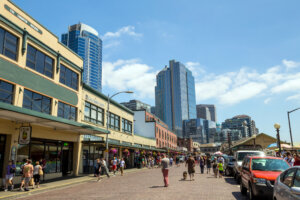

Pike Place Market in Seattle, Washington

HIGH-PRIORITY STRATEGY: Invest in community-based public-private partnerships (CBP3s) that help neighborhoods and businesses work together to prepare for extreme heat and wildfire smoke events.

CBP3s help neighborhoods and businesses jointly prepare for heat and smoke by mobilizing shared resources, strengthening local networks, and creating solutions that benefit both workers and residents. This action plan builds and supports these partnerships by engaging trusted business connectors, expanding access to preparedness information, and co‑designing pilot projects that enhance community safety, business continuity, and region‑wide resilience to extreme heat and wildfire smoke.

STEPS:

  1. Conduct a regional business resilience landscape assessment using state licensing data and local economic development insights to map business type, size, location, heat and smoke vulnerability, and relationship to communities in the South-Central Puget Sound.
  2. Engage trusted private‑sector connectors to increase engagement by partnering with chambers of commerce, business improvement areas, large employers, and industry coalitions that already convene local employers and frontline
  3. Launch a business‑focused resilience communication and education campaign that provides clear information on heat and smoke risks, the business case for investing in resilience solutions, and existing efforts by public and community partners. Tactics could include:
    • developing one‑pagers and graphics for local chambers’ newsletters
    • hosting short lunch‑and‑learn webinars
    • codesigning a resilience branding toolkit for businesses
    • synthesizing and highlighting available support resources and case studies from early
  4. Host a workshop series connecting businesses with public and community leaders (including local government, community-based organizations, public-health agencies, and utilities) to codesign partnerships and project Workshop themes could include:
    • keeping workers safe during heat and smoke days
    • developing business continuity and mutual aid strategies
    • using private or community‑facing spaces as cleaner air and cooling spaces
    • funding and technical assistance matchmaking
    • insurance and financing
  5. Advance and support the community‑based public–private partnerships and pilot projects that emerge from the workshop series, helping partners formalize roles, secure resources, and implement resilience actions that deliver shared benefits for both communities and
  6. Identify an individual or organization responsible for building and maintaining open avenues for dialogue between businesses and community organizations beyond the workshop series to identify collaboration

ESSENTIAL LEADERS AND PARTNERS:

  • Nonprofit: business associations, local chambers of commerce, community‑based organizations, Washington Chamber of Commerce, community foundations
  • Public: business improvement areas, local government economic and workforce development departments
  • Private: banks, large employers, other individual businesses

EXAMPLES AND EXISTING EFFORTS:

HIGH-PRIORITY STRATEGY: Support the development of business continuity plans to prepare for the impacts of heat and smoke events.

Preparing businesses for heat and smoke disruptions requires continuity plans that protect workers, maintain operations, and strengthen local economic resilience. This action plan guides businesses in developing those plans by identifying sector‑specific needs, expanding access to continuity resources, and supporting hands‑on workshops and pilot projects that help companies test, refine, and operationalize strategies for staying resilient during extreme heat and wildfire smoke events.

STEPS:

  1. Survey South‑Central Puget Sound businesses on resilience practices to identify current actions addressing heat and smoke, gaps in preparedness, and support needs for continuity Ensure surveyed businesses include representation from a variety of sectors impacted by heat and smoke (e.g., healthcare, technology, energy, construction and trades, manufacturing, transportation and logistics, education, and tourism), as well as a range of small, medium, and large businesses.
  1. Convene a business focus group on continuity challenges and opportunities to explore barriers, safety concerns, supply chain risks, and confidentiality considerations related to integrating heat and smoke into business continuity
  2. Synthesize sector‑specific findings from the survey and focus group on South-Central Puget Sound business preparedness for heat and smoke impacts, key barriers, and high-priorities needs related to continuity These findings on sector-, size-, and location-specific barriers and needs should help inform the scope of subsequent steps, which could be narrowed to a few specific sectors or subdivided into steps for different sizes of businesses.
  3. Launch a regional awareness campaign highlighting the business case for continuity planning for hazards, sharing innovative examples, success stories, and best practices across the In preparation, compile resources for continuity planning, drawing on local and national examples and leaders.
  4. Facilitate a hands‑on workshop series that guides businesses through the development of continuity plans that consider heat and smoke, offering tools, templates, and peer-learning
  5. Support partnerships to implement pilot projects that help businesses test and strengthen their continuity plans and resilient Evaluate opportunities for a local organization to provide ongoing support, such as regional-scale technical assistance and/or incentives to motivate and facilitate additional businesses to develop and operationalize continuity plans.

ESSENTIAL LEADERS AND PARTNERS:

  • Nonprofit: Association for Continuity Professionals (ACP), small business associations, Washington Chamber of Commerce
  • Public: business improvement areas, research and academic partners, public health experts
  • Private: local businesses, major employers, private utilities

EXAMPLES AND EXISTING EFFORTS:

Additional proposed strategies to accelerate impact

The following example strategies—brainstormed by Roundtable attendees—offer ways that the region’s businesses can build resilience to heat and smoke impacts, while contributing more broadly to community resilience outcomes.

Additional considerations

  • Businesses range in size, headquarter location, operation procedures and processes, and methods of communications (online vs. mail); resilience solutions and strategies should be tailored and scalable to support key business sectors in the region with operational risks related to heat and
  • Business communities face significant challenges around navigating permitting and regulatory requirements for resilience-related improvements and upgrades, in addition to lacking adequate resources (e.g., funding, tools, information) to support resilience planning and
  • To foster interest and demonstrate early wins, actions plans should highlight more accessible and low-cost actions that businesses can take.
  • Small businesses may have limited experience with processes like continuity planning; implemented strategies should ensure that any resulting resources or tools are designed to meet businesses where they are. In addition, small businesses are often capacity constrained; implementation of any strategy to prepare local businesses for climate impacts should ensure their participating staff are compensated for their time.

KEY ACTION AREA: Prioritize nature‑based solutions

The need

Nature-based solutions can help the South-Central Puget Sound address rising heat and smoke risks while improving community health, reducing inequities, strengthening local economies, providing cobenefits, and protecting natural resources. NbS also provide an opportunity to integrate Indigenous-led solutions, support Indigenous stewardship practices, and center Indigenous knowledge and lived experiences as essential to climate resilience. NbS strategies such as climate-smart tree canopies, green roofs, green walls, and pocket forests offer improved smoke-event air quality and other environmental and social cobenefits, including community cohesion Integrated water-focused strategies like rain gardens, street trees, permeable surfaces, and building-scale reuse enhance resilience by capturing and filtering stormwater, recharging groundwater, and reducing flooding. With cross-jurisdictional coordination, aligned policies, workforce investment, and public-private partnerships, the region can scale NbS that deliver immediate cooling and clean-air benefits, support local businesses, and lower building cooling costs, all while strengthening long-term climate and water security.

Action plans for high-priority strategies

The following action plans outline steps to implement selected high-priority strategies and identify key partners and existing efforts to build on.
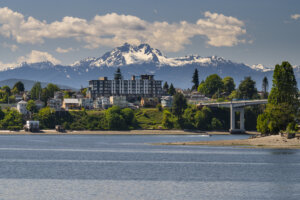

Waterfront with a view of Olympic Mountain in Bremerton, Washington

HIGH-PRIORITY STRATEGY: Expand climate‑smart tree canopy to reduce urban heat effects, prioritizing frontline communities and neighborhoods.

Expanding climate‑smart tree canopy can significantly reduce urban heat and improve air quality, especially in frontline neighborhoods that face the greatest exposure during heat and smoke events. This action plan strengthens that outcome by coordinating a regional urban forestry strategy, advancing public‑private partnerships, and launching pilot projects and workforce training programs that increase tree cover, improve long‑term maintenance, and deliver cooling, health, and equity benefits.

STEPS:

  1. Develop a regional urban forestry strategy for heat and smoke resilience that aligns existing efforts under a shared
    • Map current tree canopy to identify low‑canopy, high‑heat, high‑smoke exposure zones across the five‑county region using existing data sources such as American Forests’ Tree Equity Score Analyzer Tool and the Washington State Department of Health’s Environmental Health Disparities (EHD) Also consider identifying alternative transportation areas (e.g., sidewalks, bus stops, bike trails).
    • Compile and examine lessons learned from current tree canopy expansion efforts to understand barriers to implementation and maintenance.
    • Create a long‑term, sustainable financing strategy, which could include community funds, public‑private partnerships and other methods of stacking funding from public, private, and philanthropic resources.
    • Set target canopy expansion and NbS goals informed by health and equity metrics (e.g., historic redlining), including for street trees, rain gardens, and green The canopy expansion targets should also consider how to include goals for remediating large impermeable hot surfaces, such as parking lots.
    • Develop a “climate‑resilient tree species list” that prioritizes native and non‑invasive species for the region and explore partnerships with nurseries and holding facilities—including county conservation districts and parks’ propagation facilities—across the region to ensure supply and availability.
  1. Convene a working group of public and private partners to coordinate implementation of the regional urban forest and NbS strategies.
  2. Build private‑sector partnerships to advance investments in urban forests, including by:
    • identifying past or current pilot projects on urban forests and synthesizing findings and best practices to inform and strengthen future projects
    • identifying land developers, business improvement districts, chambers of commerce, major employers and manufacturers, and industrial sites in low‑canopy locations across the region
    • identifying existing employee volunteer programs at major employers and local non‑profits that offer corporate partnerships to elevate opportunities for companies to partner with community‑based organizations on tree planting and maintenance activities
    • designing a series of pilot projects in a variety of settings and community types that demonstrate the multiple benefits of public‑private partnerships on tree canopy and NbS investments for communities and businesses.
  3. Advocate for and support adoption of supporting policies and codes for tree preservation, expansion, and maintenance, including, for example:
    • developing and compiling model land‑use codes, tree preservation ordinances, and stormwater or green infrastructure policies that tie in resilience to heat and smoke
    • incorporating tree canopy and vegetation requirements in sites near high‑exposure buildings (e.g., schools)
    • increasing parking lot landscaping and tree requirements, as well as required soil volume minimums for trees to provide cooling in high‑heat locations and improve tree
  4. Support existing programs or launch a new regional training program for arborists, green-infrastructure installers, landscapers, and maintenance crews to develop a climate-ready workforce to support the expansion of tree

ESSENTIAL LEADERS AND PARTNERS:

  • Nonprofit: community‑based organizations, unions representing arborists and landscaping workers
  • Public: natural resource, planning, and urban forest departments; public works departments; soil and water conservation districts; Washington State University (WSU) Extension; Washington State Department of Natural Resources; Washington State Department of Transportation; local transportation departments
  • Private: landscape architects, businesses located in urban‑heat islands, major employers, business improvement areas

EXAMPLES AND EXISTING EFFORTS:

HIGH-PRIORITY STRATEGY: Advance NbS that preserve and protect water resources to ensure clean, reliable supply and provide cobenefits for heat resilience and air quality.

NbS can protect and restore the region’s water resources while simultaneously delivering cooling, cleaner air, and public‑health benefits that strengthen resilience to extreme heat and wildfire smoke. This action plan advances that vision by coordinating cross‑sector partners, piloting multi‑benefit green‑infrastructure projects, and embedding water‑resilience practices into planning, public campaigns, and code updates to ensure communities and businesses have a clean, reliable, climate‑ready water supply.

STEPS:

  1. Convene a cross‑sector working group of urban planners, landscape architects, agricultural stakeholders, environmental groups, public health, and private business leaders to coidentify NbS that protect water resources and provide cobenefits for heat and smoke resilience across the region, possibly taking an Integrated Water Resources Management (IWRM) approach.
  2. Identify gaps and needs by mapping existing water assets, green infrastructure, and cooling spaces to identify vulnerable and under-resourced communities that lack equitable access to
  3. Advance shared understanding of NbS by hosting conversations with communities and cross-sector leaders to reassess assumptions about water-intensive (e.g., lawns) and impermeable (e.g., pavement) surfaces and introduce nature-based strategies for water conservation and heat and smoke resilience.
  1. Pilot multi‑benefit public‑private projects by designing and implementing two or three demonstration projects where green infrastructure supports both private company operations and neighboring community resilience, achieving water conservation, cooling, and social benefits.
  2. Embed water resilience in public campaigns by integrating water conservation and resilience messaging into public health, social, and climate campaigns, leveraging existing platforms like Puget Soundkeeper’s Swim Guide to provide accessible, multi-channel information, and equipping businesses with messaging and practices they can use to strengthen operations and educate employees.
  3. Advocate for building code and planning updates that support water reuse, green infrastructure, and nature-based cooling strategies across the region.

ESSENTIAL LEADERS AND PARTNERS:

  • Nonprofit: community‑based organizations, conservation NGOs, community foundations
  • Public: municipal and urban planners, business improvement areas, planning commissioners, city council members, wastewater treatment plants, sewer and water districts, public utility districts, soil and water conservation districts, watershed programs
  • Private: engineers, engineering firms, local businesses, landscape architects

EXAMPLES AND EXISTING EFFORTS:

Additional proposed strategies to accelerate impact

The following example strategies—brainstormed by Roundtable attendees—could advance nature-based solutions that enhance resilience, protect health, and support communities in adapting to heat and smoke impacts:

  • Increase safe and accessible parks and green
  • Expand cooling features such as shade structures and splash pads and air quality features such as green buffers and sensors with public alerts, especially in frontline neighborhoods.
  • Expand community gardens that enhance food security, cooling, and community cohesiveness.
  • Educate policymakers and decision-makers about the multiple benefits of nature-based solutions, enabling them to align priorities and make the most of available resources and budgets.

Additional considerations

  • NbS provide an opportunity to integrate Indigenous-led solutions, support Indigenous stewardship practices, and uphold lived experience and Indigenous wisdom as important values.
  • Funding the long-term maintenance of trees—as well as with all green infrastructure—is a significant challenge for urban forestry and greening efforts; pilot projects should be designed with proposals for how to fund and teach ongoing care and maintenance.
  • Without safeguards, investments in environmental improvements can drive up property values and displace long-time residents, known as green gentrification. Pairing NbS investments with tools like community land trusts, targeted tax disincentives, and prioritizing installations near protected public and affordable housing can help lock in affordability and keep benefits in the hands of existing communities.

KEY ACTION AREA: Upgrade the built environment

The need

Many commercial and residential buildings in the South-Central Puget Sound remain ill-equipped to protect people from the impacts of heat and wildfire smoke. The Seattle metro has historically had one of the lowest air conditioning rates in the country—only 44 percent of homes had air conditioning in 2019, growing to 63 percent by 2023. Many homes, multifamily buildings, schools, and community facilities still lack high-efficiency filtration needed to keep indoor air safe during smoke events. Retrofitting and designing buildings to stay cool, filter smoke, and ensure accessible safe indoor spaces will reduce health risks, reduce business continuity disruptions, prevent displacement, and build resilience for frontline communities.

Action plans for high-priority strategies

The following action plans outline steps to implement selected high-priority strategies and identify key partners and existing efforts to build on.
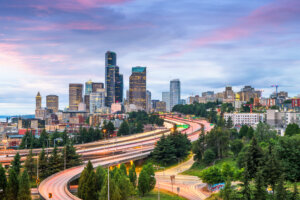


Skyline of Seattle, Washington, at dusk

HIGH-PRIORITY STRATEGY: Use public health data to shape building codes and planning policies to reduce heat and smoke exposure and ensure safe indoor environments during extreme events.

Public health data is essential for shaping building codes and planning policies that keep people safe during extreme heat and smoke events, ensuring homes, workplaces, and community spaces provide healthy indoor environments. This action plan uses that data to guide regional standards, model codes, and educational campaigns—strengthening policies, incentivizing upgrades, and improving monitoring so that buildings across the South‑Central Puget Sound can better protect community health during future climate‑driven emergencies.

STEPS:

  1. Form a working group to develop public health data-informed planning policies to systematically improve the built environment—including homes, private assets, and public facilities—for heat and smoke
  2. Establish a data‑driven foundation for decision making using existing tools, such as Americares Climate Resilient Health Toolkits, the Bree Collaborative’s Heat and Wildfire Smoke Toolkit for Healthcare Professionals, UW Center for Health and the Global Environment’s Climate and Health Risk Tool, and Health Impact Assessments, to inform policy and planning decisions for the built
  3. Develop regional guidance, standards and model codes for integrating public health data and heat/smoke solutions, such as air filtration and passive cooling, into local building codes and capital improvement
    • Provide resources, examples, and incentives for private businesses to make improvements to privately‑run assets, including critical infrastructure (e.g., hospitals) and public spaces (e.g., malls), that meet regional
  4. Advocate for improved and climate‑integrated state‑level policies, for example:
    • integrating heat and smoke priorities into Washington State Health Care Authority’s Medicaid Transportation Project via the Health-Related Social Needs (HRSN) services98 focus area
    • integrating wildfire smoke ventilation requirements into the Wildland Urban Interface (WUI) Building Code
    • establishing an upper temperature threshold for indoor environments to determine when cooling measures are required (see Washington State Building Code Section 1203).
  5. Implement educational campaigns to support compliance on new standards, geared toward the appropriate users (e.g., renters, landlords, municipalities, private businesses), as well as clear avenues to report and address inadequate building conditions related to heat and smoke.
  6. Develop a monitoring strategy for tracking implementation and evaluating effectiveness of policies and building improvements, using public health and environmental monitoring data to refine strategies over time.

ESSENTIAL LEADERS AND PARTNERS:

  • Nonprofit: public health organizations, academic experts
  • Public: public health departments at the local and state levels, local and county planning departments, code enforcement, planning boards, the State Health Insurance Commission
  • Private: care providers, hospitals, emergency medical services, health insurance, data analytics providers, building

EXAMPLES AND EXISTING EFFORTS:

  • Oregon’s Right to Cooling Requirements for Renters (SB1536)
  • Vancouver B.C.’s Guideline on Single Zone Cooling in Dwelling Units (BCBC-2024)
  • King County Heat-related illness data dashboards
  • Washington Tracking Network (WTN) Heat Stress Data
  • City of Denver’s Clean Air and Cool Home Funding for nonprofits and community‑based organizations
  • Colorado Health Institute and Kaiser Permanente’s Advancing Climate Resilience for Community Health

HIGH-PRIORITY STRATEGY: Streamline and scale regional building upgrades to prepare homes and workplaces for extreme heat and wildfire smoke.

Upgrading the region’s building stock is essential for protecting residents and workers from worsening heat and smoke, especially in homes and workplaces that currently lack adequate cooling or filtration. This action plan streamlines and scales these upgrades by developing regional guidance and incentives, simplifying contractor engagement, and expanding training pathways—making it easier and more affordable for building owners to implement heat‑ and smoke‑ready improvements.

STEPS:

  1. Conduct a regional building stock capability assessment to identify the heat and smoke-readiness of existing commercial and residential buildings.
  2. Develop voluntary regional guidance, standards, and incentives for built environment upgrades, including model policies, plug-and-play designs, and demonstration projects; identify and recognize strong partners that meet these standards, by, for example:
    • launching a public education campaign highlighting building readiness, including implementing a placard system for publicly owned buildings showing performance capabilities for cooling and smoke filtration.
  3. Streamline contractor engagement to advance heat and smoke weatherization of residential and commercial properties by:
    • defining criteria for heat‑ and smoke‑qualified contractors to simplify procurement, design, and implementation of weatherization upgrades
    • supporting local government staff and planning boards to engage and educate developers and architects early and often during the permitting process
    • forming a cross‑sector working group to identify ways of reducing administrative burdens, diversify the contractor base, and support smaller companies.
  4. Partner with or expand the Built Green program, administered by Master Builders Association of King and Snohomish Counties, to develop accreditations specific to extreme heat and wildfire smoke resilience and consider expanding the program to include Kitsap, Pierce, and Thurston counties.
  5. Compile existing state and local job training programs with significant green job components for the built environment to identify opportunities to support or expand existing efforts, including by:
    • coordinating with Washington state’s job realignment efforts to ensure consistent approaches at state and local levels
    • convening a working group of job training program leaders and designers to better understand barriers and lessons learned for green jobs, trades, and upskilling
  1. Explore and pilot incentives for homeowners, renters, building owners, and businesses who invest in heat and smoke weatherization, such as deferred or reduced taxes, reduced permitting fees, expedited review processes, zoning allowances, community benefit agreements, utility rebates, low-interest loans, insurance premium reductions, and on-bill

ESSENTIAL LEADERS AND PARTNERS:

  • Nonprofit: master builders’ associations, training and skills centers, non‑profits focused on sustainable building practices
  • Public: municipal planners, business improvement areas, regional ports, Washington State Department of Commerce, Washington State Building Code Council
  • Private: electric utilities, home insurance providers, property managers, construction companies, architects

EXAMPLES AND EXISTING EFFORTS:

Additional proposed strategies to accelerate impact

The following example strategies—brainstormed by Roundtable attendees—could improve the ability of the region’s built environment (i.e., buildings, transportation infrastructure, and water and energy systems) to withstand impacts from extreme heat and wildfire smoke, while protecting residents, workers, and visitors:

Additional considerations

  • Keep existing structures as the focus to ensure upgrades are distributed fairly and benefit communities currently reliant on those The Leverage Catalytic Local and State Policies key action area (page 25) covers zoning and design standards as they pertain to new buildings.
  • Funding and affordability are significant challenges amid rising construction costs. The state should consider exploring funding, incentive programs, and supportive policies to address and offset risking market-level construction costs that present barriers to new construction with heat and smoke resilience components.

Implementing the Roadmap

Organizations seeking to implement actions in this Roadmap will benefit from considering the range of public and private resources that are currently available. Aligned resources were considered in the process of developing this Roadmap, but the resource environment is shifting rapidly. This section outlines some of the key examples of available resources and considerations for innovative stacking of public and private funding.

Navigating Resilience Resources

Federal funding uncertainty110 and state budget constraints111 have heightened the need for local and state leaders across the South-Central Puget Sound region to find new ways to advance resilience efforts. Beyond traditional funding sources, communities can leverage non-financial resources such as data, tools, partnerships, and technical assistance to address the growing risks of extreme heat and wildfire smoke. Expanding public-private partnerships and drawing on philanthropic support, traditional bank financing, and emerging innovative financing models can unlock the diverse capital needed to accelerate and sustain resilience investments. While many resources already exist, increasing community awareness and access is critical to strengthening regional resilience.

There is growing momentum in the region around innovative financing mechanisms, community-led preparedness, and cross-sector partnerships that stretch limited resources and build on existing efforts. Examples of these opportunities include:

  • Suquamish Tribe’s Ductless Heat Program: A program providing fully subsidized installations for on-reservation elders. The program also includes collaboration with the 477 Workforce Development Program to provide job shadowing opportunities during installations.
  • Floodplains by Design Program: A public-private partnership between Bonneville Environmental Foundation (BEF) and the Washington State Department of Ecology that enables resource sharing and problem-solving for floodplain management.
  • Pierce County Urban Heat Mapping Project: An initiative that utilized a small initial grant, a 14-member partnership, and volunteers to conduct community-led urban heat mapping.

C2ES and the cohort have compiled example resources of regional or statewide initiatives and working groups, data and tools, technical assistance programs or providers, and grants or financial resources to help communities and companies build resilience to extreme heat and wildfire smoke. These example resources can be found in the tables in Appendix C. A more comprehensive—and growing—list of resources is available in the Living Resource Database, which emerged from the Resources Connector Forum in July 2025.

Looking Ahead: Accelerating Action in the South‑Central Puget Sound

This Regional Action Roadmap serves as an ongoing resource for a range of public and private organizations in the South-Central Puget Sound region seeking to take high-impact action on heat and smoke resilience. Grounded in six cross-sector key action areas and accompanying action plans developed through the 2025 Accelerator convenings, the Roadmap provides practical, equity-centered steps that emphasize collaboration among local governments, community-based organizations, businesses, and other regional partners.

By anchoring the Roadmap in action, the Accelerator will transition from collective learning to coordinated implementation, accelerating progress toward a common vision and defined outcomes for heat and smoke resilience across the five-county South-Central Puget Sound region. This Roadmap will directly shape the Accelerator’s future activities by guiding participants in selecting one or more action plans to refine and begin implementing together.

Through an engagement process surrounding the Roadmap’s release in 2026, participants will identify priority action plans, clarify roles, and commit to leading, supporting, or engaging with specific actions. This approach is designed to move from planning to action—launching early wins, strengthening cross-sector partnerships, and advancing equitable resilience outcomes—while sharing leadership across the region.

With input from the cohort, C2ES will develop criteria for selecting one or more action plans for the Accelerator to implement in 2026 and 2027, prioritizing, for example, feasibility, impact, and ability to leverage interested cross-sector partners and available resources. C2ES will also invite participants and their networks to lead or support additional action plans, offering coordination assistance to empower further refinement of the action plans and implementation of the Roadmap.