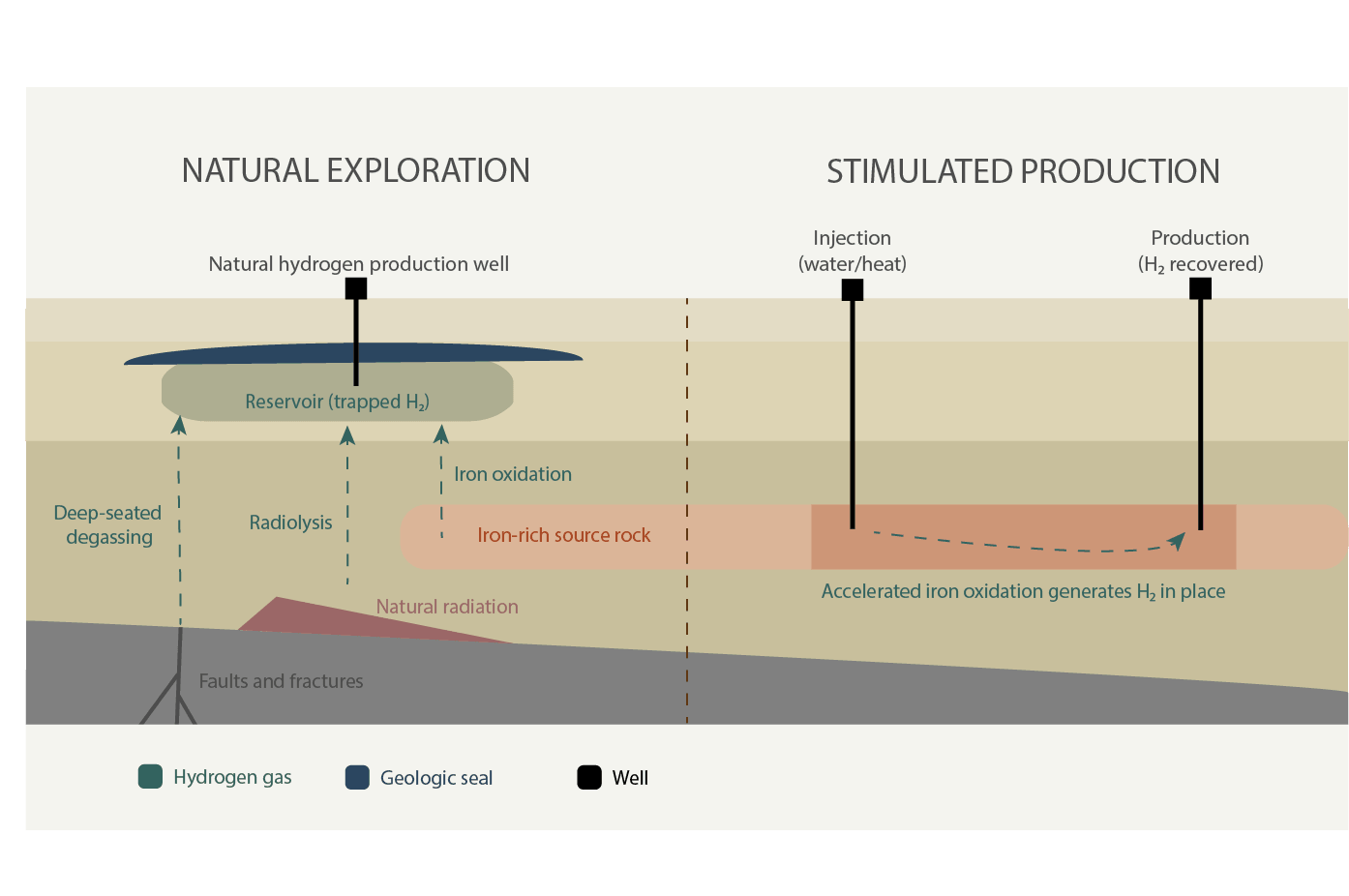
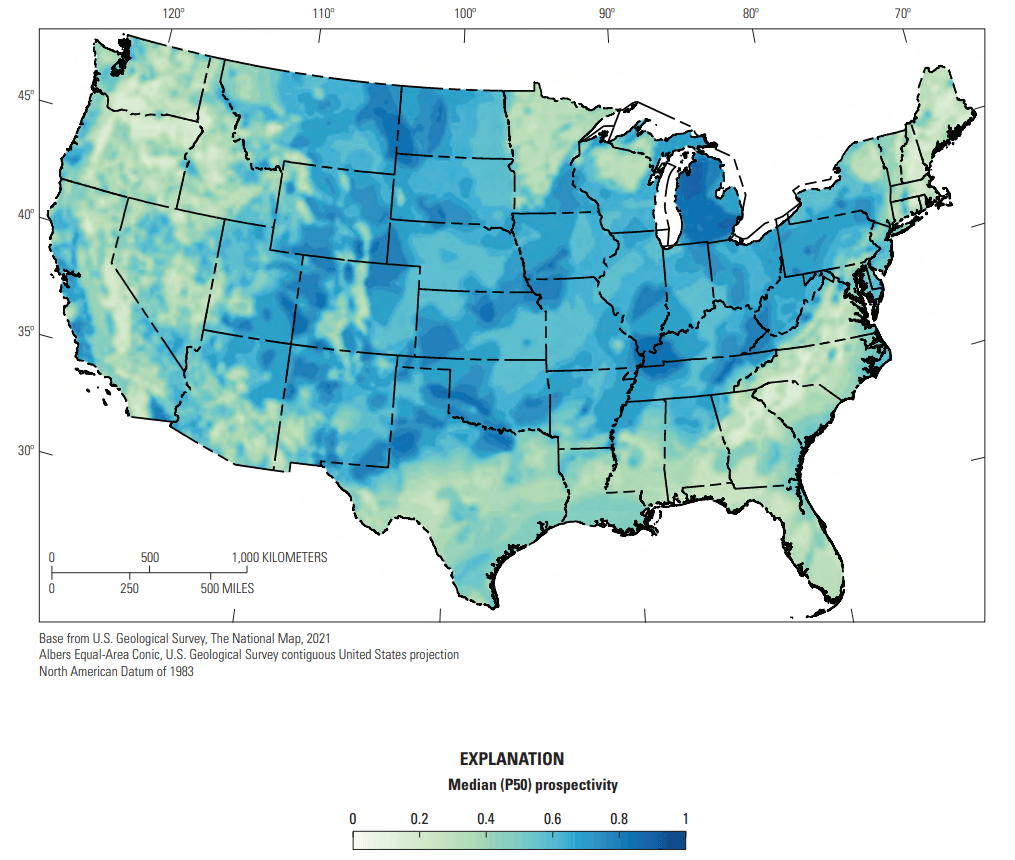
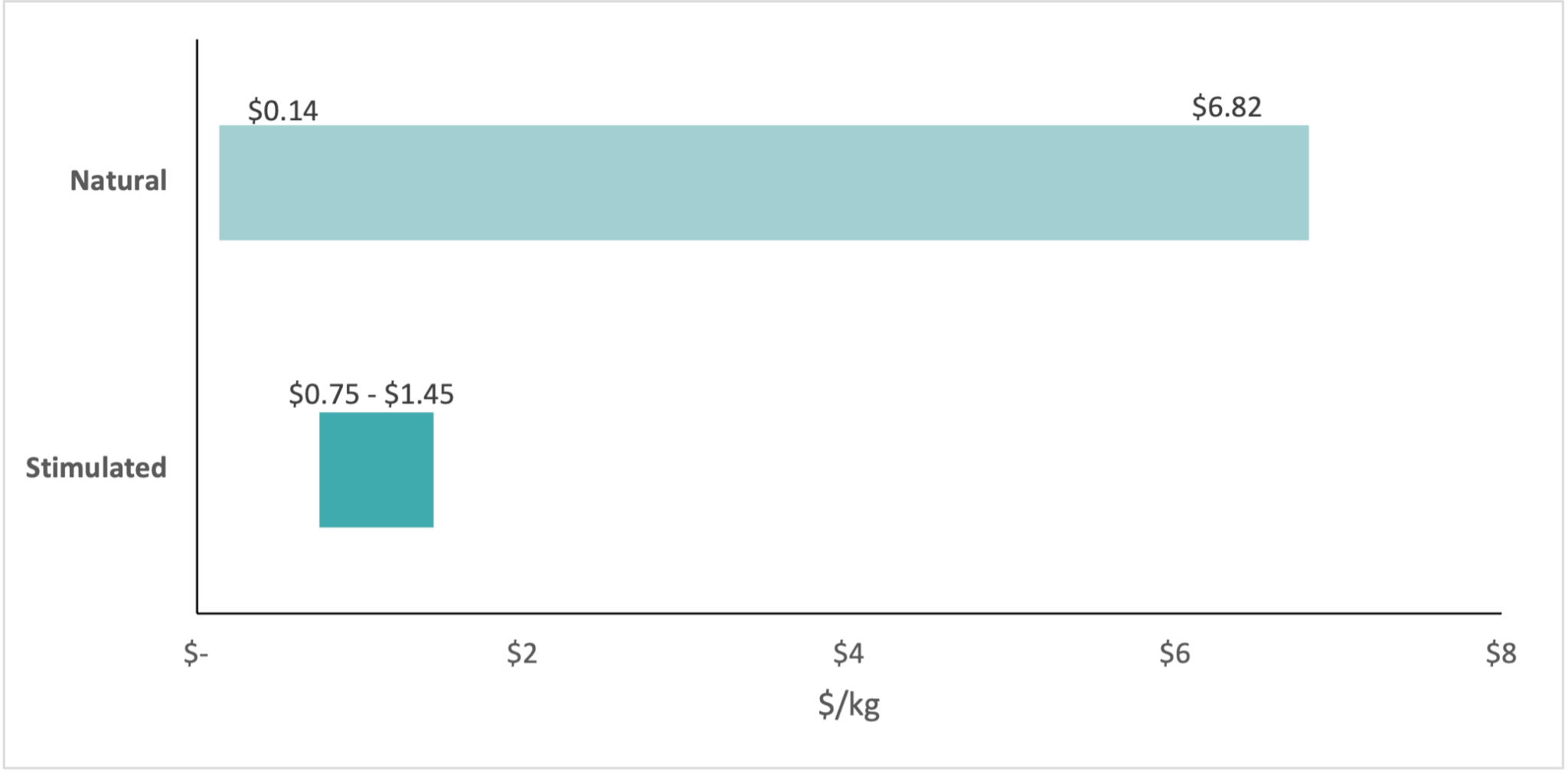
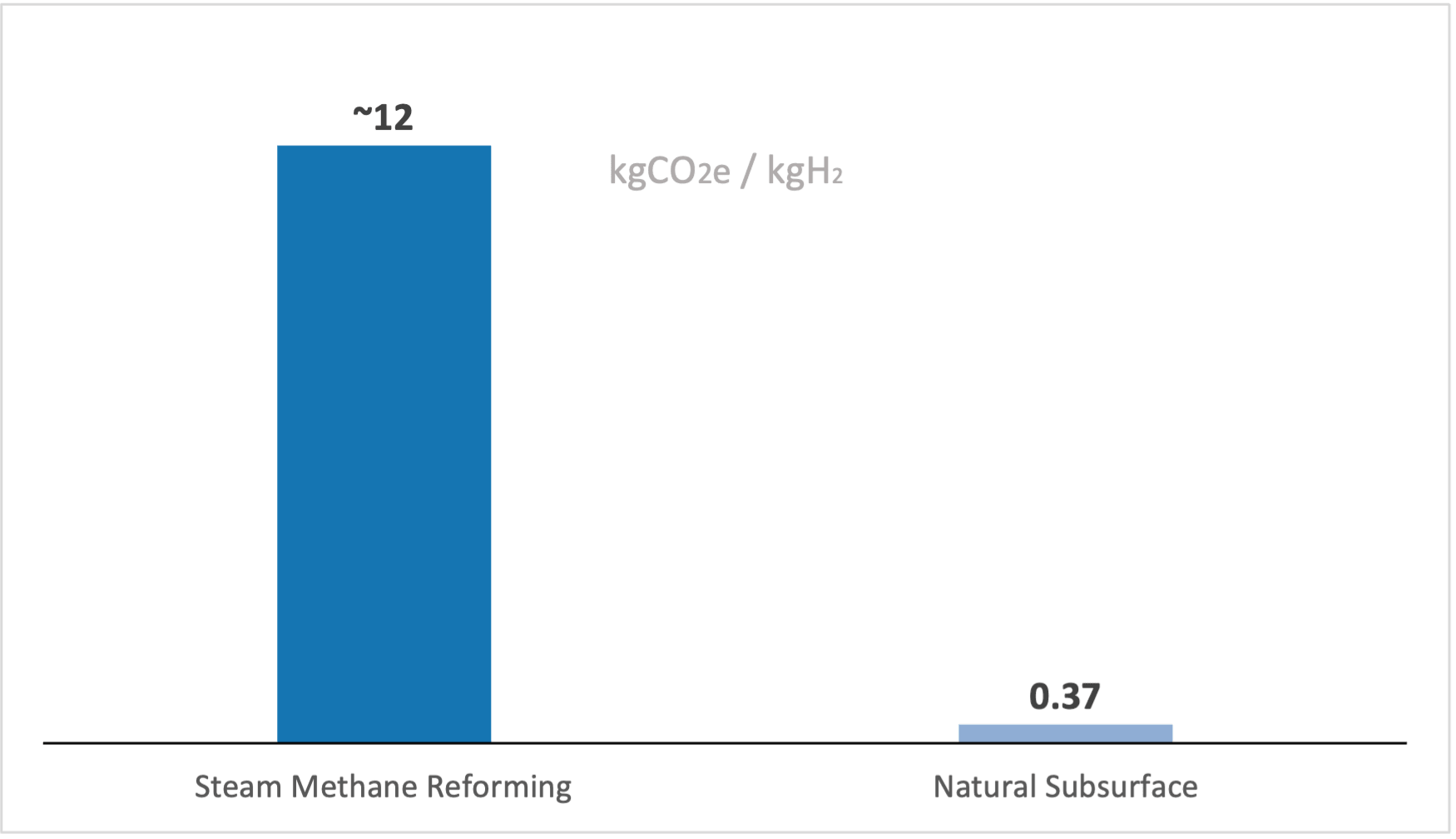
Above figures are preliminary, model-based estimates — not field-validated results. Subsurface hydrogen projects have yet to demonstrate commercial scale, purified production. Cost and emissions estimates assume flow rates, purity, and well performance that have not been proven at scale; delivered costs could rise substantially once transportation and purification processing are included.
A No-Regrets Strategy
Subsurface hydrogen leverages capabilities the United States already has in abundance: geoscience expertise, a large drilling and well-services industry, extensive subsurface data infrastructure, and national laboratories capable of resource characterization. Even if the resource proves smaller than hoped, the data, tools, and field experience gained would carry over directly to critical minerals exploration and next-generation geothermal development.
How Federal Policy Can Help
Subsurface hydrogen sits at the research and demonstration stage of the technology pipeline — exactly where federal support has historically been most effective at shouldering early risk that private capital typically won’t take on. C2ES recommends three coordinated federal actions.
- Coordinate federal research, development & demonstration: Congress should authorize and fund a dedicated subsurface hydrogen RD&D program at the Department of Energy, run in partnership with USGS, national laboratories, state geological surveys, universities, and industry. Multi-year competitive awards should support field validation pilots and require publication of nonproprietary data and results — including lessons from unsuccessful projects, to extract the most value from early research.
- Improve domestic geologic data infrastructure: Much of the United States still lacks the geologic, geophysical, and geochemical data needed to characterize subsurface hydrogen potential. Expanding data-collection programs and modernizing legacy geologic records would lower exploration risk for industry and improve the information available to regulators and communities.
- Expand the Earth Mapping Resources Initiative (Earth MRI) to include hydrogen-relevant source rock data
- Fund a Critical Mineral Assessments with AI Support (CriticalMAAS) 2.0 to apply AI-assisted data processing to hydrogen, geothermal, and mineral assessments
- Encourage time-bound public release of well-log and seismic data tied to federal leases, grants, or loans
- Provide regulatory clarity: Subsurface hydrogen doesn’t fit neatly into existing federal or state permitting regimes. Congress should give the Secretary of the Interior clear statutory authority to issue federal subsurface hydrogen leases and direct the Department of the Interior to develop streamlined environmental review pathways for exploration and testing — while preserving safeguards for groundwater, well integrity, induced seismicity, and closure.
-
- States are already moving: Iowa broadened its definition of “gas” to include hydrogen and updated subsurface rights law; Michigan’s 2026 executive directive is systematically assessing permitting authority, infrastructure reuse, and workforce needs. Federal clarity would help align these efforts rather than leaving a patchwork.
i International Energy Agency, Global Hydrogen Review 2026 (Paris: International Energy Agency, 2026), https://www.iea.org/reports/global-hydrogen-review-2026.
ii International Energy Agency, Net Zero Roadmap: A Global Pathway to Keep the 1.5 °C Goal in Reach—2023 Update (International Energy Agency, 2023), https://www.iea.org/reports/net-zero-roadmap-a-global-pathway-to-keep-the-15-0c-goal-in-reach.
iii Geoffrey S. Ellis and Sarah E. Gelman, “Model Predictions of Global Geologic Hydrogen Resources,” Science Advances 10, no. 50 (December 13, 2024): eado0955, https://doi.org/10.1126/sciadv.ado0955.
iv Ibid.