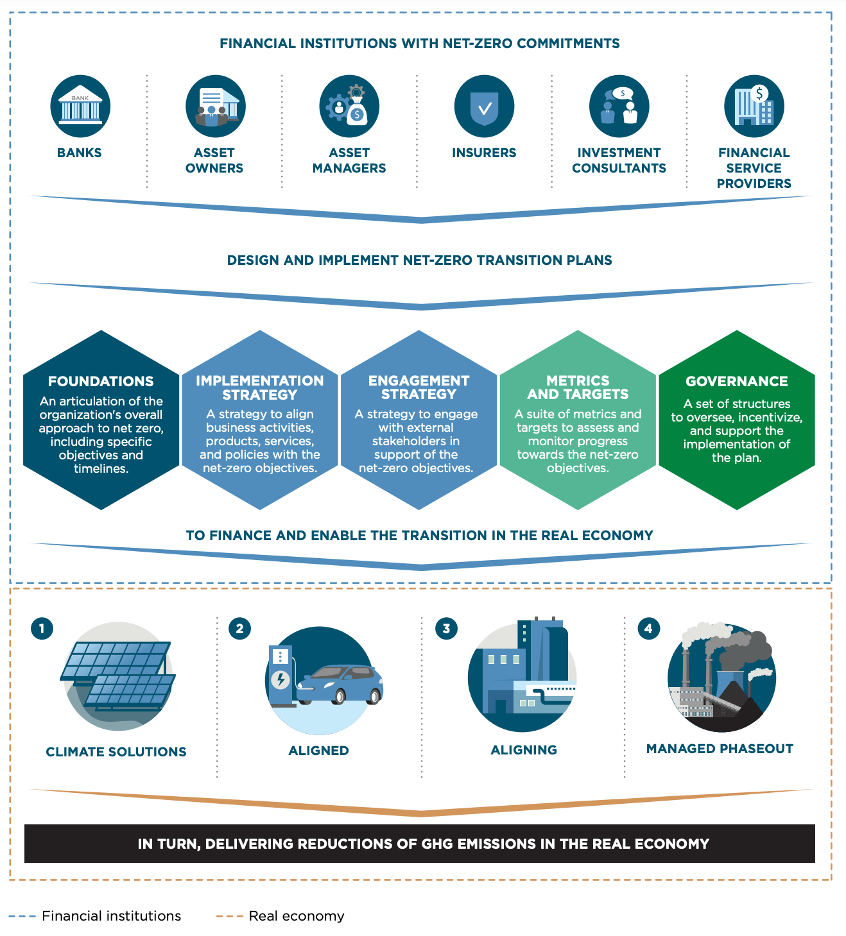
The Net Zero Investment Framework (NZIF) is a model that helps investors align portfolios with net-zero goals by setting targets, measuring progress, and integrating climate-related risks. It guides capital allocation to drive real-world decarbonization and supports the net zero economy. The NZIF 2.0 enhanced framework offers improved methodologies for portfolio alignment, target-setting, and transition finance. It refines key concepts like the Portfolio Decarbonization Reference Objective and Asset Alignment Target, ensuring investors can accelerate emissions reductions. By prioritizing climate solutions, aligned firms, and phaseout projects, NZIF 2.0 enables financial institutions to develop net-zero transition plans and drive systemic change.
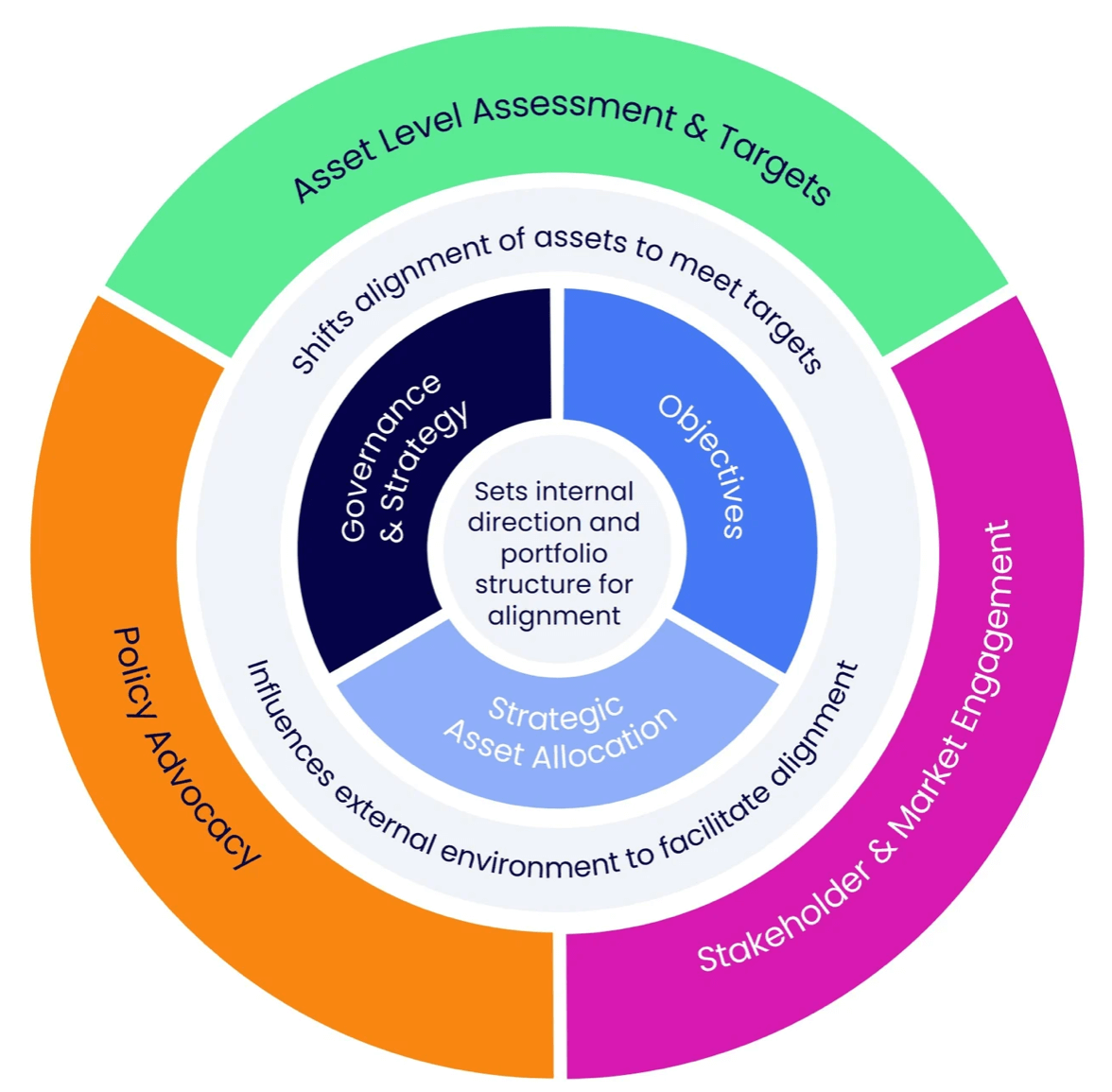
The NZIF Wheel highlights the interconnected nature of net-zero strategies, emphasizing the equal importance of key elements: Governance & Strategy, Objectives, Strategic Asset Allocation, Asset Level Assessment & Targets, Policy Advocacy, and Stakeholder & Market Engagement. This structure ensures that investment decisions, engagement efforts, and policy advocacy work together to facilitate real economy decarbonization. By leveraging these tools, financial institutions can create the conditions necessary for reducing emissions across industries and accelerating the global transition.
Similarly, GFANZ Recommendations and Guidance on Finance Sector Transition Plans acknowledges this linkage and outlines four key financing strategies that support the real economy’s transition to net zero:
- Financing Climate Solutions – Investing in projects like renewable energy and sustainable infrastructure.
- Supporting Already Aligned Firms – Backing companies already operating in line with net zero goals.
- Supporting Transitioning Firms – Providing capital and guidance to companies committed to decarbonization.
- Financing Managed Phaseout – Funding the responsible retirement of high-emission assets.
These strategies enable financial institutions to direct capital toward real-world emissions reductions, accelerating the global transition.