Biomethane
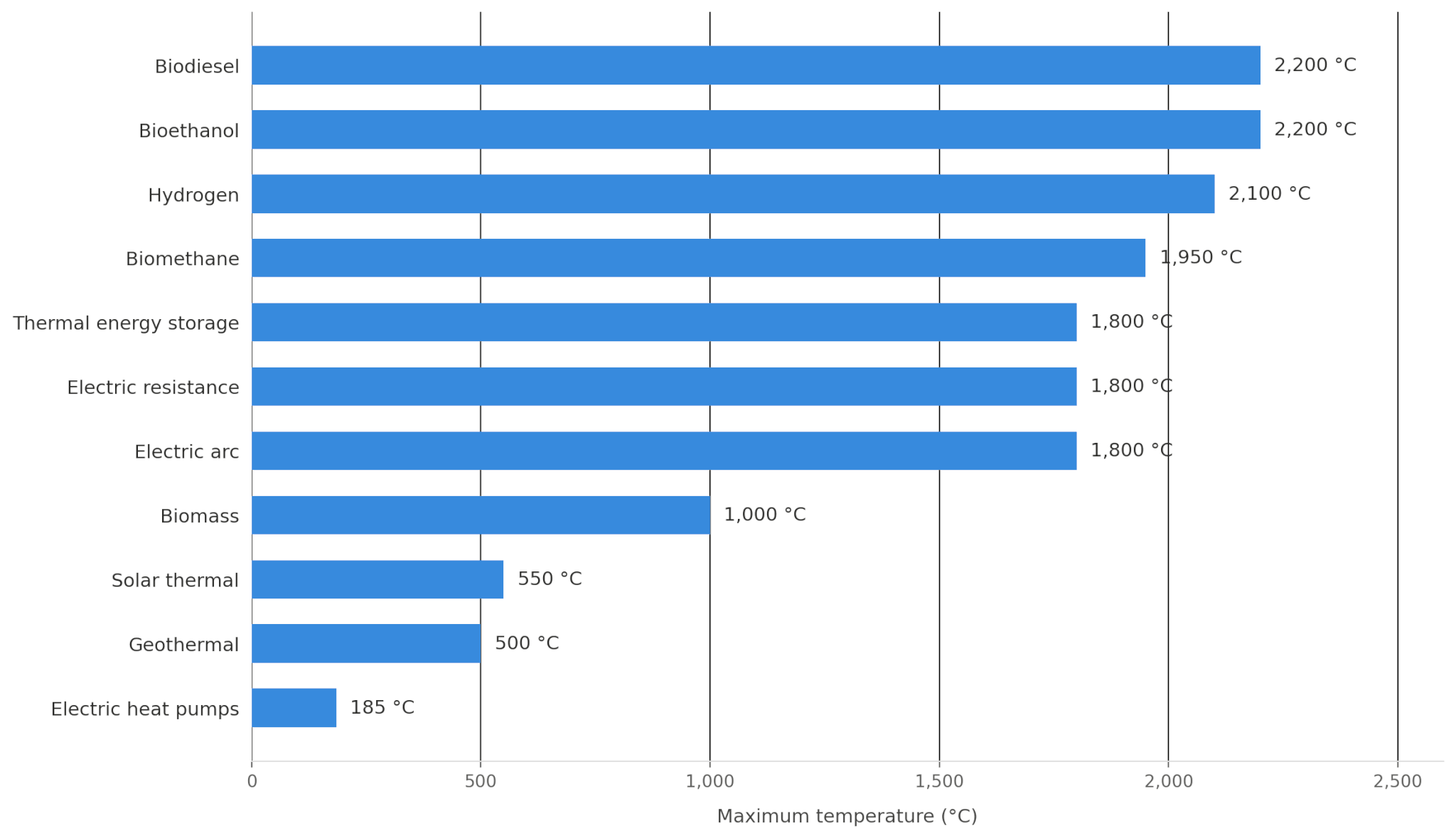
Biomethane is a renewable fuel produced from the processing of gases captured from landfills, agricultural or food waste, wastewater treatment plants and other sources. It is purified to be equivalent to natural gas (methane) and can be used with conventional heating equipment and injected directly into natural gas pipelines. Biomethane can generate heat up to 1950°C and can serve nearly all industrial applications where natural gas is currently deployed, but the available supply of biomethane for industrial heat is constrained, in part because of strong competition from other sectors like transportation.
To learn more about how biomethane is being deployed at industrial facilities, see RTC case studies on projects at the University of California, AstraZeneca, and Perdue Farms.
Waste Biomass
Biomass is solid organic matter, largely plants and plant-derived materials, that can be burned for energy. Biomass combustion typically produces steam, which drives electricity production or provides process heating up to 1000°C. Biomass is a renewable fuel when it comes from sustainable, waste-derived sources, but factors such as poor land management and emissions during harvesting, transportation, and processing may increase the overall carbon footprint. Wood pellets and other biomass are currently the largest source of renewable industrial heating in the U.S., particularly in sectors like pulp and paper with readily available feedstocks from production wastes.
Green Hydrogen
Hydrogen is a versatile energy carrier and industrial input that can serve both as a high-temperature fuel and as a chemical feedstock. With appropriate equipment modifications, hydrogen can replace natural gas in certain high-temperature industrial processes, reaching temperatures above 2,000°C. In the United States today, hydrogen is used primarily as a chemical feedstock in industries such as ammonia and fertilizer production, petroleum refining, and other chemical manufacturing processes.
Green hydrogen refers to hydrogen produced by splitting water into hydrogen and oxygen using an electrolyzer powered by renewable electricity. Looking ahead, green hydrogen is a critical solution not only for feedstock applications, but also for high-temperature industrial processes in sectors such as chemicals, iron and steel, and cement. In these sectors, hydrogen can serve both as a combustion fuel for high-temperature heat applications and, in some cases, as a reactive input (e.g., for iron ore reduction or chemical synthesis). Because few renewable solutions can meet very high temperature and molecular process requirements, green hydrogen is considered a strategic option for addressing emissions in hard-to-electrify industrial applications.
To learn more about green hydrogen, see RTC’s Green Hydrogen Technology Assessment.