Alongside the UNFCCC and the Paris Agreement, a growing ecosystem of international cooperative initiatives (ICIs) and other voluntary partnerships has emerged to accelerate implementation where consensus-based multilateral negotiations have struggled to move at the pace required. In his twelfth letter, the COP30 President described the future of climate diplomacy as evolving toward a form of “two-tier” multilateralism, arguing that effective climate action will require institutions capable of operating at different speeds while reinforcing one another’s efforts.
Methane sits at the center of this discussion. Responsible for roughly one-third of current global warming, methane abatement is one of the fastest and most cost-effective opportunities to strengthen climate action while enhancing energy security and delivering broader economic, environmental, and public health benefits. Its importance was recognized in the first Global Stocktake under the Paris Agreement, where governments agreed to contribute to global efforts to substantially reduce non-CO₂ emissions, particularly methane, by 2030. In recent years, political attention has grown through initiatives such as the Global Methane Pledge and a rapidly expanding landscape of voluntary initiatives.
Despite this surge in commitments and cooperation, global methane emissions remain stubbornly high. The gap between ambition and implementation has sparked growing debate about whether existing international efforts can deliver emissions reductions at the scale and speed required. The UN Secretary-General’s recent Call to Action on Methane has further underscored the need for stronger political leadership, deeper international cooperation, and greater accountability to accelerate progress.
On the margins of the UN General Assembly, this C2ES public event will examine the future of international methane governance and cooperation. Through the lens of methane mitigation, panelists will explore whether existing international cooperative initiatives can deliver climate action at the pace needed, whether stronger normative and political signals are required to accelerate implementation, and what this experience can tell us about the evolving role of international cooperation in addressing the climate crisis.
Please arrive early to guarantee your seat.
Panel
Angela Churie Kallhauge
, Executive Vice President, Impact at Environmental Defense Fund
Rick Duke
Former Deputy Special Envoy for Climate at the U.S. Department of State
Maas Goote
Former EU lead climate negotiator
Ana Toni
Brazil’s National Secretary for Climate Change
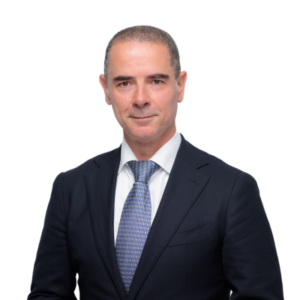
Kaveh Guilanpour — Moderator
Vice President for International Strategies, Center for Climate and Energy Solutions
Kaveh Guilanpour is the Vice President for International Strategies at the Center for Climate and Energy Solutions, overseeing the international aspects of the work of C2ES including in relation to the United Nations negotiations process and implementation of the Paris Agreement. Mr. Guilanpour has worked in the environmental sector in…