Renewable Thermal Energy

At-a-glance

Thermal energy used in industrial manufacturing processes and to heat and cool buildings is a major contributor to global energy demand and to greenhouse gas (GHG) emissions. In the United States, heat used to manufacture goods accounts for 50% of onsite industrial energy use, making it the most significant source of energy use in the industrial sector.

What is Renewable Thermal Energy?

Thermal energy used to produce, treat, or alter manufactured goods in the industrial sector is known as process heat, and is essential for manufacturing processes like melting, drying, boiling, or driving chemical reactions to turn raw materials into finished products. Heat in industry is used in a wide range of processes such as producing steel, drying paper, pasteurizing milk, brewing beer, frying chips, and separating components of crude oil in petroleum refining. These industrial processes require heat in different quantities, forms (e.g., steam, hot water), and temperatures.

Most industry practitioners distinguish process heat by temperature, typically into low (under 200°C or 392°F), medium (201-500°C or 393°F-932°F), and high (over 500°C or 932°F) temperature applications. Low-temperature processes include food processing and paper drying; medium-temperature processes include chemical production and petroleum refining; and high-temperature processes include steelmaking and cement production. Today, most industrial thermal energy comes from burning fossil fuels such as natural gas and coal.

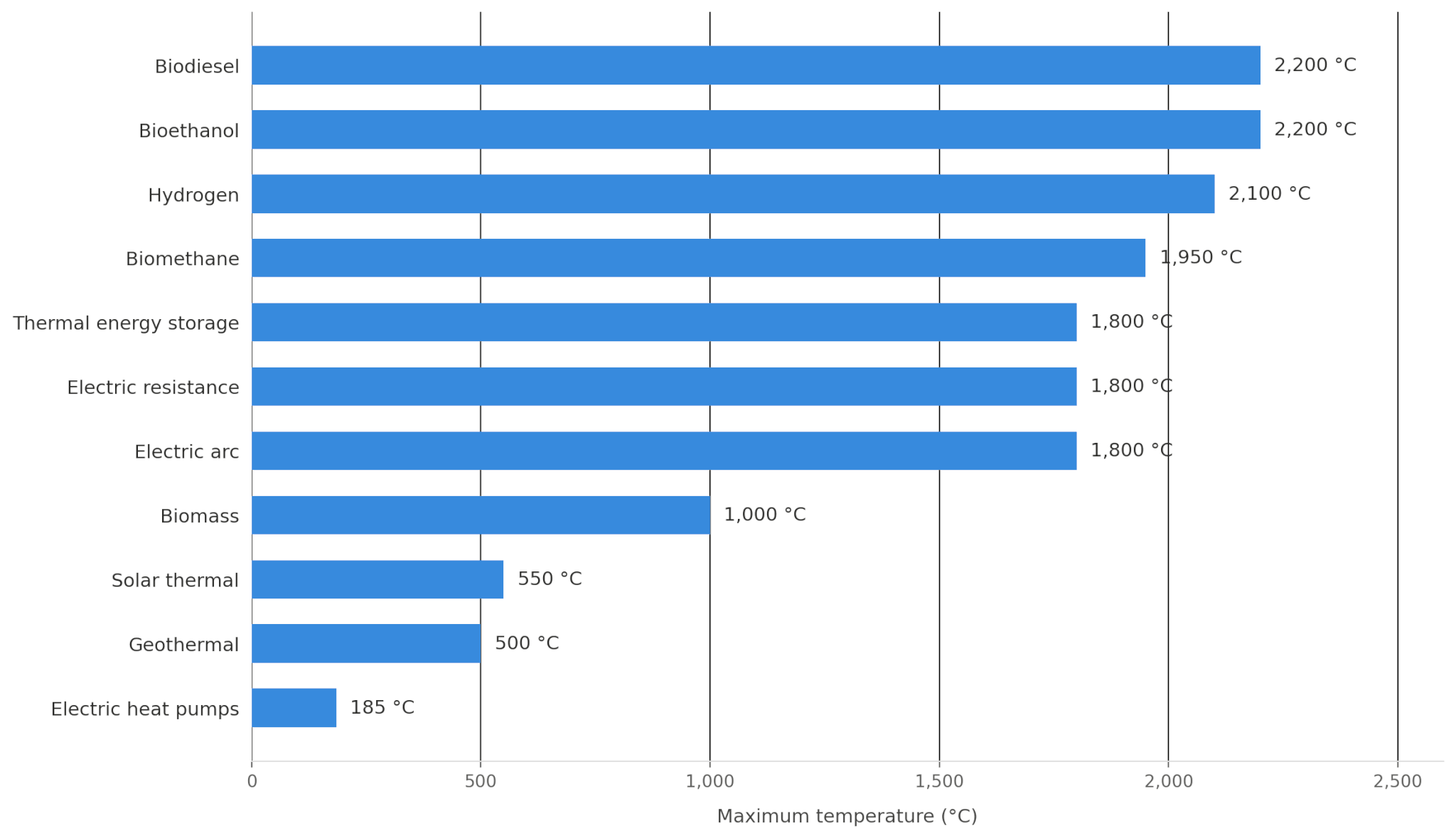
Renewable thermal energy describes low- or zero-carbon thermal technologies and fuels used for heating and cooling Electric resistance applications. In industrial applications, these include electric heat pumps, electric boilers, thermal energy storage, solar thermal, geothermal, biomethane and other biomass-derived fuels, green hydrogen, and more.

FIGURE 1: Available Renewable Thermal Technologies and Temperature Range

The Renewable Thermal Opportunity

Scaling renewable thermal technologies for industrial heat will help strengthen U.S. energy security and modernize the nation’s industrial sectors. Furthermore, renewable thermal technologies can enhance U.S. manufacturing competitiveness by protecting companies from volatile fuel prices, reducing exposure to supply chain disruptions, and helping them maintain an innovative edge in the global market that increasingly demands cleaner products. Many technologies are already commercially available and can meet low- to medium-temperature heat needs today. Despite these opportunities, renewable thermal deployment remains constrained by challenges such as high upfront costs and the price difference between natural gas and electricity. Overcoming these barriers through supportive policies, such as financial incentives and technical assistance, is critical to realizing the full potential of these technologies in American manufacturing.

Key Renewable Thermal Technologies and Fuels

Industrial Heat Pumps

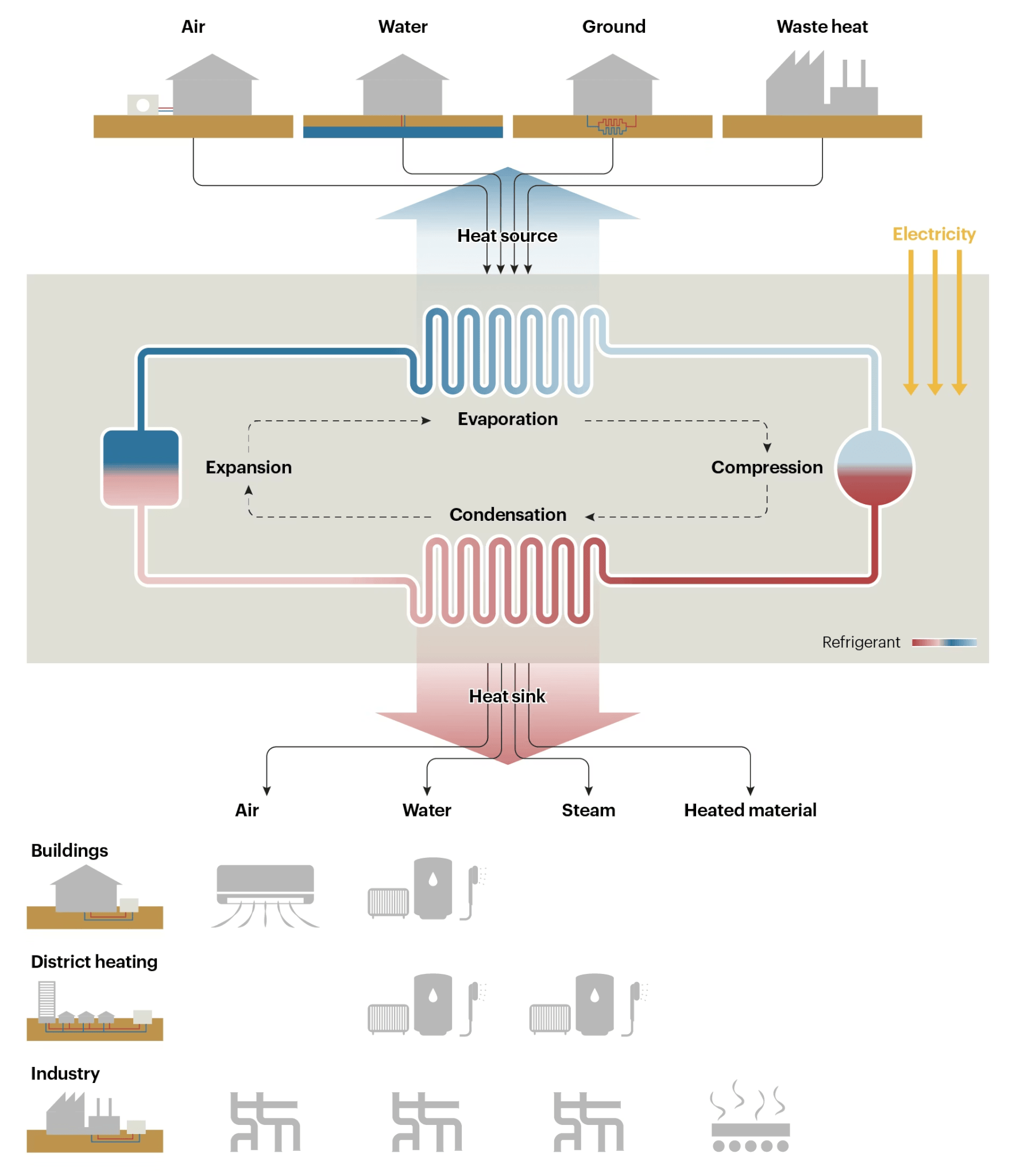
Industrial heat pumps (IHPs) extract heat from lower-temperature sources, such as ambient air or waste heat, and compress it to increase its temperature so the heat can be used in a production process (see Figure 2). Since IHPs move heat rather than burning a fuel to create it, IHPs deliver more energy than they use—often three times or more. This ratio is called the coefficient of performance, or COP. In the U.S., commercially available IHPs can provide process heat up to 165°C to applications in sectors such as chemicals, food and beverage, and pulp and paper, while higher temperature designs are nearing commercialization in the U.S. market.

To learn more about IHPs, see RTC’s Electrification Action Plan.

FIGURE 2: How a Heat Pump Works

Electric Resistance and Other Electrified Technologies

Electric heating technologies use electric current to produce heat. Most common is resistive heating, also known as Joule heating, where an electrode sends an electric current through a heating element. Heating elements have been used for over 100 years—including in your toaster—and can reach temperatures up to 1,800°C. Typically, they are used to transfer heat to air or water and are used in many types of thermal equipment, like air heaters, boilers, furnaces, or ovens. In other electric technologies, the current is applied directly to the raw materials. Electric arc furnaces in metal refineries melt steel at temperatures as high as 1,800°C by exposing steel to arcing electricity. An emerging set of electric-powered heating technologies are being evaluated for widespread industrial uses to improve manufacturing quality and performance, including infrared, induction, plasma, dielectric, and electron beam heating.

To learn more about electric heating technologies, see RTC’s Electrification Action Plan.

Thermal Energy Storage

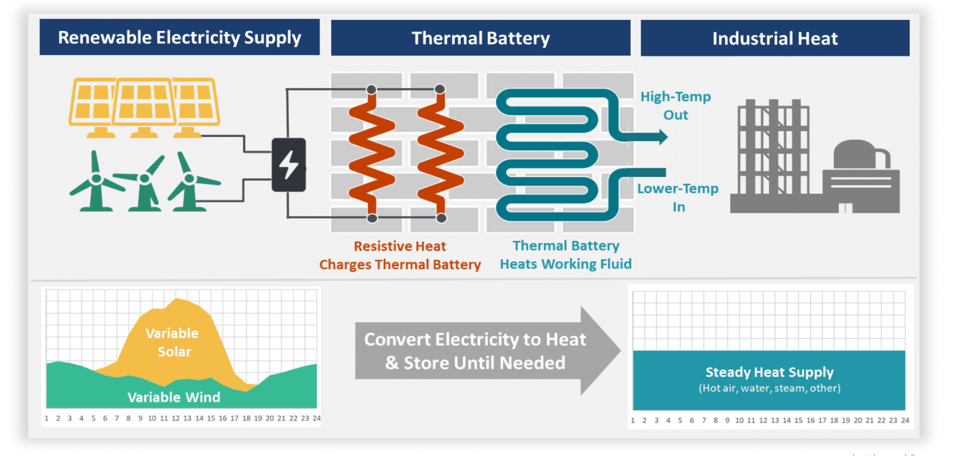
Thermal energy storage systems store energy for later use, and can take many forms, mainly distinguished by storage medium and energy source, including hot water tanks, electrified thermal batteries, molten salt, and thermochemical storage. Electrified thermal batteries in particular are an innovative form of thermal energy storage that convert grid or on-site renewable electricity into heat for immediate use or for use days or even weeks later (see Figure 3). Thermal batteries store heat in storage mediums, such as bricks, carbon blocks, rocks, or water tanks, that can maintain temperatures as high as 1,800°C. Commercially available and deployed thermal battery technologies can discharge heat up to 1,800°C. The ability of thermal batteries to both charge and provide heat on demand and utilize low-cost renewable energy during off-peak times when it might otherwise be curtailed helps maximize use of grid assets and increase reliability. Thermal batteries have commercial deployment potential across a wide variety of sectors, including refining, chemicals, food and beverage, pulp and paper, pharmaceuticals, and steel.

To learn more about thermal batteries, see RTC’s Thermal Battery Technology Assessment.

FIGURE 3: How Thermal Batteries Work

Solar Thermal

Solar thermal technologies capture radiant solar energy and directly convert it to heat. Non-concentrating solar thermal technologies can produce heat up to 100°C, while concentrating solar thermal (CST) technologies can currently produce heat up to 550°C, and theoretically up to 1,200°C. While solar photovoltaics (PV) turn about 20% of solar power into electricity, solar thermal systems are more efficient and can convert 40-80% of solar power into heat. Furthermore, solar thermal has the potential to meet up to 25% of U.S. industrial thermal energy demand and can be paired with other renewable thermal solutions like thermal batteries and heat pumps. It is particularly well suited for heating applications in food and beverage, pulp and paper, and consumer goods manufacturing sectors.

To learn more about solar thermal, see RTC’s Solar Thermal Action Plan.

Geothermal Energy

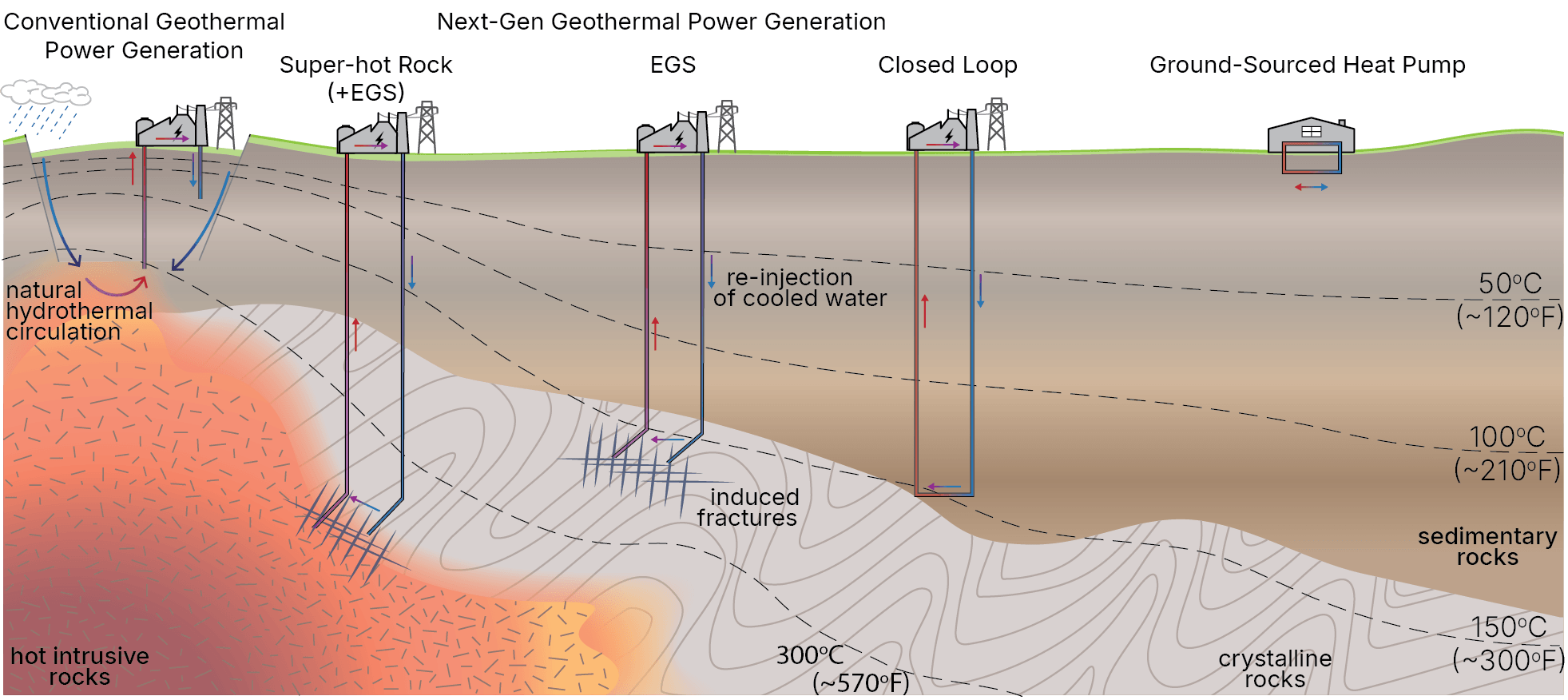
Geothermal energy technologies pull heat from hot rocks or aquifers inside the Earth’s crust (see Figure 4). While this heat is more commonly used for power generation (electricity), manufacturers can use the heat directly to power industrial processes. Conventional geothermal systems utilize naturally occurring hot water aquifers near Earth’s surface as a source of heat for buildings and industrial processes. Such systems are usually limited to geologically active areas like Iceland and the western U.S. However, next-generation technologies offer more opportunities to industrial manufacturers.

Next-generation geothermal is an umbrella term for two technologies: enhanced and advanced geothermal systems. Enhanced geothermal systems access geothermal heat from dry rock, injecting water in the rock to create fractures and extracting it to the surface for usage. Advanced geothermal systems circulate fluid through a sealed pipe in the hot rock to create a closed-loop system where there is no fluid exchange with underground rock. Both technologies enable access to geothermal heat in a broader range of locations and at temperatures in excess of 500°C.

FIGURE 4: Conventional & Next-Gen Geothermal Energy

Biomethane

Biomethane is a renewable fuel produced from the processing of gases captured from landfills, agricultural or food waste, wastewater treatment plants and other sources. It is purified to be equivalent to natural gas (methane) and can be used with conventional heating equipment and injected directly into natural gas pipelines. Biomethane can generate heat up to 1950°C and can serve nearly all industrial applications where natural gas is currently deployed, but the available supply of biomethane for industrial heat is constrained, in part because of strong competition from other sectors like transportation.

To learn more about how biomethane is being deployed at industrial facilities, see RTC case studies on projects at the University of California, AstraZeneca, and Perdue Farms.

Waste Biomass

Biomass is solid organic matter, largely plants and plant-derived materials, that can be burned for energy. Biomass combustion typically produces steam, which drives electricity production or provides process heating up to 1000°C. Biomass is a renewable fuel when it comes from sustainable, waste-derived sources, but factors such as poor land management and emissions during harvesting, transportation, and processing may increase the overall carbon footprint. Wood pellets and other biomass are currently the largest source of renewable industrial heating in the U.S., particularly in sectors like pulp and paper with readily available feedstocks from production wastes.

Green Hydrogen

Hydrogen is a versatile energy carrier and industrial input that can serve both as a high-temperature fuel and as a chemical feedstock. With appropriate equipment modifications, hydrogen can replace natural gas in certain high-temperature industrial processes, reaching temperatures above 2,000°C. In the United States today, hydrogen is used primarily as a chemical feedstock in industries such as ammonia and fertilizer production, petroleum refining, and other chemical manufacturing processes.

Green hydrogen refers to hydrogen produced by splitting water into hydrogen and oxygen using an electrolyzer powered by renewable electricity. Looking ahead, green hydrogen is a critical solution not only for feedstock applications, but also for high-temperature industrial processes in sectors such as chemicals, iron and steel, and cement. In these sectors, hydrogen can serve both as a combustion fuel for high-temperature heat applications and, in some cases, as a reactive input (e.g., for iron ore reduction or chemical synthesis). Because few renewable solutions can meet very high temperature and molecular process requirements, green hydrogen is considered a strategic option for addressing emissions in hard-to-electrify industrial applications.

To learn more about green hydrogen, see RTC’s Green Hydrogen Technology Assessment.