Over 70 business, government, academia, and community leaders convened over past year to develop roadmap that accelerates regional resilience to increasing extreme heat, wildfire, and flooding
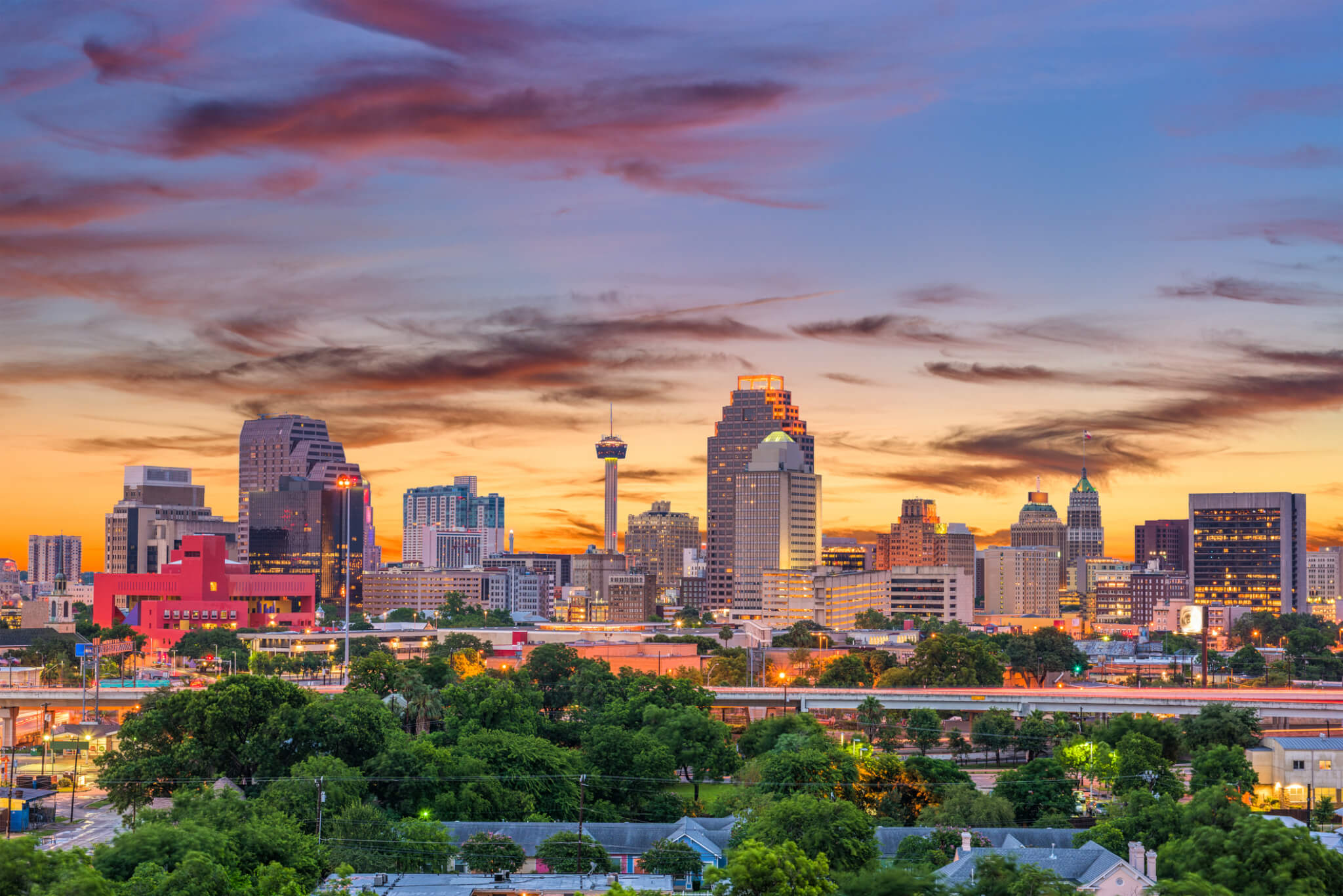
WASHINGTON—Today, the Center for Climate and Energy Solutions (C2ES) released a roadmap designed to accelerate resilience across South Central Texas in ways that will reduce the impact future wildfires, extreme heat, and flooding events will have on the area’s homes and businesses.
Read the South Central Texas Regional Action Roadmap here.
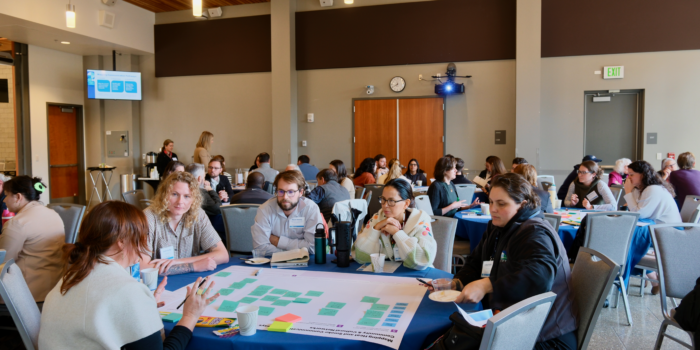
Launched by C2ES in 2025, the South Central Texas Climate Resilient Communities Accelerator is a two-year effort to convene local leaders and cross-sector partners to build and advance a regional roadmap of high-impact resilience actions to locally identified extreme weather hazards. Since September 2025, the South Central Texas Accelerator has convened a cohort of leaders representing government, businesses, community organizations, and academia from across the greater Austin-San Antonio region to identify key strategies that will strengthen regional resilience to extreme heat, wildfire, and flooding.
Grounded in insights from more than 70 South Central Texas local governments, businesses, communities, and organizations who participated in more than 100 scoping calls, in-person convenings, and virtual meetings through the Accelerator in 2026, the resulting Texas Resolve: A Regional Action Roadmap for Extreme Heat, Wildfire, and Flooding outlines a future vision in which growth is paired with reliable infrastructure, connected communities, a protected workforce, and accessible insurance. The roadmap builds on innovative resilience efforts already underway across the region and identifies opportunities to strengthen coordination, replicate proven approaches, and scale early successes to benefit communities throughout South Central Texas.
These priorities are reflected in the Roadmap’s five key action areas and high-impact, feasible multi-hazard strategies. The Accelerator cohort will continue refining and advancing these strategies over the coming year, and the Roadmap will serve as a long-term framework to guide and inspire resilience action across South Central Texas beyond the Accelerator’s two-year program.
Highlights include:
- Establishing a regional resilience network to coordinate pre-disaster planning, sharing, and investment across jurisdictions: Too often resilience actions deployed in one Texas community or county are not shared or coordinated with neighboring jurisdictions that experience the same hazards. A regional resilience governing structure can align priorities, share data and best practices, support local decision-making, facilitate development of public-private partnerships, and accelerate investments across urban and rural communities.
- Scaling nature-based solutions that deliver multihazard benefits: Nature-based solutions (NbS) can include tree canopy and green infrastructure that address heat and stormwater in urban centers, vegetative buffers that mitigate flooding in suburban areas, and fire-aware landscaping, shaded fuel breaks, and defensible space programs that reduce wildfire risk in communities at the wildland urban interface. A prioritized NbS project pipeline could be anchored in regional goals and replicable designs, enabled via new partnerships and financing, and designed to be accessible to individual landowners and businesses.
- Developing a phased multi-hazard home hardening initiative: The San Antonio–Austin corridor is one of the fastest-growing regions in the United States. While some population growth has increased density in heat-vulnerable urban areas, much of the development is pushing into the wildland-urban interface, placing more homes in terrain at higher risk of wildfire. Growth is also expanding into Texas Hill Country, which is especially vulnerable to flash flooding. Further, a significant share of existing housing stock predates modern standards for wildfire resistance, thermal performance, and flood protection. An integrated “one-stop shop” for homeowners and renters that includes resilience assessments, customized retrofit plans, technical assistance, vetted contractors, and financing pathways can better protect households from growing extreme heat, wildfire, and flooding risks, while delivering benefits such as lower electricity bills and reduced grid demand.
“Across our region, cities, businesses, and community organizations are already developing innovative solutions to address the growing challenges of wildfire, extreme heat, and flooding,” said Laura Patiño, Director of Department of Resilience and Sustainability with the City of San Antonio. “In San Antonio, we’ve seen firsthand the importance of building resilience from the neighborhood up. Our greatest opportunity now is to connect these efforts, learn from one another, and scale what works. By working together, we can strengthen our region’s ability to withstand future challenges while ensuring it continues to grow and thrive.”
“At its core, resilience is about making sure our communities have the resources, relationships, and support they need to navigate challenges,” said Marc Coudert, Climate Resilience and Adaptation Manager with the City of Austin. “The Accelerator has helped us build stronger connections across the region, and we’re looking forward to putting those partnerships to work in ways that make a real difference for residents.”
“Every day, firefighters and paramedics see how extreme heat, flooding, and wildfire threaten the people we serve, and building a more resilient South Central Texas takes all of us working together,” said Nick Perkins, Fire Chief of the Pflugerville Fire Department (Travis County Emergency Services District No. 2). “As the Accelerator moves into its second year, we look forward to turning this roadmap into practical actions that protect lives, strengthen communities, and help us prepare before the next emergency.”
“As a rural-serving organization, we recognize that climate challenges do not stop at county lines, and neither should our solutions,” said Bastrop County Cares Executive Director Dr. Norma Mercado. “The development of a regional roadmap and shared toolkits is especially valuable because it provides practical resources while connecting organizations across communities and sectors. By working together, we can move beyond individual efforts toward a more connected, coordinated, and resilient region.”
“Our climate is changing at an unfamiliar pace, our weather extremes are exceeding expectations, and communities of all sizes across Texas are experiencing unprecedented social and economic challenges related to both,” said Dr. Ronald Hagelman III, professor of geography and environmental studies at Texas State University. “The good news is that Texans are resilient by nature. We have the talent, experience, and institutional support to ensure that all Texans have access to safe communities, stable economies, and the collective confidence to plan for tomorrow’s growth and development.”
“Communities across South Central Texas are innovative and resourceful when it comes to building efforts to combat extreme weather. The Accelerator helps connect communities to work more effectively together, while expanding a network of cross-sector partners,” said Libby Zemaitis, Director of Resilience Programs and Policy at C2ES. “This new roadmap presents the top multi-hazard, multi-benefit strategies, seeking to attract new resources and partnerships to accelerate action and impact for communities and businesses across the region.”
About C2ES: The Center for Climate and Energy Solutions—or C2ES—champions policies and technologies that foster thriving economies and shared prosperity, founded on abundant, affordable, and reliable clean energy and a safe climate. Founded in 1998 as the Pew Center on Global Climate Change, C2ES is known worldwide as a thought leader and trusted convener. We work with policymakers and leading businesses in the U.S. and around the world to forge durable, effective, and ambitious solutions to climate and energy challenges.