The rise of artificial intelligence (AI)–driven data centers presents a generational opportunity to attract significant capital for clean firm power technologies. These technologies can provide low- or zero-carbon power on demand and thus are critical to achieving economic prosperity and environmental goals. Through a series of case studies, this paper examines why some hyperscalers— companies that own and operate large, globally distributed data centers—are pursuing clean firm technologies despite their higher upfront costs and longer development timelines compared with conventional firm options. It also explores what these investments could mean for the U.S. power system amid rising electricity demand. The paper finds that:
U.S. electricity demand is rising once again after remaining flat for two decades.1“After more than a decade of little change, U.S. electricity consumption is rising again,” U.S. Energy Information Administration, May 13, 2025, https://www.eia.gov/todayinenergy/detail.php?id=65264. A 2025 estimate projects demand growth of 1.5 to 1.7 percent annually over the next 15 years, resulting in a cumulative increase of approximately 25 to 29 percent by 2040.2Ben King et al., Taking Stock 2025 (New York, N.Y.: Rhodium Group, 2026), https://rhg.com/research/taking-stock-2025. While the growth of AI-driven data centers has garnered significant attention as a leading factor to rising electricity demand—alongside reshoring manufacturing and growing electrification in sectors like transportation, buildings, and industry—estimating their associated future power needs remains challenging.3U.S. Department of Energy, How Clean Energy is the Solution to Rising Electricity Demand, Liftoff Topic Brief (Washington, D.C.: U.S. Department of Energy, 2024), https://yardsale.energy/wp-content/uploads/2025/05/DOE-Liftoff-Demand-Growth-Topic-Brief.pdf. Much of this uncertainty is tied to the pace at which new AI data centers can be built and the long-term demand growth of AI services. Supply constraints, including material shortages of semiconductors, storage chips, and copper can slow data center development. Additional headwinds come from tariffs; inflation; high interest rates; labor constraints; limited availability of engineering, procurement, and construction contractors; regulatory and permitting hurdles; and community opposition. At the same time, ongoing improvements in AI system efficiency and load flexibility may moderate future electricity demand from these same facilities.
Despite these uncertainties, several analyses project substantial growth in data center electricity consumption, though ranges vary. One 2026 analysis estimates that data centers could consume 9–17 percent of U.S. electricity generation by 2030—more than double current use.4Geoff Blanford, et al., Powering Intelligence 2026: Updated Scenarios of U.S. Data Center Electricity Use and Power Strategies (Palo Alto, C.A.: Electric Power Research Institute, 2026), https://www.epri.com/research/products/000000003002034696. Currently, AI workloads are estimated to account for up to 25 percent of data center electricity demand.5Geoff Blanford, et al., Powering Intelligence 2026: Updated Scenarios of U.S. Data Center Electricity Use and Power Strategies. Based on these estimates, AI workloads alone could account for roughly 2–4 percent of total U.S. electricity demand by 2030, though the actual share could be significantly higher as AI workloads continue to grow as a proportion of overall data center electricity consumption.6 Geoff Blanford, et al., Powering Intelligence 2026: Updated Scenarios of U.S. Data Center Electricity Use and Power Strategies.
After making significant progress on decarbonization in recent decades, the U.S. power sector faces a critical question: how can it continue reducing emissions while ensuring reliable and affordable electricity amid rising demand? The answer will depend, in part, on how much of that growing demand is met by clean firm power technologies, which can ramp electricity generation up or down to meet demand—known as dispatchable generation in industry parlance—while producing low- or zero-carbon dioxide emissions. While definitions of clean firm technologies vary, this paper focuses on long-duration energy storage (LDES) paired with clean energy sources, traditional and advanced nuclear, next-generation geothermal, biomass energy with carbon capture and storage (BECCS), and natural gas with carbon capture and storage (CCS).7The emissions reduction benefits of natural gas with CCS depend not only on the carbon dioxide capture rate, but also on addressing fugitive methane emissions across the natural gas value chain. Methane, the primary component of natural gas, is a highly potent greenhouse gas with a global warming potential far greater than that of carbon dioxide over the short term. Therefore, if natural gas paired with carbon capture is to be considered a clean firm power resource, robust technologies and policies must be implemented to minimize methane emissions across the natural gas value chain, including in production, gathering and processing, transmission, and distribution. The rise of AI-driven data centers presents a once-in-a-generation opportunity to channel substantial investment toward scaling these technologies that will be critical to meeting system-wide goals. Through their investments in AI-connected clean firm projects, leading hyperscalers—companies that own and operate large, globally distributed data centers—are helping reduce financing risk for utilities and technology providers.
Despite this potential, the climate legacy of AI-driven data centers remains uncertain. Hyperscalers must meet rapidly growing electricity demand today, not years from now, to support their AI operations, which carries significant economic and national security implications. Moreover, although leading hyperscalers are generally more willing than other customers to pay a premium for cleaner technologies, costs remain a key factor for them. While some hyperscalers are investing in clean firm technologies, unabated natural gas followed by intermittent renewable generation remain the dominant sources of electricity for data centers in the United States, though energy portfolios vary across individual hyperscalers.8 Davide D’Ambrosio, et al., Energy supply for AI (Paris, France: International Energy Agency, 2025), https://www.iea.org/reports/energy-and-ai/energy-supply-for-ai. As a conventional firm resource, natural gas is mature, dispatchable, and generally faster to deploy and less costly than clean firm alternatives, though it is also more emissions intensive. AI-driven demand may help accelerate clean firm power adoption over time; however, targeted policy support is needed now to accelerate energy project timelines, reduce technology costs, protect ratepayers, and ultimately help clean firm technologies compete and scale more effectively. Paired with AI-driven investments, policy support can help scale clean firm technologies more rapidly, enabling their earlier adoption as major power sources for both AI data centers and the broader power system.
The “footprint” and “handprint” concepts provide a useful framework for assessing AI’s overall environmental impact. Footprints capture the negative environmental impacts associated with an activity, while handprints measure the positive benefits it enables.9 Joseph H.A. Guillaume, et al., “Giving Legs to Handprint Thinking: Foundations for Evaluating the Good We Do,” American Geophysical Union, Volume 8, Issue 6 (June 2020), https://agupubs.onlinelibrary.wiley.com/doi/full/10.1029/2019EF001422. Much of the public debate has focused on AI’s footprint, including the electricity and water consumption associated with operating data centers, their effects on local air quality, and the environmental impacts of manufacturing highperformance computing hardware for those facilities. These critiques are well founded. Equally important, however, is AI’s potential handprint. This paper examines one potential handprint impact of AI: the ability of AI-driven data center demand to catalyze investment in clean firm technologies. Future research could explore broader handprint outcomes associated with the application of AI itself, including its potential to support the clean energy transition by accelerating research and development (R&D), streamlining permitting, and improving grid planning and management.
Although data centers have existed since the 1940s, the rise of AI has dramatically increased their power demand, as AI-focused facilities require more energy per square foot than traditional data centers.10 Stephanie Susnjara and Ian Smalley, “What is a data center?,” IBM (blog), accessed May 8, 2026, https://www.ibm.com/think/topics/data-centers; see also Bhargs Srivathsan, et al., AI power: Expanding data center capacity to meet growing demand (New York, N.Y.: McKinsey & Company, 2024), https://www.mckinsey.com/industries/technology-media-and-telecommunications/our-insights/ai-power-expanding-data-center-capacity-to-meet-growing-demand; see also Martin Stansbury, et al., Can US infrastructure keep up with the AI economy?, (London, England: Deloitte, 2025), https://www.deloitte.com/us/en/insights/industry/power-and-utilities/data-centerinfrastructure-artificial-intelligence.html. Just a decade ago, a 30-MW data center would have been considered large.11Bhargs Srivathsan, et al., AI power: Expanding data center capacity to meet growing demand.Today, AI data centers with capacities of up to 11 GW are under development, exceeding New York City’s peak electricity demand during an extreme heat wave.12 Christa Marshall, “Rick Perry-led company eyes DOE loan for massive AI project,” E&E News, September 9, 2025, https://www.eenews.net/articles/rick-perry-led-company-eyes-doe-loan-formassive-ai-project/; see also Karen Imas et al., Meeting New York City’s Energy Demand Challenge: How Local Distributed Energy Can Strengthen Energy Security, Lower Costs, and Improve Resilience (New York, N.Y.: Office of the NYC Comptroller, 2026), https://comptroller.nyc.gov/reports/meetingnew-york-citys-energy-demand-challenge. The size of AI data centers may evolve as computing efficiency and load flexibility improve and as some AI inference workloads shift toward smaller, more distributed facilities. However, the growing demand for AI in aggregate is likely to significantly increase electricity consumption from these facilities in the near and medium term.
With current technologies, significant amounts of water are typically needed for data centers to cool the hardware used for training and deploying AI models.13 Adam Zewe, “Explained: Generative AI’s environmental impact,” MIT News, January 17, 2025, https://news.mit.edu/2025/explained-generative-ai-environmental-impact-0117. One estimate projects that from 2024 and 2030, U.S. AI servers could have an annual water footprint of 731 to 1,125 million cubic meters— enough water each year to meet the annual needs of more than 1 to 2 million U.S. households.14 Tianqi Xiao, et al., Environmental impact and net-zero pathways for sustainable artificial intelligence servers in the USA, Nature Sustainability 8 (November 2025): 1541–1553, https://www.nature.com/articles/s41893-025-01681-y; see also WaterSense, “Indoor Water Use in the United States,” U.S. Environmental Protection Agency, accessed October 30, 2026. While there are options to reduce water consumption in AI data centers, each comes with its own tradeoffs. For instance, air cooling can lower water usage, but results in greater electricity consumption.15 Miguel Yañez-Barnuevo, Data Centers and Water Consumption (Washington, D.C.: Environmental and Energy Study Institute, 2025), https://www.eesi.org/articles/view/data-centers-and-waterconsumption. Similarly, closed-loop cooling systems can conserve water, but require higher installation costs.16Christopher Tozzi, “What Is Closed-Loop Cooling, and When Should Data Centers Use It?,” Data Center Knowledge, October 21, 2024, https://www.datacenterknowledge.com/cooling/what-isclosed-loop-cooling-and-when-should-data-centers-use-it-.
Data centers can also contribute to local air pollution, particularly through diesel generators that are often used for backup power. 17Lelia Marie Hampton and Eric Nost, “Communities Close to EPA-Regulated Data Centers Face Heightened Air Pollution,” Environmental Data & Governance Initiative, October 28, 2025, https://envirodatagov.org/communities-close-to-epa-regulated-data-centers-face-heightened-air-pollution. These generators emit pollutants, such as nitrogen oxides and diesel particulate matter, which are linked to respiratory illnesses and other adverse health outcomes.18 “Health effects from diesel pollution,” State of Washington Department of Ecology, accessed July 29, 2026, https://ecology.wa.gov/air-climate/air-quality/vehicle-emissions/diesel-emissions/healthimpacts. Data centers that rely on unabated natural gas–powered generation can also affect local air quality, as nitrogen oxides are among the primary pollutants produced during combustion.
In addition, data centers require high-performance computing hardware, which creates additional impacts from manufacturing.19Adam Zewe, “Explained: Generative AI’s environmental impact.” Semiconductors are the foundational materials used to make chips, which enable data processing in everything from cell phones to data centers. Their manufacturing requires large quantities of raw material, water, and energy, and generates substantial waste and emissions.20 Marcello Ruberti, “The chip manufacturing industry: Environmental impacts and eco-efficiency analysis,” Science of The Total Environment 858, part 2 (February 2023): 159873, https://www.sciencedirect.com/science/article/abs/pii/S004896972206973X.
AI has the potential to play a critical role in the scientific discovery and R&D of clean energy technologies. At Carnegie Mellon University, researchers are utilizing AI to accelerate the discovery-to-deployment pathway of innovative materials solutions across the energy sector, including through the automation of critical mineral extraction and material design.21 Elizabeth Dickey, Mohadeseh Taheri-Mousavi, and Emma Strubell, AI Materials Design: Enabling the Next Generation of US Energy Infrastructure (Pittsburgh, P.A.: Carneige Mellon University, 2025), https://live-cmu-flagship-main.pantheonsite.io/sites/default/files/2025-08/AI%20Materials%20Design%20Enabling%20the%20Next%20Generation%20of%20US%20Energy%20Infrastructure_02.pdf. Additionally, the U.S. Department of Energy (DOE) has identified AI as a tool to accelerate nuclear fuel testing, including by optimizing material selection to reduce waste.22Keith J. Benes, Joshua E. Porterfield, and Charles Yang, AI for Energy (Washington, D.C.: U.S. Department of Energy, 2024), https://www.energy.gov/sites/default/files/2024-04/AI%20EO%20Report%20Section%205.2g%28i%29_043024.pdf. In the carbon capture space, the DOE has also highlighted AI’s potential to enable the discovery of novel sorbents or materials that capture carbon dioxide.23Keith J. Benes, Joshua E. Porterfield, and Charles Yang, AI for Energy. Finally, AI could help generate models that integrate geospatial analytics to optimize carbon dioxide transport, as well as identify and manage suitable geothermal sites using satellite imagery and seismic data.24 Keith J. Benes, Joshua E. Porterfield, and Charles Yang, AI for Energy.
Public and private sector actors have begun to explore early initiatives that use AI to help accelerate the permitting process, a longstanding bottleneck that can delay the deployment of energy infrastructure, including clean energy projects. The Pacific Northwest National Laboratory, in partnership with the DOE’s Office of Policy, is developing PermitAI—an AI-enabled effort that aggregates decades of National Environmental Policy Act documents into a public, machinereadable dataset to improve the speed, consistency, and quality of environmental reviews.25Office of Policy, “Faster, Better Permitting with PermitAI,” U.S. Department of Energy, July 10, 2025, https://www.energy.gov/policy/articles/faster-better-permitting-permitai. In April 2025, PJM interconnection also launched a multiyear partnership with Tapestry to streamline the grid operator’s interconnection process using AI-powered tools.26 PJM, Google, & Tapestry Join Forces To Apply AI To Enhance Regional Planning, Generation Interconnection, PJM Inside Lines, April 10, 2025, https://insidelines.pjm.com/pjm-google-tapestryjoin-forces-to-apply-ai-to-enhance-regional-planning-generation-interconnection/; see also Sonal C. Patel, “PJM Taps Google and Tapestry to Use AI for Grid Interconnection Planning,” Power, April 10, 2025, https://www.powermag.com/pjm-taps-google-and-tapestry-to-use-ai-for-gridinterconnection-planning. These tools are intended to automate application intake and data verification, unify disparate grid modeling databases into a single collaborative platform, and support faster integration of new energy resources.27 PJM, Google, & Tapestry Join Forces To Apply AI To Enhance Regional Planning, Generation Interconnection; see also Sonal C. Patel, “PJM Taps Google and Tapestry to Use AI for Grid Interconnection Planning.”
Another promising application of AI is in grid planning and management, facilitating clean energy integration while improving grid reliability and resilience. AI has the potential to help forecast future electricity demand, anticipate how renewable energy sources will perform, and identify the best locations for them to support smarter, more efficient grid expansion.28 Indu Nambiar, “Artificial Intelligence – Exploring its use in grid modernization,” California ISO (blog), September 30, 2024, https://www.caiso.com/about/news/energy-matters-blog/artificialintelligence-exploring-its-use-in-grid-modernization. Additionally, AI could be used to coordinate distributed energy resources during grid disruptions, enabling backup power during emergencies like extreme-weather events.29 Shane Londagin, Unlocking AI’s Grid Modernization Potential (Washington, D.C., Third Way, 2025), https://www.thirdway.org/memo/unlocking-ais-grid-modernization-potential. As climate change drives more frequent and severe extreme weather events, AI can also play a proactive role in improving outage prediction by enabling more informed decision-making by grid planners and operators.30 Keith J. Benes, Joshua E. Porterfield, and Charles Yang, AI for Energy: Opportunities for a Modern Grid and Clean Energy Economy. Realizing these benefits, however, will require robust cybersecurity safeguards and governance frameworks to ensure that the integration of AI in grid planning and management does not introduce new vulnerabilities to critical energy infrastructure.
Clean firm technologies offer several benefits, including high utilization rates and reliable operation regardless of weather.31 Wilson Ricks and Kasparas Spokas, Clean Firm Electricity Technologies: What, Why, and How (Boston, M.A.: Clean Air Task Force, 2026), https://www.catf.us/resource/clean-firm-electricitytechnologies-why-what-how. These characteristics minimize the need to overbuild capacity and energy storage, reduce land-use change, decrease transmission buildout, and ultimately lower the systemwide cost compared to electric grids that rely solely on variable renewables and batteries.32 Wilson Ricks and Kasparas Spokas, Clean Firm Electricity Technologies: What, Why, and How. Wind and solar, however, will continue to play a critical role in power sector decarbonization due to their lower upfront costs and growing deployment. When paired with short-duration energy storage, such as lithium-ion batteries, variable renewables (e.g., wind and solar) can help balance daily fluctuations in electricity supply and demand and, in some cases, can be deployed as quickly as, or more quickly than, fossil fuel generation.33Anna Broughel, “Flexible Data Centers Soon To Run On Renewables And Energy Storage,” Forbes, February 16, 2026, https://www.forbes.com/sites/annabroughel/2026/02/16/flexible-datacenters-soon-to-run-on-batteries-and-renewables/; see also “Speed to Deploy,” Solar Energy Industries Association, June 22, 2026, https://seia.org/research-resources/speed-to-deploy. However, short-duration energy storage serves a different role than clean firm power. While it is effective for improving dispatchability over the course of hours, extending lithium-ion storage to durations needed for multi-day reliability is unlikely to be economically optimal.34 Susan Taylor and Henrique Ribeiro, “The risks of leaving long-duration energy storage short of money,” S&P Global, June 24, 2024, https://www.spglobal.com/energy/en/news-research/blog/electric-power/062824-the-risks-of-leaving-long-duration-energy-storage-short-of-money. Instead, research suggests that a portfolio combining clean firm technologies, variable renewables, and short-duration energy storage could reduce total electricity costs in a fully decarbonized electric grid by 10–62 percent.35Nestor A. Sepulveda, et al., “The Role of Firm Low-Carbon Electricity Resources in Deep Decarbonization of Power Generation,” Joule volume 2, issue 11 (November 2018): 2403-2420, https://www.sciencedirect.com/science/article/pii/S2542435118303866?via%3Dihub
Because AI data centers require continuous power for extended periods of time and often operate at very high utilization loads, hyperscalers are prioritizing access to reliable, on-demand sources of electricity. While emerging tools (e.g., Emerald AI’s Conductor platform) are creating new opportunities to increase the load flexibility of AI data centers, conventional firm resources remain the preferred option for meeting these current operational requirements.36Geoff Blanford, et al., Powering Intelligence 2026: Updated Scenarios of U.S. Data Center Electricity Use and Power Strategies; see also Shayle Kann, “The rise of flexible data centers,” Latitude Media, April 9, 2026, https://www.latitudemedia.com/news/catalyst-the-rise-of-flexibledata-centers. Unabated natural gas generation without carbon capture is a commonly deployed conventional firm resource and the primary source of electricity for U.S. data centers.37 Davide D’Ambrosio, et al., Energy supply for AI.
Nevertheless, the major hyperscalers, including Google, Meta, Amazon, and Microsoft, have sustainability commitments that strengthen their willingness to pursue clean firm technologies despite their higher upfront costs and longer development timelines relative to conventional firm options.38 Meta, 2025 Sustainability Report (Menlo Park, C.A.: Meta, 2025), https://sustainability.atmeta.com/2025-sustainability-report/; see also Amazon, 2025 Sustainability Report (Seattle, W.A.: Amazon, 2026), https://sustainability.aboutamazon.com/2025-amazon-sustainability-report.pdf; see also Microsoft, 2025 Environmental Sustainability Report (Redmond, W.A.: Microsoft, 2025), https://www.microsoft.com/en-us/corporate-responsibility/sustainability/report/; see also Google, 2025 Environmental Report (Mountain View, C.A.: Google, 2025), https://sustainability.google/reports/google-2025-environmental-report. Some hyperscalers, such as Google, have also committed to matching clean electricity purchases to the hour and location of use.39 Sundar Pichai, “Our third decade of climate action: Realizing a carbon-free future,” Google, September 14, 2020, https://blog.google/company-news/outreach-and-initiatives/sustainability/ourthird-decade-climate-action-realizing-carbon-free-future. Clean firm technologies can play a critical role in meeting this goal, as variable renewables do not generate electricity continuously (e.g., solar photovoltaic cells do not generate electricity at night). While hyperscalers can procure variable renewable energy credits to align with 24/7 hourly demand—a topic outside the scope of this paper—clean firm technologies may be necessary to meet that demand on a location-specific basis.
Electric utilities also have reasons to procure clean firm technologies, including reliability needs, state clean electricity standards, investor interests, and corporate emissions reduction goals. The grid is currently highly reliable, with the average U.S. customer experiencing only about 1.3 electricity interruptions and five hours of total outage time per year between 2013 and 2021.40 National Renewable Energy Laboratory, “Explained: Reliability of the Current Power Grid,” NREL, January 2024, https://research-hub.nlr.gov/en/publications/explained-reliability-of-the-currentpower-grid. As utilities work to meet growing electricity demand while pursuing decarbonization goals, clean firm resources will be essential to maintaining that reliability. Complementary priorities are already driving greater collaboration between utilities and leading hyperscalers to deploy these solutions. Moving forward, stronger private-sector commitments to front-of-the-meter power generation for data centers—generation located on the utility side of the meter—could help deepen these partnerships and enhance grid reliability and emissions reductions through a wider deployment of clean firm technologies.
Over the past few years, there have been several announcements connecting AI-driven data centers to clean firm power projects. Emerging technologies, including BECCS, LDES, advanced nuclear, and next-generation geothermal, are attracting increased attention from leading hyperscalers and utilities. Meanwhile, commercially available but higher-cost technologies are also regaining traction, particularly traditional nuclear, which has seen several plant closures in the United States, and carbon capture, which has recently been affected by DOE’s project cancellations.41 “U.S. Nuclear Reactor Shutdown List,” U.S. Energy Information Administration, accessed May 28, 2026, https://www.eia.gov/nuclear/reactors/shutdown/; see also Ethan Howland, “DOE cancels $3.7B in carbon capture, decarbonization awards,” Utility Dive, May 30, 2025, https://www.utilitydive.com/news/doe-cancel-carbon-capture-decarbonization-awards-grants/749409.
Some hyperscalers are providing valuable financial support for clean firm technologies through innovative tariff structures and long-term power purchase agreements. These instruments are helping accelerate deployment of clean firm generation, as they can reduce investment exposure for utilities and technology providers, demonstrate proof of concept to build investor confidence, and support higher-cost technologies as they scale and move down the cost curve. The era of AI presents a pivotal opportunity to speed the buildout of clean firm power, enabling these technologies to meet rising electricity demand while advancing power sector decarbonization.
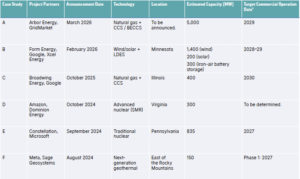
Below (and summarized in Table 1) is a selection of clean firm technology projects announced in recent years that are connected to the growing electricity demand from AI and data centers. These case studies explore the benefits of various clean firm pathways— both in meeting the needs of AI-driven data centers and in advancing broader system goals, such as decarbonization, grid reliability, and affordability. The case studies draw on publicly available information. In addition, the analysis and interpretation in this paper were informed by several interviews with key stakeholders of the featured projects. These conversations provided context and insights that helped shape the case studies, though interviewees are not directly quoted or attributed. It is important to note that project announcements do not guarantee deployment. Many of the featured technologies continue to face significant implementation barriers.
baseload power through flexible turbine technology designed to operate with either natural gas and CCS or BECCS. Arbor’s approach centers on its use of modular gas turbines, which the company claims can be deployed more quickly than traditional turbines.42 Keerthi Vedantam, “Who’s Who in Tech: Arbor Energy is Cooling the Market,” Los Angeles Business Journal, March 16, 2026, https://labusinessjournal.com/special-reports/whos-who-in-techarbor-energy-is-cooling-the-market. This rapid deployment could be especially attractive to data center customers who must prioritize quick access to power, particularly as original equipment manufacturers currently quote lead times of five to seven years for traditional gas turbines—a backlog caused by persistent post-pandemic supply chain constraints.43 Jared Anderson, “US gas-fired turbine wait times as much as seven years; costs up sharply,” S&P Global, May 20, 2025, https://www.spglobal.com/energy/en/news-research/latest-news/electricpower/052025-us-gas-fired-turbine-wait-times-as-much-as-seven-years-costs-up-sharply. Because they operate at a lower firing temperature, Arbor can use 3D-printed turbines, which the company argues enable a more flexible supply chain44 Darrell Proctor, “The POWER Interview: Former SpaceX Exec Drives Arbor’s Turbine Innovation,” Power, February 24, 2026, https://www.powermag.com/the-power-interview-former-spacex-execdrives-arbors-turbine-innovation. For data center customers with sustainability commitments, Arbor also claims a carbon capture rate of up to 98 percent through oxy-fuel combustion—a combustion approach that produces a highly concentrated carbon dioxide stream that is easier to capture.45“Clean baseload power engineered end-to-end,” Arbor Energy, accessed June 9, 2026, https://arbor.co/technology.If the company achieves this capture rate, it would exceed the typical 90 percent capture rate typically targeted by conventional gas turbines with CCS, enabling the delivery of clean firm power.46 CEBA, Carbon Capture and Storage (CCS) for Natural Gas Power (Washington, D.C.: CEBA, 2026), https://ceba.org/wp-content/uploads/2026/04/CEBA_CCS_Primer_041526-FINAL2.pdf. In cases where appropriately certified biomass is used as the fuel source, the integration of carbon capture could enable net-negative carbon dioxide emissions.47 “BECCS,” Carbon Gap, accessed July 15, 2026, https://tracker.carbongap.org/glossary/beccs.
In March 2026, Arbor signed an agreement with GridMarket—an energy optimization platform that connects clean energy projects with sites and buyers (e.g., hyperscalers).48 Arbor Energy Staff, “Data Center Dynamics: Arbor partners with GridMarket to deliver 5 GW for US data centers,” Arbor Energy (blog), March 26, 2026, https://arbor.co/updates/press/data-centerdynamics-arbor-gridmarket-5gw. Under the agreement, Arbor announced plans to supply up to 5,000 MW of power to the data center sector, with deliveries expected to begin in 2029.49 Arbor Energy Staff, “Data Center Dynamics: Arbor partners with GridMarket to deliver 5 GW for US data centers.”While Arbor has not specified the types of data centers that will be served through this partnership, the agreement appears aligned with growing AI-related demand, as GridMarket has highlighted “speed to power” or timely electricity supply as a critical factor in supporting AI infrastructure development.50GridMarket, “Power Procurement Strategy in the Current AI-Driven Data Center Landscape,” GridMarket (blog), March 25, 2026, https://gridmarket.com/power-procurement-strategy-in-thecurrent-ai-driven-data-center-landscape.
A partnership with a platform like GridMarket is particularly valuable for early-stage companies like Arbor. Despite strong venture capital backing in its early funding round, Arbor still faces many of the challenges common to emerging technology companies.51 Arbor Energy, “Arbor Energy raises $55M Series A to scale clean baseload power,” press release October 21, 2025, https://arbor.co/updates/company/arbor-energy-raises-55m-series-a-to-scaleclean-baseload-power. Namely, both the company’s pilot and commercial demonstration projects are still underway, which may limit appeal for offtakers that favor nthof- a-kind (NOAK) technologies—those that have been successfully deployed at commercial scale multiple times. By facilitating forward purchase agreements with early adopters, GridMarket can help Arbor demonstrate its technology at commercial scale and accelerate its path to broader market adoption. If Arbor can prove its ability to serve AIdriven data centers, it could eventually expand into more risk-averse markets, including utilities and industrial customers.
One barrier to the development of carbon capture projects like those planned by Arbor is the sequestration component, which remains a particular challenge for bespoke projects and smaller companies that lack established transport and storage infrastructure. Class VI well operators, which develop and manage the geologic storage sites needed for CCS, must have confidence that sufficient volumes of captured carbon dioxide will be available to justify the economics of well development. At the same time, carbon capture developers often need firm commitments for transportation and storage before they can move projects forward. This creates a classic chicken-and-egg challenge: storage developers need guaranteed carbon dioxide volumes to justify investment, while capture projects need available storage capacity before they can proceed. The result is a mutually reinforcing cycle that can slow deployment of both capture and storage infrastructure.
Ultimately, this cycle impacts project economics since eligibility for the section 45Q tax credit depends on permanently storing captured carbon dioxide (unless it is directed to a qualifying utilization pathway or enhanced oil recovery). As a result, the underlying value of the power depends on the ability to securely store the captured carbon dioxide. In addition to tax credit eligibility, this matters because some energy buyers may require verification that the electricity produced meets low- or zero-carbon dioxide emissions.
CCS projects like this one—those driven by demand from AI data centers—could help break the reinforcing sequestration cycle by creating a reliable source of captured carbon dioxide volumes that supports investment in shared transportation and storage infrastructure. Although little information is currently available about where these data center projects will ultimately be sited, their viability may depend on geographic clustering that enables shared storage sites and reduces transportation requirements. More broadly, continued federal support for carbon management infrastructure will likely be necessary to expand transportation and storage capacity and unlock wider deployment of CCS.
As was the case with scaling variable renewable energy, Google has been a leader in supporting emerging clean firm technologies through innovative financing structures. In February 2026, Google announced plans to build a data center in Pine Island, Minnesota.52 Brianna Kobor, “Google is coming to Minnesota and advancing clean energy goals,” Google (blog), February, 24, 2026, https://blog.google/innovation-and-ai/infrastructure-and-cloud/globalnetwork/data-center-pine-island.The project includes a clean transition tariff (CTT) agreement proposed jointly with the local utility, Xcel Energy.53Brianna Kobor, “Google is coming to Minnesota and advancing clean energy goals.” CTTs are rate structures that enable large customers (e.g., Google) and utilities (e.g., Xcel Energy) to collaborate on integrating emerging energy technologies with certain attributes (e.g., clean firm) into the system, with the customer agreeing to pay a premium for the selected resources.54 Caitlin Flanagan, “Clean Transition Tariffs: An innovative way to accelerate power sector emission reductions,” Center for Climate and Energy Solutions (blog), August 20, 2024, https://www.c2es.org/2024/08/clean-transition-tariffs-an-innovative-way-to-accelerate-power-sector-emissionreductions. This specific project includes a local Minnesota version of a CTT known as the Clean Energy Accelerator Charge (CEAC).55 Brianna Kobor, “Google is coming to Minnesota and advancing clean energy goals.” Under the CEAC, Google’s utility rates will cover the full revenue requirement for 1,400 MW of wind, 200 MW of solar, and 300 MW of iron-air batteries (a 100-hour, multi-day storage system from LDES developer Form Energy).56 Brianna Kobor, “Google is coming to Minnesota and advancing clean energy goals.” Reports indicate that these energy projects are expected to come online between 2028 and 2029.57Spencer Kimball, “Google to build data center in Minnesota with new solar, wind power and battery storage,” CNBC, February 24, 2026, https://www.cnbc.com/2026/02/24/google-to-builddata-center-in-minnesota-with-solar-wind-and-battery-storage.html. Google has publicly stated that the agreement supports its goal of expanding AI and cloud capabilities in a way that provides long-term value for the communities in which it operates.58 Xcel Energy, “Xcel Energy to power new Google data center in Minnesota,” press release, February 24, 2026, https://newsroom.xcelenergy.com/news/xcel-energy-to-power-new-googledata-center-in-minnesota.
The DOE defines LDES as any system that can store energy for 10 or more hours.59 Katheryn Scott et al., Pathways to Commercial Liftoff: Long Duration Energy Storage (Washington, D.C.: U.S. Department of Energy, 2023), https://yardsale.energy/wp-content/uploads/2025/05/DOE-Liftoff-LDES-2023.pdf. While wind and solar are intermittent renewable resources, pairing them with LDES can enable clean firm power. LDES is also essential for providing sustained backup power during prolonged periods of high electricity demand or grid-stress events, helping to prevent blackouts, safeguard lives, and reduce economic disruption.60 Diandra Angiello, Reliability in Reserve: Long-Duration Energy Storage for an Abundant American Energy Future (Washington, D.C.: Center for Climate and Energy Solutions, 2025), https://www.c2es.org/document/reliability-in-reserve-long-duration-energy-storage-for-an-abundant-american-energy-future.Despite these benefits, most integrated resource plan modeling does not fully capture the value and need for LDES.61 Center for Climate and Energy Solutions, Policy Recommendations to Unlock the Value of LongDuration Energy Storage (Washington, D.C.: C2ES, 2024), https://www.c2es.org/document/policy-recommendations-to-unlock-the-value-of-long-duration-energy-storage.
The purpose of the CEAC is to ensure that the costs of developing new clean firm resources to serve Google’s AI and cloud capabilities are not shifted onto local ratepayers. It also enables Xcel Energy to pursue emerging technologies like LDES, which utilities are often hesitant to adopt due to leastcost procurement requirements driven by public utility commissions (PUCs).62 Center for Climate and Energy Solutions, Policy Recommendations to Unlock the Value of LongDuration Energy Storage. Without the CEAC, Xcel Energy would be unable to cost-effectively invest in LDES under standard resource planning.63 Northern States Power Company (Xcel Energy), “Petition for Approval of Contracts
for Provision of Electric Service to a New Large Customer Project,” Minnesota Public Utilities Commission, Docket No. E002/M-26-170, filed April 14, 2026, https://efiling.web.commerce.state.mn.us/documents/%7BF043919D-0000-C91D-B54E-E5A278BD3E11%7D/download?contentSequence=0&rowIndex=14.
As costs fall, Xcel Energy can build experience integrating emerging technologies like LDES into its portfolio, positioning them to serve a broader range of demand beyond AI-driven data centers over time.
Despite the potential of this data center project to scale a clean firm technology, it faces several barriers to implementation. Both grid-connected large loads— electricity customers whose peak demand can impose significant operational costs or create system-wide reliability and stability risks—and electricity generation assets must contend with extensive interconnection processes that can slow the deployment of new front-of-the-meter energy resources.64 Tyler Farrell, et al., Understanding Large Load Interconnection (Boulder, C.O.: RMI, 2026), https://rmi.org/resources/understanding-large-load-interconnection/; see also Peter Fitzmaurice et al., Characterizing Large Loads, Characterizing Large Loads (Idaho Falls, I.D.: Idaho National Laboratory, 2025), https://inl.gov/content/uploads/2023/07/Characterizing-Large-Loads-A-Taxonomy-toSupport-Large-Load-Integration.pdf. In this case, Google’s CEAC petition is still awaiting approval from the Minnesota PUC.65 Northern States Power Company (Xcel Energy), “Petition for Approval of Contracts for Provision of Electric Service to a New Large Customer Project.” Opposition from civil society may pose an additional challenge: construction on the data center has remained temporarily halted since May 2026 following a county judge’s order in response to a lawsuit filed by a Minnesota environmental organization.66 Kirsti Marohn, “Judge halts construction of Pine Island’s hyperscale data center,” MPRnews, May 26, 2026, https://www.mprnews.org/story/2026/05/26/pine-island-hyperscale-data-centerconstruction-halted-by-judge. More broadly, data center project cancellations are increasing—more than quadrupling to 25 in 2025 from just a few in 2024.67 Sebastian Obando, “What’s stalling data center projects? Public opposition and power access lead delays,” Construction Dive, April 22, 2026, https://www.constructiondive.com/news/datacenter-project-cancellations-power-public-pushback/818157. If data center development slows or fails to materialize, the value proposition of clean firm technologies could diminish accordingly. Targeted policies to expedite interconnection and proactively engage local communities can help reduce these barriers.
Google is at the center of another clean firm project driven by AI data centers, in this case involving natural gas with CCS. In October 2025, Google announced a first-of-a-kind (FOAK) corporate agreement with Broadwing Energy—a natural gas power plant with CCS project in Decatur, Illinois.68 Michael Terrell, “Our first carbon capture and storage project,” Google (blog), October 23, 2025, https://blog.google/company-news/outreach-and-initiatives/sustainability/first-carbon-capturestorage-project. With a targeted commercial operation date in 2030, the project is expected to deliver over 400 MW of generating capacity through a new, on-site power plant designed to capture more than 90 percent of its carbon dioxide emissions.69 Michael Terrell, “Our first carbon capture and storage project.” Illinois is one of the nation’s largest data center markets, with 139 operating and 123 planned facilities—numbers that are likely to grow as AI-driven demand increases.70“Top states data centers,” Pew Research Center, April 13, 2026, https://www.pewresearch.org/chart/top-states-data-centers.
Google has stated that, by agreeing to purchase most of the project’s power, the company is helping bring this new, baseload power source online and onto the regional grid that supports its data centers.71 Michael Terrell, “Our first carbon capture and storage project.” The project is located at an industrial food processing facility run by Archer Daniels Midland (ADM), which will purchase the remaining power not contracted by Google to serve its operations.72 Michael Terrell, “Our first carbon capture and storage project;” see also Sean Wolfe, “Google enters carbon capture arena with natural gas-fired power in Illinois,” Factor This Power Engineering, October 23, 2025, https://www.power-eng.com/environmental-emissions/carbon-capture-storage/google-enters-carbon-capture-arena-with-natural-gas-fired-power-plant-in-illinois. The captured carbon dioxide will be permanently stored in ADM’s adjacent EPAapproved Class VI sequestration facilities, reducing the need for transport infrastructure.73 Michael Terrell, “Our first carbon capture and storage project.” The project also benefits from ADM’s nearly decade-long experience sequestering carbon dioxide from ethanol production—currently the most economically viable application of carbon capture.74Michael Terrell, “Our first carbon capture and storage project;” see also Eduardo Garcia, “Carbon capture edges forward despite cost challenge,” Reuters, March 30, 2026, https://www.reuters.com/business/energy/carbon-capture-edges-forward-despite-cost-challenge–reeii-2026-03-30.
Carbon capture is essential for decarbonizing data centers and the power sector, both of which are largely powered by unabated natural gas in the United States.75 Davide D’Ambrosio, et al., Energy supply for AI; see also “Electricity explained: Electricity in the United States,” U.S. Energy Information Administration, accessed June 23, 2026, https://www.eia.gov/energyexplained/electricity/electricity-in-the-us.php. Additionally, it is critical for reducing emissions in hard-to-electrify sectors such as the steel, cement, and chemical industries. As discussed in Case Study A on page 10, investments tied to AI-driven electricity demand can create larger and more reliable sources of captured carbon dioxide, helping justify the development of shared transport and storage infrastructure. Over time, this infrastructure can reduce costs, improve project timelines, and expand access to carbon management solutions, enabling CCS integration across the power sector beyond data centers. The agreement also creates a template for bundled natural gas and CCS environmental attribute certificates, treating CCS as a contractual requirement rather than an optional add-on.76 Christopher Johnson, “The $6 Billion Blueprint: How Google’s CCS Power Deal Created a Market Category from Nothing,” Avanza Energy, August 11, 2026, https://avanzaenergy.substack.com/p/googles-12-million-grid-hack-how; see also Iain Kaplan and Gustaf Michaelsen, Carbon Capture and Storage Energy Attribute Certificates (Concord, M.A.: The NorthBridge Group, 2025), https://static1.squarespace.com/static/68c1d5e34187aa1210d57c2a/t/68f29c1902964c1e19240aa5/1760730137439/CCS_EAC_Standard.pdf.
However, the Broadwing project also underscores the challenges facing broader carbon capture deployment. The project’s site-specific advantages cannot be easily replicated for all CCS projects. Industry experts have also noted that many large technology companies have deprioritized carbon capture in favor of alternative power solutions with shorter development timelines.77 Eduardo Garcia, “Carbon capture edges forward despite cost challenge.” In addition, carbon capture for fossil fuel–fired power generation remains relatively expensive to deploy at commercial scale, even with federal incentives.78 John Thompson and Sam Bowers, “Carbon capture and storage: Opportunities for federal action to support domestic energy production and industrial innovation,” Clean Air Task Force, June 12, 2025, https://www.catf.us/2025/06/carbon-capture-storage-opportunities-federal-action-supportdomestic-energy-production-industrial-innovation/; Although more than 270 CCS projects have been announced in the United States, only about two dozen were operational as of 2025.79 John Thompson and Sam Bowers, “Carbon capture and storage: Opportunities for federal action to support domestic energy production and industrial innovation;” see also Global CCS Institute, Global Status of CCS 2025 (Melbourne, Australia: Global CCS Institute, 2025), https://www.globalccsinstitute.com/global-status-of-ccs. This gap reflects challenging project economics rather than fundamental technological limitations. As a result, replicating the Broadwing model at scale, whether for AI data centers or the broader power sector, will likely require stronger federal support to improve the economics of carbon capture beyond existing ethanol-capture sites and expand transportation and storage capacity.
In October 2024, Amazon announced a memorandum of understanding (MOU) with Dominion Energy to explore the development of small modular reactors (SMRs) near the utility’s existing North Anna nuclear power station.80 Amazon Staff, “Amazon signs agreements for innovative nuclear energy projects to address growing energy demands,” Amazon (blog), October 16, 2024, https://www.aboutamazon.com/news/sustainability/amazon-nuclear-small-modular-reactor-net-carbon-zero; see also Dominion Energy, “Dominion Energy and Amazon to explore advancement of Small Modular Reactor (SMR) nuclear development in Virginia,” press release, October 16, 2024, https://investors.dominionenergy.com/news/press-release-details/2024/Dominion-Energy-and-Amazon-to-explore-advancement-ofSmall-Modular-Reactor-SMR-nuclear-development-in-Virginia/default.aspx. The MOU documents the companies’ efforts to jointly explore innovative ways to advance SMR development and financing while also mitigating potential cost and development risks for customers and capital providers.81 Dominion Energy, “Dominion Energy and Amazon to explore advancement of Small Modular Reactor (SMR) nuclear development in Virginia.” While no official start date has been established, Dominion has indicated that SMRs are likely to play a role in its energy mix in the 2030s.82Dominion Energy, “Dominion Energy and Amazon to explore advancement of Small Modular Reactor (SMR) nuclear development in Virginia.” The partnership is expected to bring at least 300 MW of power to Virginia, which is home to the largest data center market in the world.83Amazon Staff, “Amazon signs agreements for innovative nuclear energy projects to address growing energy demands;” see also “Data centers,” Virginia Economic Development Partnership, accessed May 27, 2025, https://www.vedp.org/industry/data-centers; see also Digital Reality, “Data Center Alley: How Ashburn became a data center hub of the world,” blog, Digital Reality, January 7, 2025, https://www.digitalrealty.com/resources/blog/northern-virginia-ashburn-data-centers. Although most of Virginia’s data centers currently support cloud-computing services and this MOU is not specifically focused on facilities used for AI capabilities, there is growing investment in AI data centers within the state. While Northern Virginia remains the state’s dominant data center hub and is home primarily to traditional data centers, early AI clusters are beginning to emerge in other regions, including in the Richmond area.84 Joint Legislative Audit and Review Commission, Data Centers in Virginia (Richmond, V.A.: Virginia General Assembly, 2024), https://jlarc.virginia.gov/pdfs/reports/Rpt598.pdf; see also Karri Peifer and Alex Fitzpatrick, “Mapped: Virginia is still No. 1 for data centers,” Axios, January 8, 2026, https://www.axios.com/local/richmond/2026/01/08/virginia-no1-data-centers-richmond-growth-ai.
SMRs are a type of advanced nuclear technology that use nuclear fission to generate heat and produce low-emissions electricity.85 Joanne Liou, “What are Small Modular Reactors (SMRs),” International Atomic Energy Agency, September 13, 2023, https://www.iaea.org/newscenter/news/what-are-small-modular-reactorssmrs. Their smaller, modular design offers the potential to deliver projects at lower costs and shorter construction timelines than traditional largescale nuclear plants.86 Joanne Liou, “What are Small Modular Reactors (SMRs).” As deployment scales, SMRs could see cost declines similar to those seen in other technologies, such as solar photovoltaics.87 Information Technology & Innovation Foundation, “Small Modular Reactors Are the Future of Nuclear Power; New Report Recommends Policy Shift for Energy Department,” ITIF, April 14, 2025, https://itif.org/publications/2025/04/14/smrs-are-the-future-of-nuclear-power-new-reportrecommends-policy-shift-for-energy-department. The growing electricity demand from AI-driven data centers could help accelerate this process.
In 2024, Dominion reported six new all-time peak electricity demand records, followed by three additional records set in January 2025 alone.88 “Powering Virginia,” Dominion Energy, accessed May 27, 2026, https://www.dominionenergy.com/virginia/updates/powering-virginia. More recently, in July 2026, PJM interconnection—the largest grid operator in the United States and the regional transmission organization serving Dominion—came close to surpassing its peak demand record of 165.6 GW, set 20 years ago.89Tim McLaughlin, “Eastern US power grid operator orders emergency curbs as electricity use nears record,” Reuters, July 3, 2026, https://www.reuters.com/business/energy/largest-us-powergrid-pjm-says-it-is-no-longer-able-provide-expected-energy-2026-07-03. At the same time of this record-breaking electricity demand, Virginia’s Clean Economy Act requires the state’s utilities to generate 100 percent of their electricity from renewable sources by 2045.90 The Virginia General Assembly, Virginia Clean Economy Act, House Bill 1526, 2020 (enacted), https://legacylis.virginia.gov/cgi-bin/legp604.exe?201+sum+HB1526. While nuclear energy is not classified a renewable source under the law, it is recognized as a carbon-free resource and can reduce utilities’ renewable portfolio standard (RPS) requirements in proportion to the electricity it generates.91 Peter Anderson, “Approaching Nuclear With Caution,” Virginia Conservation Network, accessed Juen 23, 2026, https://vcnva.org/agenda-item/approaching-nuclear-with-caution/; see also The Virginia General Assembly, Virginia Clean Economy Act. Rising electricity demand in Virginia, combined with the state’s Clean Economy Act, creates strong incentives for utilities and hyperscalers to collaborate in scaling clean firm technologies.
Amazon’s business extends well beyond data centers to include services such as streaming (e.g., Prime Video), electric transportation, and online retail. As a result, Amazon has a strong incentive to support a grid that is both reliable and affordable. Although Dominion has raised electricity rates over the past year, the utility attributes these increases to inflation rather than rising demand.92 Matthew Zeitlin, “Electricity Price Increases Hit Different in Virginia,” Heatmap, April 1, 2026, https://heatmap.news/energy/electricity-price-hub-pjm. One nationwide analysis suggests that load growth has depressed retail electricity prices in recent years, as fixed transmission and distribution costs are spread across a large customer base.93 Ryan Wiser, et al., “Factors influencing recent trends in retail electricity prices in the United States,” The Electricity Journal, 38 (2025) 107516, https://emp.lbl.gov/publications/factorsinfluencing-recent-trends. However, it remains uncertain whether this trend will persist, underscoring the long-term uncertainty surrounding large loads and their impacts on ratepayers.94 Ryan Wiser, et al., “Factors influencing recent trends in retail electricity prices in the United States.”
It is important to note that this announcement between Amazon and Dominion represents an initial exploratory step rather than a firm construction commitment. SMRs are several years away from meeting the near-term needs of AI-driven data centers in Virginia. Both grid-connected large loads and front-of-the-meter electricity generation assets must navigate lengthy interconnection timelines, and tariff structures will need to be approved by PUCs. Large-load tariffs—specialized contracts, rate structures, and service agreements between utilities and large customers—and CTTs can play a critical role in enabling the deployment of emerging clean firm technologies like SMRs while maintaining affordability.95 Rocky Mountain Institute, Large Load Tariff Principles (Boulder, Colorado: RMI, 2025), https://rmi.org/resources/large-load-tariff-principles.
Constellation announced its largest-ever power purchase agreement with Microsoft in 2024 to support the Crane Clean Energy Center (CCEC)—a planned restart of Three Mile Island Unit 1.96 Constellation Staff, “Constellation to Launch Crane Energy Center, Restoring Jobs and Carbon-Free Power to The Grid,” Constellation (blog), September 20, 2024, https://www.constellationenergy. Under the agreement, Microsoft will purchase energy from the plant for 20 years as part of its goal to help match the power its data centers consume in the PJM interconnection with carbon-free energy. The CCEC is expected to go online in 2027, with a generating capacity of 835 MW.97 “Crane Clean Energy Center,” Constellation, accessed October 6, 2026, https://www.constellationenergy.com/about/locations/crane-clean-energy-center.html; see also Constellation Staff, “Constellation to Launch Crane Energy Center, Restoring Jobs and Carbon-Free Power to The Grid.”
In 2019, the Three Mile Island Unit 1 nuclear power plant closed, largely because it could not compete with cheaper, unabated natural gas.98Brett Sholtis, “Three Mile Island Nuclear Power Plant Shuts Down,” NPR, September 20, 2019, https://www.npr.org/2019/09/20/762762962/three-mile-island-nuclear-power-plant-shuts-down. Pennsylvania lawmakers proposed two bills to keep the plant operational, citing nuclear energy’s benefits—including carbon-free generation, fuel diversity, and reliability—but both ultimately failed.99 Brett Sholtis, “Three Mile Island Nuclear Power Plant Shuts Down.” Five years later, Pennsylvania has emerged as one of the country’s leading data center markets, driven in part by the surging demand for AI.100 “Top states data centers,” Pew Research Center. This growth has renewed interest in securing clean firm sources of power in the state—which could help reduce the state power sector’s reliance on fossil fuels, particularly natural gas.101 “Pennsylvania: End-use energy consumption 2024, estimates,” U.S. Energy Information Administration, accessed June 23, 2026, https://www.eia.gov/states/PA/overview.
For large-scale power projects, financial viability is critical. A 20-year offtake agreement provides the revenue certainty needed to justify upfront investment, enabling the plant’s restart and the renewal of its operating license. This hyperscaler–utility collaboration model could be replicated in other states, helping revive U.S. investment in nuclear power. Notably, the project also illustrates how private-sector commitments can attract public-sector support. In November 2025, following Microsoft’s announced power purchase agreement, the DOE’s Office of Energy Dominance Financing (EDF)—formerly the Loan Programs Office—closed a $1 billion loan to Constellation to help finance the project, reinforcing the role that hyperscaler participation can play in reducing perceived project risk and mobilizing additional capital.102 U.S. Department of Energy, “Energy Department Closes Loan to Restart Nuclear Power Plant in Pennsylvania,” press release November 18, 2025, https://www.energy.gov/articles/energydepartment-closes-loan-restart-nuclear-power-plant-pennsylvania. In addition to Microsoft’s support and the federal loan, the section 45Y clean electricity production tax credit—available to new nuclear energy (including restarts) and other clean firm technologies, with a phaseout beginning in 2034—further strengthens the project’s economic case.103 Kirland & Ellis, “‘One Big Beautiful Bill Act’ Brings Changes to Green Energy Tax Credits,” Kirland & Ellis, August 6, 2025, https://www.kirkland.com/publications/kirkland-alert/2025/08/one-bigbeautiful-bill-act-brings-big-changes-to-green-energy-tax-credits; see also Shannon Wood, “Setbacks and Silver Linings: Where the ‘One Big Beautiful Bill’ Positions the US Economy,” Center for Climate and Energy Solutions (blog), July 29, 2025, https://www.c2es.org/2025/07/setbacks-andsilver-linings-where-the-one-big-beautiful-bill-positions-the-us-economy.
Restarts of existing nuclear reactors that closed for economic reasons, such as the CCEC, are viewed as a near-term strategy to expand domestic nuclear capacity. However, even these projects must navigate several steps to obtain the regulatory approval to restart.104 “Christopher M. Crane Clean Energy Center,” Nuclear Regulatory Commission, accessed June 23, 2026, https://www.nrc.gov/info-finder/reactors/ccec. Recent legislative and executive actions have made progress toward streamlining these processes for restarts, uprates, and new commercial reactors. The Nuclear Regulatory Commission (NRC) is continuing to implement the ADVANCE Act, passed in 2024, to reduce unnecessary regulatory burdens, while executive actions under the current Trump administration have sought to accelerate licensing timelines and improve regulatory responsiveness.105 Morgan Lewis, The Nuclear Industry At A Turning Point: Policy Reform, Market Expansion, and Risk Considerations for 2026, (Philadelphia, P.A.: Morgan Lewis, 2025), https://www.morganlewis.com/-/media/files/publication/morgan-lewis-title/white-paper/2026/the-nuclear-industry-at-a-turning-point.pdf.
The CCEC has cleared several regulatory hurdles but still requires NRC approval to restart. In September 2026, as part of its National Environmental Policy Act (NEPA) review, the NRC finalized its environmental assessment with a ‘finding of no significant impact’ (FONSI), concluding that the project would not have significant environmental impacts.106 U.S. Nuclear Regulatory Commission, “Constellation Energy Generation, LLC; Christopher M. Crane Clean Energy Center; Environmental Assessment and Finding of No Significant Impact,” Federal Register 60988, September 25, 2026, https://www.federalregister.gov/documents/2026/09/25/2026-19603/constellation-energy-generation-llc-christopher-m-craneclean-energy-center-environmental-assessment; see also Pavan Acharya, “Three Mile Island restart closes in on NRC approval,” E&E News, June 9, 2026, https://subscriber.politicopro.com/article/eenews/2026/06/09/three-mile-island-restart-nuclear-approval-00954294; see also Jack Thomas, “Three Mile Island reactor restart moves closer with federal waiver,” Innovation News Network, June 9, 2026, https://www.innovationnewsnetwork.com/three-mile-island-reactor-restart-movescloser/70551. The FONSI eliminates the need for a full environmental impact statement (EIS), a more extensive level of environmental review under NEPA.107 U.S. Nuclear Regulatory Commission, “Constellation Energy Generation, LLC; Christopher M. Crane Clean Energy Center; Environmental Assessment and Finding of No Significant Impact,” see also Pavan Acharya, “Three Mile Island restart closes in on NRC approval,” see also Jack Thomas, “Three Mile Island reactor restart moves closer with federal waiver.” Despite this progress for the CCEC, sustaining momentum in nuclear permitting and licensing in the United States will depend on adequate staffing and funding at the NRC, as it faces a growing volume of applications related to uprates, license renewals, restarts, advanced reactor designs, and fuel technologies.108 Morgan Lewis, The Nuclear Industry At A Turning Point: Policy Reform, Market Expansion, and Risk Considerations for 2026. Finally, lengthy interconnection processes remain a significant challenge for grid-connected large loads and front-of-themeter electricity generation assets, though permitting reform could help accelerate project development.
In August 2024, Meta announced a partnership with next-generation geothermal developer Sage Geosystems on a project aimed at expanding the use of geothermal energy in the United States.109Meta Staff, “New Geothermal Energy Project to Support Our Data Centers,” Meta (blog), August 26, 2024, https://about.fb.com/news/2024/08/new-geothermal-energy-project-to-support-ourdata-centers. As part of the partnership with Sage, Meta plans to support the delivery of up to 150 MW of new geothermal baseload power to the grid to meet growing electricity demand from its data centers.110 Meta Staff, “New Geothermal Energy Project to Support Our Data Centers;” see also Reuters, “Meta Platforms strikes geothermal energy deal to power US data centers,” Reuters, August 26, 2024, https://www.reuters.com/business/energy/meta-strikes-geothermal-energy-deal-with-sagegeosystems-power-data-centers-2024-08-26. The first phase of the project is expected to be operational by 2027.111 Meta Staff, “New Geothermal Energy Project to Support Our Data Centers,” see also Reuters, “Meta Platforms strikes geothermal energy deal to power US data centers.”
Geothermal is particularly attractive to hyperscalers because it can provide reliable, on-demand electricity and adjust output up or down quickly in response to changing demand.112 Emily Pope, Drilling Down: What it Will Take to Harness the Potential of Next-Generation Geothermal (Washington, D.C.: Center for Climate and Energy Solutions, 2026), https://www.c2es.org/document/drilling-down. It also has significant decarbonization potential and enough energy capacity to meet global demand more than 100 times over.113 J.H. Davies and D.R. Davies, “Earth’s surface heat flux,” Solid Earth Volume 1, Issue 1 (February 2010): 5-24, http://doi.org/10.5194/se-1-5-2010; see also Rhet Allian, “How Long Could the World Run on Geothermal Power?,” Wired, March 10, 2020, https://www.wired.com/story/how-long-will-earthsgeothermal-energy-last/; see also International Energy Agency, Global Energy Review 2025 (Paris, France: IEA, 2025), https://www.iea.org/reports/global-energy-review-2025. Unlike traditional geothermal systems, next-generation geothermal does not depend on natural hydrothermal circulation, thereby expanding the regions where geothermal energy can be harnessed for power generation or directuse heating.114 Emily Pope, Drilling Down: What it Will Take to Harness the Potential of Next-Generation Geothermal.
Partnering with a hyperscaler like Meta is particularly valuable for emerging technology companies like Sage. While Sage already operates a small commercial demonstration facility in Christine, Texas, transitioning from a FOAK project to repeatable NOAK deployment remains a key commercialization challenge.115Sonal Patel, “Geothermal Breakthrough in South Texas Signals New Era for ERCOT, Power, September 2, 2025, https://www.powermag.com/geothermal-breakthrough-in-south-texas-signalsnew-era-for-ercot. Although a FOAK project can demonstrate technical viability, it does not necessarily make subsequent projects financeable. Traditional project finance relies on established operating histories, and a single demonstration project is often insufficient to support lender confidence in future projects. By securing Meta as an offtaker for what will likely be Sage’s first large-scale commercial facility, the company gains greater revenue certainty and visibility, strengthening the project’s overall bankability.116 Lamar Johnson, “Meta inks geothermal deal with Sage Geosystems to power data centers,” Utility Dive, August 29, 2024, https://www.utilitydive.com/news/meta-inks-geothermal-deal-withsage-geosystems-data-centers-clean-energy/725605. Over time, performance data from a successful large-scale commercial deployment could strengthen Sage’s access to project financing for additional NOAK deployments and facilitate the adoption of its technology into more risk-averse markets.
While limited information is available on the permitting status of this project, geothermal development often faces long and uncertain timelines, driven in part by complex environmental review requirements and overlapping federal, state, and local permitting frameworks.117 Emily Pope, Drilling Down: What it Will Take to Harness the Potential of Next-Generation Geothermal. The current and former administrations have both worked to streamline geothermal permitting, including through the January 2025 Bureau of Land Management categorical exclusion, which expedites NEPA review for low-environmental-impact geothermal exploration on public lands, and the May 2025 U.S. Department of the Interior determination allowing emergency permitting procedures for geothermal projects deemed critical to U.S. energy security.118 Bureau of Land Management, “BLM takes steps to accelerate geothermal energy development,” press release, January 16, 2025, https://www.blm.gov/announcement/blm-takes-steps-accelerategeothermal-energy-development; see also https://ceq.doe.gov/nepa-practice/categoricalexclusions.html; see also U.S. Department of the Interior, “Department of the Interior Implements Emergency Permitting Procedures to Accelerate Geothermal Energy Development for National Security and Energy Independence,” press release, last updated June 10, 2025, https://www.doi.gov/pressreleases/department-interior-implements-emergency-permitting-procedures-accelerategeothermal. Despite these actions, further reforms will be necessary to improve the efficiency of geothermal permitting processes.
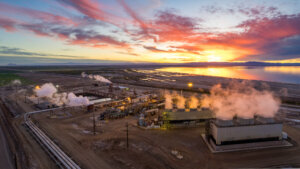
The case studies illustrate how the rapid expansion of AI data centers is creating a growing market for technologies that can deliver reliable, around-the-clock, low- and carbon-free electricity. Still, it is important to take a realistic view of what the AI boom can—and cannot—do to scale clean firm technologies.
Although leading hyperscalers are investing in clean firm technologies as longer-term power options for their AI data centers, they still require nearterm power and therefore cannot rely exclusively on these solutions. Speed to power remains a top priority, and many clean firm technologies face longer commercialization timelines than conventional firm alternatives. As a result, unabated natural gas accounts for roughly 40 percent of the electricity supply for data centers in the United States.119 Davide D’Ambrosio, et al., Energy supply for AI. According to McKinsey, 25–33 percent of incremental data center demand through 2030 is expected to be met with behind-the-meter solutions—power resources located on the customer’s side of the meter.120Scott Clavenna, “Behind-the-meter generation is picking up traction,” Latitude Media, October 22, 2025, https://www.latitudemedia.com/news/behind-the-meter-generation-is-picking-uptraction. These solutions are not subject to state clean energy requirements and are typically natural gas. While solar paired with lithium-ion batteries can often be deployed as quickly as, or more quickly than, fossil fuel generation, this combination of technologies cannot provide the same level of extended reliability as firm resources.
Cost is another important consideration. While many hyperscalers are willing to pay a premium for cleaner energy sources, they must still balance sustainability objectives with economic realities. Clean firm technologies often have higher upfront costs and greater deployment risks than mature conventional firm generation options. Even a small green premium can result in significant additional expenditures over the lifetime of a project. For example, paying an additional $10/MWh for clean electricity for a 100 MW facility would increase costs by roughly $10 million per year.
While many hyperscalers highlight the potential for clean firm projects tied to AI data centers to benefit the broader grid, their impact on grid-wide decarbonization may be limited in the near term. Some projects have the potential for surplus generation; in those cases, excess clean firm power can support other uses—for example, plans to supply excess power to industrial operations, as in Case Study C on page 13. However, given the estimated capacities of these clean firm projects and the growing electricity demand of an average AI data center, they are likely to contribute electricity that, at best, primarily covers their associated data center demand.
The broader value of today’s clean firm investments lies in the medium to long term. These investments will play a critical role in advancing clean firm technologies by enabling “learning by doing,” helping to drive down costs, and building investor confidence. AI-driven clean firm projects also provide utilities with valuable opportunities to gain operational experience integrating emerging technologies into their portfolios, positioning them to meet a wider range of future demand. Not every AI-connected clean firm project will succeed, given both technology-specific and data center–related risks. However, the growing volume of clean firm announcements suggests that enough projects will move forward to drive meaningful progress. Over time, this can unlock additional private capital and support the broader market adoption of clean firm technologies, enabling them to meet growing electricity demand across the power sector beyond data centers.121 Iegor Riepin et al., “24/7 carbon-free electricity matching accelerates adoption of advanced clean energy technologies,” Joule Volume 9, Issue 2 (February 2025), https://www.cell.com/joule/fulltext/S2542-4351(24)00544-0; see also Iegor Riepin et al, “How 24/7 carbon-free energy can catalyze clean innovation,” Latitude Media, February 28, 2025, https://www.latitudemedia.com/news/how-247-carbon-free-energy-can-catalyze-clean-energy-innovation.
The climate impact of AI will depend in part on the extent to which clean firm technologies can compete for and capture this growing source of electricity demand from data centers, and how quickly those technologies can be mobilized. If they achieve cost parity and comparable deployment timelines with conventional firm options, clean firm technologies are likely to become the preferred power choice for hyperscalers, particularly given the growing societal pressure surrounding data center development. As data centers face increasing scrutiny over their environmental impacts, access to clean energy can improve public acceptance and increase the likelihood of project approval. The climate implications of AI will also hinge on how effectively hyperscalers’ catalytic capital can help expand the application of clean firm technologies beyond data centers. Both dynamics can be accelerated through targeted policy support.
AI-driven electricity demand may help accelerate clean firm power adoption over time; however, targeted policy support is still needed to overcome certain deployment barriers. While hyperscalers can help mitigate certain financing risks, many projects still face cost and risk profiles that require additional support in the form of government incentives (e.g., federal tax credits). Moreover, financing is only one part of the challenge. Clean firm technologies must also navigate technology specific risks as well as broader commercialization barriers that can be addressed through policy (e.g., permitting and transmission reform). Sustained progress for clean firm technologies will therefore depend on continued financial support from the AI data center sector, combined with durable federal and subnational policies, as well as responsible corporate strategies. Together, these sources of support can help scale clean firm technologies more rapidly, enabling their earlier adoption as major power sources for both AI data centers and the broader power system.
As demonstrated in many of the case studies, permitting is one of the most significant barriers to energy development in the United States. Outdated and opaque processes increase project timelines and costs and make long-term planning and investment more difficult. In 2025, the average permitting timeline for energy generation projects was five to six years.122 Bob Sternfels, Adi Kumar, Bobo Stankovikj, and Tim Cater, Unlocking U.S. federal permitting: A sustainable growth imperative (New York, N.Y.: McKinsey & Company, 2025), https://www.mckinsey. com/industries/public-sector/our-insights/unlocking-us-federal-permitting-a-sustainable-growth-imperative. Certain clean firm technologies are even more susceptible to these delays due to their relative nascency (e.g., SMRs), the extensive safety and environmental reviews they require (e.g., traditional and advanced nuclear), and overlapping federal, state, and local permitting frameworks (e.g., geothermal). Beyond environmental reviews, interconnection and transmission remain key bottlenecks in the U.S. energy permitting process. As of the end of 2025, over 2,060 GW of generation and storage capacity were awaiting grid connection.123 “Queued Up: Characteristics of Power Plants Seeking Transmission Interconnection,” Lawrence Berkeley National Laboratory, accessed June 23, 2026, https://emp.lbl.gov/queues. With transmission expansion lagging behind this surge, projects are forced to compete for limited transmission capacity, which, together with lengthy interconnection study processes, creates a growing queue of projects awaiting interconnection approval. This, in turn, exacerbates challenges in maintaining resource adequacy, or the ability to balance electricity supply and demand while maintaining sufficient capacity and operating reserves. Lengthy interconnection timelines can also incentivize reliance on behind-the-meter generation, which may fall outside existing state clean electricity standard (CES) policies. These standards generally apply to utilities and retail electricity providers—not to self-generated electricity consumed on-site.
Rising electricity demand and energy prices have elevated permitting reform to a bipartisan, bicameral priority in the 119th Congress. While permitting barriers in the United States also exist at the state and local levels, meaningful progress can begin at the federal level, where Congress can play a leading role. As a starting point, Congress should prioritize reforms that streamline permitting by digitizing the process. This shift could reduce bureaucratic delays, enhance project transparency, improve project outcomes, and ultimately reduce costs for taxpayers. Congress should also enable greater coordination among neighboring regions by requiring them to conduct regular interregional transmission planning studies using shared assumptions and consistent data. These studies should evaluate the reliability, affordability, and economic benefits of proposed transmission projects and make their findings easily accessible to the public through summary reports. A more coordinated and transparent approach to transmission planning would not only improve grid reliability but also improve the efficiency of the interconnection process and support the integration of new front-of-the- meter energy resources, including clean firm technologies, into the grid.
Although sustainability commitments strengthen the willingness of leading hyperscalers to invest in clean firm technologies, unabated natural gas remains the dominant source of electricity for data centers in the United States.124 Davide D’Ambrosio, et al., Energy supply for AI. At present, unabated natural gas generation maintains advantages in both cost and deployment speed relative to most clean firm technologies, though these factors vary across regions and specific technology pathways. Utilities likewise face increasing pressure to procure clean firm resources in response to state clean electricity standards, investor interests, and corporate emissions reduction targets; however, least-cost procurement mandates continue to favor lower-cost alternatives, restricting broader adoption of clean firm technologies.
Congress can encourage greater investment in clean firm technologies through a variety of legislative pathways. One option is a federal CES, a type of electricity portfolio standard that establishes aggregate targets for the share of electricity that utilities and other retail providers must supply from qualifying clean energy sources.125 Center for Climate and Energy Solutions, Clean Energy Standards: State and Federal Policy Options and Considerations (Arlington, V.A.: C2ES, 2019), https://www.c2es.org/document/clean-energy-standards-state-and-federal-policy-options-and-considerations. Although several states have adopted CES policies, a national approach would apply to a larger share of U.S. electricity generation. If designed to recognize a full range of low- and zero-carbon technologies and allow market-based credit trading, a federal CES could help drive investment in clean firm technologies. A possible limitation of this pathway, however, is that a conventional CES could primarily cover front-of-the-meter power generation (i.e., where retail sales occur) and therefore may do little to address the growing number of data centers powered by behind-the-meter generation. In other words, if a CES requires a certain percent generation from clean energy, it may not impose comparable requirements for behind-the-meter generation and would not incentivize data centers to use cleaner sources of energy. This risk underscores the importance of ensuring that federal policies encourage cleaner electricity generation regardless of how it is supplied to data centers.
A complementary approach could also address behind-the-meter generation. Congress could establish a federal emissions performance standard specifically for data centers’ energy use. Typically, a performance standard establishes a declining emissions-intensity benchmark for electricity consumed. This declining benchmark therefore incentivizes covered entities and facilities to reduce their emissions intensity by increasing efficiency, adopting new processes, and utilizing cleaner energy. Covered entities and facilities could be charged a fee if their emissions exceed the performance standard. Revenues from the fees could be used to support the development and deployment of emerging clean firm technologies. Legislators should carefully consider and clarify the size of covered entities subject to this standard, as the Energy Independence Act’s definition of data centers does not include capacity-based sizing criteria.126 United States, Energy Independence and Security Act of 2007, Pub. L. No. 110-140, 121 Stat. 1492 (2007). A well-calibrated threshold could focus the standard on the data centers driving the largest share of projected load growth and associated emissions while minimizing administrative and compliance burdens for smaller operators.
As previously noted, unabated natural gas power plants are currently the largest source of electricity for data centers in the United States. As a result, carbon capture will be important for reducing emissions from natural gas–fired power plants that serve data centers. Carbon capture is also critical for broader decarbonization, particularly for industry and fossil-based electricity generation. However, realizing the full decarbonization potential of carbon capture will require stronger incentives to improve the project economics of carbon capture for fossil-based electricity generation. As demonstrated in Case Study C on page 13, current carbon capture deployment has been concentrated in ethanol production—currently the most economically viable application of the technology. At the same time, as demonstrated in Case Study A on page 10, carbon dioxide transport and sequestration remain major barriers, particularly for bespoke projects and smaller developers that lack access to established carbon management infrastructure.
A near-term federal priority should be to improve the economics of carbon capture for fossil-based electricity generation. Congress could accomplish this by modifying the section 45Q tax credit to better reflect the varying costs of carbon capture across applications. One approach would be to establish a sliding-scale incentive that provides higher credit values for lower-concentration carbon dioxide streams (e.g., natural gas), which are generally more technically challenging and expensive to capture than higher-concentration streams (e.g., ethanol or coal).127 Xiaxing Wang and Chunshan Song, “Carbon Capture From Flue Gas and the Atmosphere,” Frontiers in Energy Research, Volume 8 (December 2020), https://www.frontiersin.org/journals/energy-research/articles/10.3389/fenrg.2020.560849/full; see also EFI Foundation, Unlocking Private Capital for Carbon Capture and Storage Projects in Industry and Power, EFI Foundation, April 2025, https://efifoundation.org/wp-content/uploads/sites/3/2025/04/Unlocking-Private-Capitalfor-CCS-Projects-in-Industry-and-Power.pdf; see also John Thompson and Sam Bowers, “Carbon capture and storage: Opportunities for federal action to support domestic energy production and industrial innovation.” By better matching incentive levels to project costs, this approach would help expand carbon capture deployment beyond the relatively favorable economics seen in ethanol facilities. It would also encourage wider adoption of carbon capture for AI data centers, the broader power sector, and industrial applications. Over the longer term, policymakers should complement this incentive with a broader suite of federal measures to address carbon dioxide transportation and storage, helping to establish the infrastructure necessary for largescale carbon capture deployment nationwide.
The section 48E investment tax credit and the section 45Y production tax credit—collectively known as the clean electricity technology-neutral tax credits—have been foundational to clean energy development in the United States since their enactment under the Inflation Reduction Act in 2022. These incentives have strengthened the economic case for higher upfront cost projects, such as the nuclear restart featured in Case Study E on page 15. While some clean energy tax incentives were weakened by the passage of the One Big Beautiful Bill Act in July 2025, these technology-neutral credits have remained relatively robust, particularly for grid-firming technologies like nuclear, geothermal, and energy storage. The full credit amount is currently available to qualifying facilities that begin construction before 2034, with a gradual phase-down leading to a full sunset in 2036.128 Energy incentives under OBBBA: What you need to know, Grant Thornton, September 5, 2025, https://www.grantthornton.com/insights/alerts/tax/2025/insights/energy-incentives-under-obbba-what-you-need-to-know; see also Kirland & Ellis, “‘One Big Beautiful Bill Act’ Brings Changes to Green
Congress should extend the window of eligibility for the technology-neutral tax credits by ten years for grid-firming technologies. Rising electricity demand in the United States underscores the need for stable federal support for resources that can promote grid reliability and affordability, lower emissions, and foster U.S. leadership in the next generation of energy technologies. As discussed in Case Study D on page 14, some grid-firming technologies, such as advanced nuclear, are not expected to play a significant role in the energy mix of major utilities like Dominion until the 2030s.129 Dominion Energy, “Dominion Energy and Amazon to explore advancement of Small Modular Reactor (SMR) nuclear development in Virginia.” The pace of future advanced nuclear construction—and that of other emerging clean firm technologies—will depend in part on the success of these initial projects, potentially limiting further buildout until their performance is proven. As a result, extending these credits further by another decade is particularly important.
As highlighted in Case Study E on page 15, the Office of Energy Dominance Financing, formerly the Loan Programs Office, has the authority to issue federal low-interest loans and loan guarantees for energy projects, including for clean firm technologies. This federal support can help unlock the capital needed to scale emerging technologies and drive cost reductions. EDF is particularly important for addressing the “missing middle,” a well-documented financing gap in which FOAK commercial-scale technology projects require capital that falls between venture funding and traditional project finance. Through its Title 17 Program, EDF can support emerging clean firm technologies that advance its goals of securing and strengthening energy assets, boosting innovation, expanding affordable and reliable energy, and creating jobs. Congress should appropriate the necessary funds to do this, including providing sufficient program direction budget to support the staff responsible for managing federal loans and ensuring a timely review and award process.
Currently, 27 states and the District of Columbia require electric utilities to deliver a certain share of electricity from renewable energy sources.130 David Kemp, “The Case for Reconsidering Renewable Portfolio Standards,” C3 Solutions, May 11, 2026, https://c3solutions.org/policy-paper/the-case-for-reconsidering-renewable-portfoliostandards. As the most common form of electricity portfolio standard, renewable portfolio standard policies generally focus on variable renewable resources—such as wind and solar—rather than a broader suite of clean firm technologies needed to provide reliable, around-the-clock, low- or zero-carbon electricity. 131 Geothermal energy is included in many renewable portfolio standards and is distinct from variable renewable resources because it can provide reliable, around-the-clock low carbon power, making it both a renewable and a clean firm resource. For example, the qualifying energy resources in Oregon’s RPS include wind, solar, wave, geothermal, biomass, and new hydropower.132 “U.S. State Electricity Portfolio Standards,” Center for Climate and Energy Solutions, accessed May 28, 2026, https://www.c2es.org/document/renewable-and-alternate-energy-portfolio-standards. Oregon’s RPS does not include nuclear power or natural gas generation with carbon capture and storage. By contrast, some states, such as New York, have adopted broader clean electricity standards that include technologies like nuclear power but still exclude natural gas generation with carbon capture and storage.133 “U.S. State Electricity Portfolio Standards,” Center for Climate and Energy Solutions.
As electricity demand increases, states should place greater emphasis on requiring utilities to procure power from sources that are both clean and dispatchable. This outcome can be achieved through state legislatures adopting or modifying existing clean electricity standards that encompass a broader suite of low- or zero-carbon technologies than traditional RPS policies. As demonstrated in Case Study D on page 14, Virginia’s recognition of nuclear energy as a carbon-free resource under its Clean Economy Act creates strong incentives for utilities and hyperscalers to collaborate in scaling the technology within the state. Additionally, policymakers should ensure that added resources deliver genuine emissions reductions. For example, natural gas paired with CCS should be required to meet verified carbon capture performance thresholds and account for lifecycle methane emissions. And, since LDES stores rather than generates electricity, it should be evaluated based on its charging source emissions. Many states have established electricity portfolio standards and could update them to include a broader range of clean firm technologies is likely the more feasible near-term pathway. These policies could complement a federal clean electricity standard (as referenced in the above federal policy recommendations) while allowing states to account for their particular resource and reliability needs.
Procurement is another critical tool states can use to incentivize the adoption of clean firm technologies. Agreements such as Microsoft’s 20-year PPA supporting the Crane Clean Energy Center, highlighted in Case Study E on page 15, demonstrate the role hyperscalers can play in driving long-term offtake. However, private-sector demand alone will be insufficient to scale these technologies fast enough to meet rising electricity demand. Substantial additional capital will be required beyond what is currently being mobilized through the AI data center ecosystem, creating an opportunity for states to play a more active role.
Enabling legislation, such as clean electricity standards (see above), can provide the authority needed for utilities or other state agencies to pursue targeted procurement mandates.134 Center for Climate and Energy Solutions, Policy Recommendations to Unlock the Value of Long duration Energy Storage. These policies can help emerging technologies secure long-term market agreements, thereby reducing market risks. This support is particularly important for clean firm technologies that deliver system-level benefits, such as reliability, that are not fully captured by traditional metrics like levelized cost of electricity (LCOE), though improvements to resource adequacy modeling and accreditation approaches could help better account for their value.135Center for Climate and Energy Solutions, Policy Recommendations to Unlock the Value of Long duration Energy Storage. While state procurement can support a broad range of clean firm technologies, it may be especially well suited for LDES, which is often excluded from clean electricity standards focused primarily on generation. States such as New York, California, Massachusetts, and Virginia have already taken steps in this direction by adopting targeted procurement mandates for LDES.136 New York State Energy Research and Development Authority (NYSERDA), “Energy Storage Program,” accessed May 28, 2026, https://www.nyserda.ny.gov/All-Programs/Energy-Storage-Program; see also “Energy Storage,” California Public Utilities Commission, accessed May 28, 2026, https://www.cpuc.ca.gov/industries-and-topics/electrical-energy/energy-storage; see also Stephanie Gagnon-Rodriguez, “Virginia Targets a Long-Duration Energy Future, Center for Climate and Energy Solutions (blog), April 15, 2026, https://www.c2es.org/2026/04/virginia-targets-a-long-duration-energy-storage-future/; see also Massachusetts Department of Public Utilities, “Laws Governing Long-Term Contracts for Renewable Energy and Energy Storage,” Mass.gov, last modified February 26, 2026, https://www.mass.gov/info-details/laws-governing-long-term-contracts-for-renewableenergy-and-energy-storage. While state procurement is likely the more feasible near-term pathway, particularly where enabling legislation already exists through clean electricity standards, federal procurement could be a longer-term tool for helping clean firm technologies achieve wider commercial scale and market adoption.
To limit the cost impacts of clean firm technologies on ratepayers, PUCs can approve CTTs. As highlighted in Case Study B on page 12, Google and Xcel Energy have jointly proposed a CTT to support Google’s planned data center development in Pine Island, Minnesota. CTTs are rate structures that enable large-load customers and utilities to collaborate on integrating emerging energy technologies with certain attributes (e.g., clean firm) into the system, with the customer agreeing to pay a premium for the selected resources.137 Caitlin Flanagan, “Clean Transition Tariffs: An innovative way to accelerate power sector emission reductions.” Under this model, the large-load customer pays the revenue requirement for a new clean energy resource, with crediting mechanisms applied to the customer’s bill for the capacity and energy value provided.138 Caitlin Flanagan, “Clean Transition Tariffs: An innovative way to accelerate power sector emission reductions.” If the customer’s demand exceeds the energy supplied by the clean resource, they can purchase additional electricity from the grid at a variable rate.139 Caitlin Flanagan, “Clean Transition Tariffs: An innovative way to accelerate power sector emission reductions.” CTTs can support the integration of emerging technologies into the grid while advancing decarbonization and maintaining affordability.
PUCs can also approve large-load tariffs to complement CTTs. Large-load tariffs are specialized contracts, rate structures, and service agreements between utilities and large customers.140 Rocky Mountain Institute, Large Load Tariff Principles. Unlike CTTs, large-load tariffs do not always designate the use of certain types of power (e.g., clean firm); however, they can help mitigate financing risks by requiring new data centers to bear the incremental costs from capital expenditures needed to serve them.141 Vincent Nolette, “Data Center Regulation: What Local Governments Should Know about Large-Load Tariffs and Clean Transition Tariffs,” Sabin Center for Climate Change Law (blog), June 2, 2026, https://blogs.law.columbia.edu/climatechange/2026/06/02/data-center-regulation-what-local-governments-should-know-about-large-load-tariffs-and-clean-transition-tariffs. As of June 2026, 24 states have approved at least one large-load tariff, including one in Virginia for Dominion.142 Edison Electric Institute, “Large Load Projects and Tariffs (June 2026),” accessed July 15, 2026, https://www.eei.org/-/media/Project/EEI/Documents/Issues%20and%20Policy/List%20of%20Large%20Customer%20Projects%20and%20Tariffs. Under Dominion’s large-load tariff, customers with loads exceeding 25 MW are required to pay for 85 percent of their transmission and distribution costs, regardless of their electricity usage.143Virginia State Corporation Commission, “SCC Date Center Initiatives,” accessed July 15, 2026, https://www.scc.virginia.gov/media/sccvirginiagov-home/about-the-scc/fact-sheets/scc-data-center-initiatives-02-2026.pdf; see also Vincent Nolette, “Data Center Regulation: What Local Governments Should Know about Large-Load Tariffs and Clean Transition Tariffs.” Societal support for both data centers and clean firm projects is closely tied to their ability to avoid increasing costs for ratepayers. The use of CTTs and large-load tariffs can help mitigate this concern.
The preceding recommendations focus on public policies that can help scale clean firm technologies. However, it is important to note that there is also significant opportunity for civil society and the private sector to advance voluntary standards and common metrics for data center sustainability and performance. Greater transparency and consistency in how data centers measure and report their environmental impacts could support the broader adoption of cleaner power sources, like clean firm technologies. In addition, stronger private-sector commitments to front-of-the-meter power generation for data centers could encourage greater collaboration with utilities to deliver reliability and emissions benefits across the grid, rather than at a single facility, including through the deployment of clean firm technologies.
The United States is at an inflection point in the evolution of its power system. After two decades of relatively flat demand and significant progress in decarbonization, electricity demand is rising once again, driven by a range of factors—including the rapid growth of AI data centers. This shift creates a critical opportunity for policymakers and corporate leaders to rethink how power is generated, delivered, and financed. This moment can and must be leveraged to scale clean firm technologies that are essential to decarbonizing the power sector. Coupled with supportive policies, private sector investment can accelerate the adoption of these technologies, enabling them to help meet growing electricity demand while strengthening grid reliability and preserving energy affordability.