Modeling from C2ES and Greenline Insights finds Bipartisan American Affordability and Jobs Act would save consumers billions, strengthen and diversify the nation’s energy mix
Modeling outlines cost of delayed reform, which could forgo $55 billion in savings and 800 MMt of power sector emissions reductions
WASHINGTON – The Center for Climate and Energy Solutions (C2ES) and Greenline Insights today released new national modeling showing how the Bipartisan American Affordability and Jobs Act (BAAJA) can deliver substantial economic, reliability, and climate benefits by modernizing the nation’s electricity infrastructure and making it easier to build in America. The analysis finds that proposed reforms would boost deployment of clean energy, strengthen grid reliability, lower electricity costs, and reduce carbon pollution. The analysis, which also highlights the significant cost of delaying reforms, comes as electricity demand continues to rise, driven by growing data center development, electrification, and domestic manufacturing expansion.
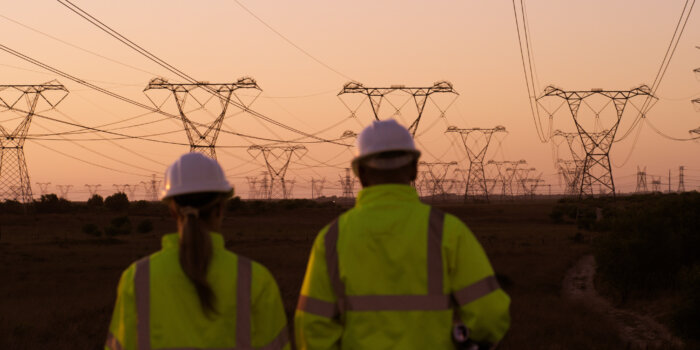
Expanding on an earlier regional analysis, the new study evaluates impacts across the contiguous United States, examining how key provisions of BAAJA could reshape the electric power system by 2035. More than 2,000 GW of proposed generation and storage projects remain stuck in queues today, while fewer than 900 miles of high-capacity transmission were added in 2024.
Compared to a “business as usual” scenario, by 2035 the modeled reforms would enable 170 GW of additional wind, solar, and battery storage capacity, including 83 GW of solar, 67 GW of wind, and 20 GW of battery storage, and expand interregional transmission capacity by 61 GW.
And in 2035 alone, reform would:
- Reduce annual electricity system costs by $11.7 billion.
- Lower residential electricity bills by approximately $2.5 billion annually.
- Eliminate power shortfalls and avoid roughly $900 million in annual reliability-related costs.
- Reduce annual power sector carbon dioxide emissions by 173 million metric tons, a 13 percent reduction relative to business as usual. That’s the equivalent to the emissions of more than 40 million gas-powered cars driven for one year.
The modeling suggests the climate benefits would start before 2035 and continue well beyond that year. Assuming new projects come online gradually over time, cumulative power-sector emissions reductions could reach approximately 1.7 gigatons by 2040.
The new analysis also outlines how delays in reforms could leave significant cost savings – and emissions reductions – on the table. Because new interconnection processes and transmission projects take years to deliver, a delay until 2030 would mean achieving only about 40 percent of the modeled benefits by 2035, while reducing reliability, limiting the expansion of clean technology, and increasing reliance on new, inefficient natural gas “peaking” units. Through 2040, this delay would forgo roughly $55 billion in electricity system savings and 800 million metric tons of emissions reductions.
Reforms would strengthen and diversify nation’s energy mix
The analysis finds that reform would strengthen and diversify the nation’s energy mix. Wind and solar would provide roughly 40 percent of U.S. electricity generation in 2035 under the reform scenario, compared with approximately one-third under business as usual. At the same time, natural gas generation falls from 44 percent of total generation to 36 percent. Reforms would also benefit both electricity-exporting and electricity-importing regions. Expanded transmission increases electricity trade between regions by approximately 70 percent, allowing regions with abundant wind and solar resources to meet growing demand elsewhere while reducing overall system costs. In addition to these reforms, the legislation makes significant improvements to unlock next generation energy technologies like geothermal, updating permitting and leasing rules to boost development,
“As electricity demand surges across the country, America faces a choice. We can continue with a broken status quo, or we can make it easier and faster to build the cleaner, modern electric grid our economy needs,” said C2ES President Nat Keohane. “This analysis shows that durable, bipartisan reforms can help deploy more clean energy, lower costs for consumers, improve reliability, and significantly reduce emissions. The benefits are substantial, but the clock is ticking and we cannot afford further delay.”
The modeled emissions reductions are driven by BAAJA’s interconnection provisions, which address lengthy studies, uncertain upgrade costs, and project withdrawals that prevent or delay proposed resources from reaching commercial operation.
“Grid constraints don’t just delay clean energy projects. They fundamentally change which resources get built,” said Ashna Aggarwal, Director of Analysis at Greenline Insights. “Our modeling finds that without interconnection reform, the emissions benefits of this legislation essentially disappear. With electricity demand rising and thousands of gigawatts of proposed generation and storage waiting to connect to the grid, maintaining the status quo risks locking in more natural gas infrastructure for decades to come.”
Notably, the benefits hold under alternate assumptions about natural gas pipeline expansion and electricity demand, including under scenarios with lower natural gas prices, lower data center demand, and with additional pipeline capacity in regions where permitting barriers have constrained development. The findings released today are also echoed in recent modeling analyses released by experts including Rhodium Group and Resources for the Future.
The findings reinforce the urgent need for durable, bipartisan permitting and grid reforms that can accelerate investment while maintaining certainty for developers, communities, and consumers. Through its permitting reform campaign, C2ES has worked with businesses, policymakers, and stakeholders to advance solutions that improve interconnection processes, expand transmission infrastructure, streamline permitting, and strengthen America’s ability to build the energy infrastructure needed for future economic growth and a stable climate.
###