Biofuels Overview
What are Biofuels?
A biofuel is defined as any fuel that is produced from any plant- or animal-based feedstock (often referred to as “biomass”). As countries seek to reduce greenhouse gas (GHG) emissions from the transportation sector and to lessen dependence on petroleum-based fuels, biofuels are gaining increasing attention as one possible solution. Biofuels offer a way to produce transportation fuels from renewable sources or waste materials and to help reduce net carbon dioxide (CO2) emissions because the CO2 emitted during combustion of the fuel is captured during the growth of the feedstock.
Biofuels in the United States
Currently, corn ethanol is the most widely used liquid biofuel in the United States. Most of this ethanol is blended into gasoline for use in passenger vehicles. Gasoline with up to 10 percent ethanol (E10) can be used in most vehicles without further modification, while special flexible fuel vehicles can use a gasoline-ethanol blend that has up to 85 percent ethanol (E85). In 2009, ethanol production is expected to be more than 11 billion gallons (about 10 percent of total gasoline consumption), in compliance with the Renewable Fuels mandate in the Energy Information and Security Act of 2007. The other commonly used biofuel in the United States is biodiesel, primarily produced from soybean oil. Biodiesel can legally be blended with petroleum diesel in any fraction. The most common blend of biodiesel in the United States is 20 percent biodiesel, 80 percent petroleum diesel (B20). Figure 1 shows biofuel production levels in the United States over time.
Figure 1: U.S. Biofuel Production, 1990-2008 |
|
Sources: Renewable Fuels Association, Historic U.S. Fuel Ethanol Production, accessed May 10, 2009. National Biodiesel Board, Production Capacity, 2008. |
Biofuels: Technology and Feedstocks
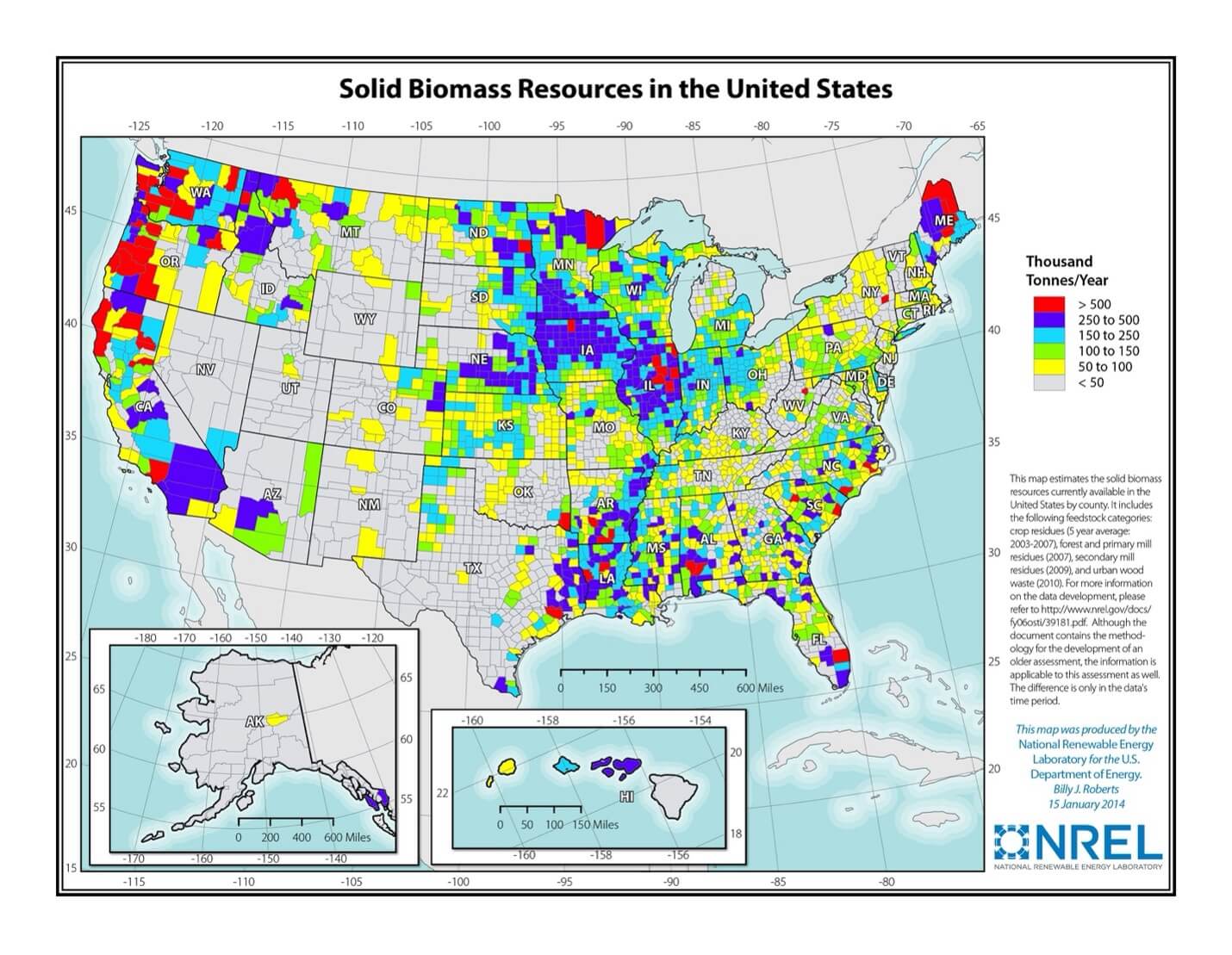
A wide variety of feedstocks are currently in use or under development to produce biofuels (Figure 2). These feedstocks differ significantly in the types of lands on which they can be grown, yields per acre, and the fuels into which they are processed.
| Figure 2: Current and Emerging Biofuel Pathways |
| Source: Pena, N., Biofuels for Transportation: A Climate Perspective, Figure 2, 2008. |
Today’s commercial processes convert only simple sugars, starches, or oils to produce biofuels—the fermentation of cornstarch (from the corn kernel), sugar beets, or sugarcane produces ethanol, and the transesterification1 of oils (e.g., soybean or palm oil) produces biodiesel. Of the feedstocks that are in use right now, sugar beets, sugarcane, and palm oil yield the highest amounts of fuel per acre on a gasoline gallon-equivalent basis.2
However, the vast majority of available plant material for biofuels is in the form of cellulose, hemicellulose, and lignin. This biomass is not currently used in most biofuel production processes.3 Because of the higher availability of these materials, processes capable of converting cellulose to biofuels represent one pathway to significantly lowering the resources needed to grow biofuel feedstocks. Furthermore, once the cellulose is extracted from the plant to produce the biofuel, the remaining lignin can be used as a fuel to power the biofuel conversion process. Lignin yields energy when burned and further limits the fossil fuel inputs required to produce the biofuel. Researchers are also looking at different sources for oils that can be converted into biodiesel.
Examples of emerging feedstocks include the following:
- Cellulosic feedstocks, such as perennial grasses (e.g., switchgrass and Miscanthus) or short rotation woody crops, which can be converted to ethanol or other biofuels.
- Industrial Wastes, such as agricultural wastes including manure and other processing wastes that are high in protein and fats; these can be converted to oils and then to biodiesel. Other waste biomass includes, for example, wood residues from the forest industry and agricultural residues from corn farming; the cellulose in these materials can be converted into ethanol.
- Algae, which can produce an oil that can be converted to a number of different biofuels.
- Jatropha, a plant that can grow on barren, marginal land, especially in many parts of Asia. Jatropha oil is extracted from the seeds of the plant and can be used to produce biodiesel.
These feedstocks have the ability to reduce GHG emissions significantly relative to conventional gasoline and diesel fuel. Because they are not food-based and are often processing wastes from other industries, they also have the added benefit limiting competition with agricultural food crops.
Biofuels and GHG Emission Reductions
When calculating the GHG emission reductions from the use of biofuels, it is important to examine the full life-cycle of emissions from the fuel. Potential greenhouse gas emission reductions vary widely, depending on choices made at each step, from feedstock selection and production through conversion of the feedstock into a fuel, and then to final fuel use. Fossil fuels are often used in growing and processing feedstocks, which can increase the life-cycle emissions for the biofuel. Changes in land use and land management practices to grow biofuel feedstocks also affect the GHG profile of a fuel.
Developing GHG profiles over the life-cycle of a fuel, however, is not an easy task. It is challenging to design scientifically-based, equitable methodologies for estimating life-cycle GHG emissions for both petroleum- and bio-based fuels, as well as other potential energy-source options. In practice, not all GHG emissions can be included in a fuel’s GHG footprint, and choices must be made as to which emissions to include. In the case of biofuels, for example, emissions from the manufacturing and use of fertilizers to produce the feedstock are usually included, but emissions from building the fertilizer plant itself are not.
| Figure 3: Diagram of Life-cycle Emissions Pathway, Corn Ethanol |
![]() |
| Source: Delucchi, M., "Appendix X: Pathways Diagrams." In A Lifecycle Emissions Model (LEM): Lifecycle Emissions from Transportation Fuels, Motor Vehicles, Transportation Modes, Electricity Use, Heating and Cooking Fuels, and Materials. Institute of Transportation Studies, University of California, Davis, Research Report UCD-ITS-RR-03-17 MAIN, Figure 13, 2003. |
As biofuel production increases, concerns are growing about the actual GHG reductions achieved by these fuels and competing objectives for water and land resources. In order to appropriately use these fuels, governments, scientists, environmental groups, and others recognize the need for improved methods to account for the GHG emissions and other environmental impacts caused by using plant material to produce transportation fuels.
Policy Options to Promote Biofuels
Policymakers are also looking for the right set of public policy tools that help spur innovation in and promote the use of low-carbon biofuels from renewable sources. Renewable fuel policies and low carbon fuel standards (LCFS) are two such policy measures.
- Renewable Fuels Standards
The first option—a volumetric requirement for biofuels—requires that fuel providers sell a certain quantity of the specified fuels over a certain time period. Such mandates have the advantage of offering suppliers a guaranteed market for their products, thus accelerating the penetration of new technologies. Current renewable fuel mandates are based on the feedstock that the fuel is produced from (e.g., corn ethanol). The potential downside to a purely volumetric approach is that producers must sell certain amounts of the fuel, without regard to its life-cycle carbon emissions, so the GHG mitigation benefit from using these fuels may be uncertain.
The Energy Independence and Security Act of 2007 (EISA 2007) updates the federal Renewable Fuel Standard (RFS), originally enacted under the Energy Policy Act of 2005. EISA 2007 increases the previous volumetric targets for biofuels. The policy requires increasing amounts of certain advanced biofuels with relatively low life-cycle GHG intensity but does not create any incentives for the adoption of fuel types other than those included in the legislation. Several U.S. states have also implemented policies to promote biofuel use. As of March 2009, 37 states provide incentives promoting ethanol production and use and nine states have also enacted their own renewable fuels standards.
Volumetric mandates based on feedstock can push advanced biofuels (e.g., algae-derived biodiesel) into the market by giving suppliers a guaranteed level of sales per year. - Low Carbon Fuel Standard
The second policy option for fuels is a performance standard (e.g., a low carbon fuel standard, or LCFS), which would set targets for reductions in GHG intensity for the entire transportation fuel pool, not only biofuels. Under an LCFS, a standard would specify the carbon intensity for transportation fuels, on average, for a given year, usually expressed as a percent reduction from a baseline (e.g., GHG intensity in 2015 must be 5 percent lower than 2005 levels). The GHG intensity for a fuel is calculated on a life-cycle basis, which includes the emissions from production or extraction, processing, and combustion of the fuel. This policy allows manufacturers to produce and retailers to purchase the mix of fuels that most cost-effectively meets the standard.
To address some of the concerns with biofuel mandates, California has adopted a low carbon fuel standard that sets a goal of reducing the carbon intensity of passenger vehicle fuels by a minimum of 10 percent by 2020. Other states are considering similar policies.
If it is based on the appropriate life-cycle emissions accounting, an LCFS provides a level playing field for all transportation energy sources that may be used in the future, including biofuels, electricity, or hydrogen.
Business Environmental Leadership Council (BELC) Company Activities Related to Ethanol
Related C2ES Resources
Agriculture's Role in Greenhouse Gas Mitigation, 2006
Biofuels for Transportation: A Climate Perspective, 2008
Climate Techbook: Biodiesel, 2009
Climate Techbook: Ethanol, 2009
MAP: State Mandates and Incentives Promoting Biofuels
Further Reading / Additional Resources
Biomass Research and Development Board
- The Economics of Biomass Feedstocks: A Review of the Literature, 2008
- National Biofuels Action Plan, 2008
International Energy Agency (IEA), IEA Energy Technology Essentials: Biofuel Production, 2007
National Research Council, Committee on Assessment of Resource Needs for Fuel Cell and Hydrogen Technologies, “Alternative Technologies for Light-Duty Vehicles,” In Transitions to Alternative Transportation Technologies: A Focus on Hydrogen, 2008
Natural Resources Defense Council (NRDC), Getting Biofuels Right: Eight Steps for Reaping Real Environmental Benefits from Biofuels, 2007
SCOPE: International Biofuels Project, Biofuels: Environmental Consequences and Interactions with Changing Land Use, 2009
U.S. Department of Energy (DOE), Biomass Energy Data Book, 2008
U.S. Department of Energy (DOE), Office of Energy Efficiency and Renewable Energy, Biomass Program: ABC's of Biofuels
1 Transesterification is a process that modifies the oils in the feedstocks by replacing glycerin in fatty acid chains of vegetable oils with methanol.
2 It is necessary convert biofuels to their gasoline-equivalents because the different fuels have different energy content. For example, ethanol contains only 66 percent as much energy per gallon as a gallon of gasoline.
3 Cellulose is complex carbohydrate and the main structural component of plants. Hemicellulose is similar to cellulose and found in plant cell walls. Cellulose and hemicelluloses account for 25 to 50 percent of plant material. Lignin is a polymer that provides rigidity to plants cell walls and is second largest component of plant biomass.