As the proud successor to the Pew Center on Global Climate Change, and recently named the world’s top environmental think tank, C2ES provides independent analysis and innovative solutions to the twin challenges of energy and climate change.

Solar Power

Quick Facts

  • Solar power currently accounts for less than 1 percent of electricity production in the United States.[1] In 2008, solar accounted for less than 1 percent of global electricity generation.[2]
  • Total global solar energy capacity averaged 40 percent annual growth from 2000 to 2010;[3] grid-connected solar photovoltaic capacity grew 50 percent per year for much of this time.[4]
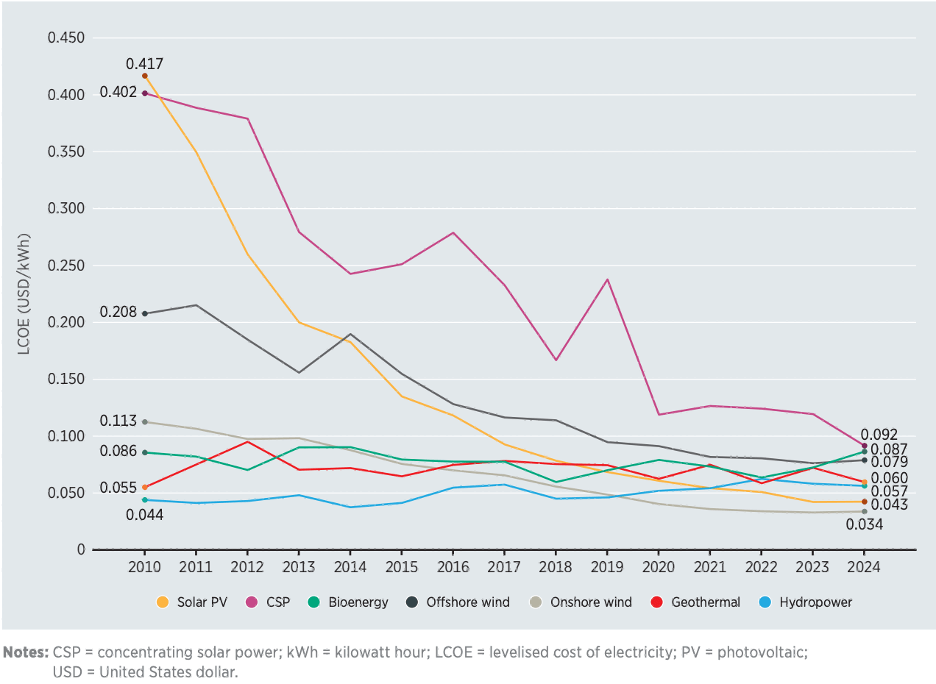
  • The approximate levelized cost of electricity[5] from a new silicon PV tracking installation is about 20-27 cents per kWh including federal tax incentives.[6] These costs, however, are highly dependent on a number of assumptions and are very sensitive to the inclusion of various tax incentives for solar power.

Background

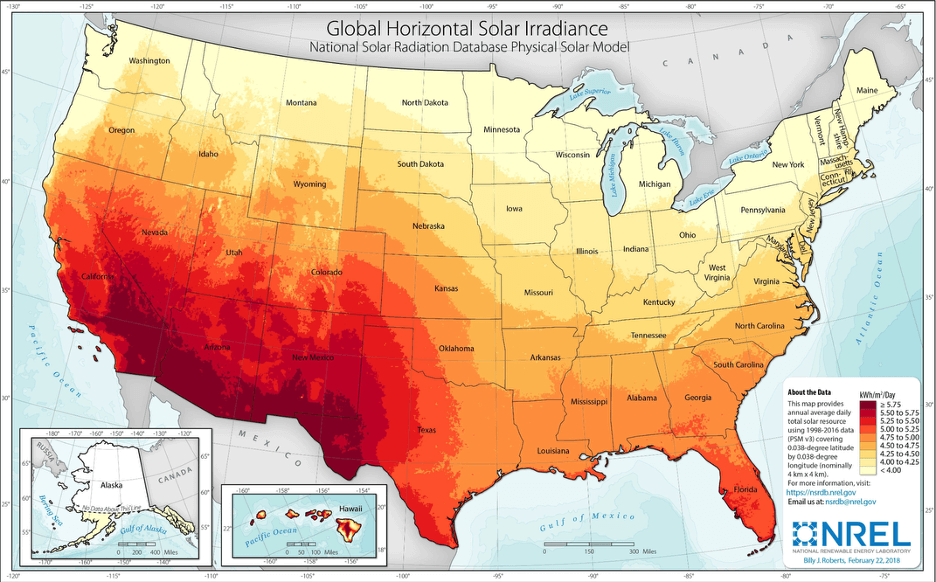
Solar power harnesses the sun’s energy to produce electricity. Solar energy resources are massive and widespread, and they can be harnessed anywhere that receives sunlight. The amount of solar radiation, also known as insolation, reaching the earth’s surface every hour is more than all the energy currently consumed by all human activities annually.[7] A number of factors, including geographic location, time of day, and current weather conditions, all affect the amount of energy that can be harnessed for electricity production or heating purposes (see Figure 1).

Figure 1: Average Daily Solar Resource for South-facing PV Panels with Latitude Tilt

Source: National Renewable Energy Laboratory (NREL), “PV Solar Radiation (Flat Plate, Facing South, Latitude Tilt)-Static Maps.” From Dynamic Maps, GIS data, and Analysis Tools, accessed July 28, 2011. http://www.nrel.gov/gis/solar.html

Note: This map shows annual average daily total solar resources. The insolation values represent the resource available to a photovoltaic panel oriented and tilted to maximize capture of solar energy. This map displays an annual average; maps for individual months reflect the seasonal variation associated with solar energy.

Although solar energy is abundantly available, it is also variable and intermittent. Solar power cannot generate electricity at night, and it is less effective in overcast or cloudy conditions.

The two most frequently discussed solar technologies for electricity are solar photovoltaics (PV), which use semiconductor materials to convert sunlight into electricity, and concentrating solar power (CSP), which concentrates sunlight on a fluid to produce steam and drive a turbine to produce electricity. In 2008, CSP accounts for about ten times as much installed capacity as solar PV in the United States.[8] Both solar PV and CSP are expensive relative to other forms of electricity generation, but technological improvements have helped bring these costs down in recent years.

Description

Solar power uses the sun’s energy to produce electricity. A number of solar technologies are currently available or under development, including:

  • Solar photovoltaic (PV)

Solar PV is the most familiar solar technology. Photovoltaics use semiconductor materials—most frequently silicon—to convert sunlight directly into electricity. PV installations can vary substantially in size and application. The modular nature of solar PV makes it well-suited for distributed generation (small-scale installations close to where the electricity will be used, such as on the roof of a house); PV can also be used for utility-scale power plants.

  • Silicon-wafer photovoltaics

In 2008, approximately 85-90 percent of installed solar capacity employed silicon-wafer-based PV systems.[9] PV modules are produced by slicing silicon ingots into wafers which are then electrically connected and packaged into modules which can then be assembled into arrays. Today’s silicon-based modules have a conversion efficiency of about 13-20 percent (meaning they convert up to 20 percent of the energy they receive from the sun into electricity) though these efficiencies are improving.[10]

  • Thin-film photovoltaics

Thin-film technologies use very thin layers (only a few microns) of semiconductor material to make PV cells. Thin-film PV is less efficient at converting light into electricity than traditional PV, and thus needs more surface area to produce a given amount of power. However, thin-film PV requires significantly less material to manufacture (approximately 5 percent of the material required to make a traditional PV cell) and can be integrated into buildings or consumer products. Processed silicon is an expensive material, so the use of lower-grade silicon, or even non-silicon materials such as CIGS (copper-indium-gallium-diselenide) and CdTe (cadmium telluride), delivers lower manufacturing costs for these and other next-generation PV via the use of less expensive materials or reductions in the amount of material needed for PV cells. Though comprising 10-15 percent of the solar PV market today,[11] use of thin-film is expected to grow significantly by 2020.[12]

  • Next-generation photovoltaics

Researchers are developing next-generation PV materials as well as new methods for producing photovoltaics. Concentrating PV – using lenses or mirrors to concentrate sunlight onto special PV materials—may prove to be a lower-cost solar energy option. Nano-scale materials, such as carbon nanotubes, could also yield breakthrough applications for PV materials. Others believe they can achieve low-cost solar electricity via the use of organic materials, bioengineering, and streamlined manufacturing processes.[13]

  • Concentrated solar power (CSP)

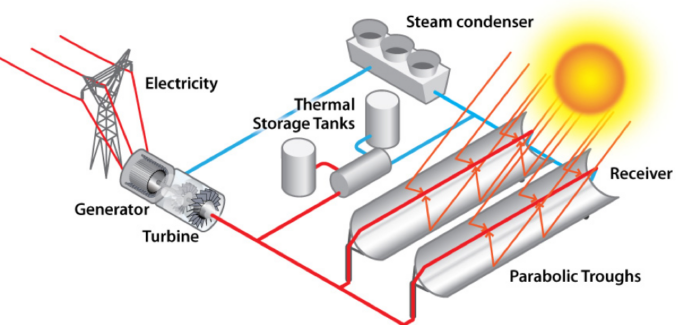
Unlike PV, which converts sunlight directly into electricity, CSP uses the sun’s thermal energy to produce electricity. CSP is a utility-scale application of solar power that uses arrays of mirrors to focus sunlight on a fluid and produce steam to power an electricity-generating turbine. CSP systems require a significant amount of area and ideal solar conditions.

Environmental Benefit / Emission Reduction Potential

Electricity produced using solar energy emits no greenhouse gases (GHGs) or other pollutants.

As with any electricity-generating resource, the production of the PV systems themselves requires energy that may come from sources that emit GHGs and other pollutants. Since solar PV systems have no emissions once in operation, based on current technologies, an average traditional PV system will need to operate for four years to recover the energy and emissions associated with its production; a thin-film system currently requires three years. Technological improvements are anticipated to bring these timeframes down to one or two years. A residential PV system that can meet half of average household electricity needs is estimated to avoid 100 tons of carbon dioxide (CO2) over its lifetime.[14]

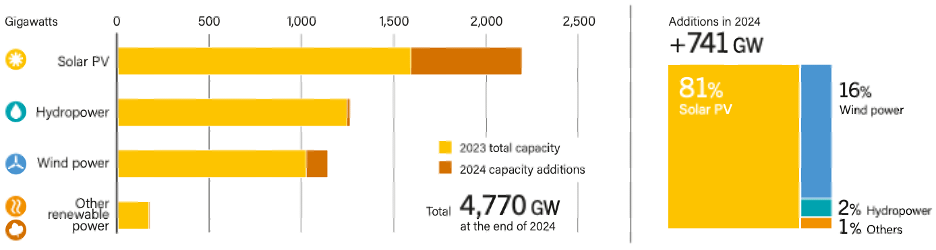
The International Energy Agency (IEA) estimates global solar PV installations will grow to between 242 and 748 gigawatts (GW) in total capacity by 2035 depending on incentives and other policy support, up from about 15 GW in 2008.[15] This represents 2.7 to 8.7 percent of total projected global electricity output, but approximately 10.8 to 15.5 percent of average annual growth in new power capacity over that period.[16] By 2050, installed solar PV capacity could avoid 2.3 gigatonnes (Gt) of CO2 emissions from the electricity sector[17], or 3.2 percent of estimated business-as-usual global emissions in 2050.[18]

Cost

The cost of solar power has fallen substantially over the last few decades. A study of over 70 percent of grid-connected solar PV systems in the United States shows that, in real 2009 dollars per installed watt, the average cost of these systems declined from $10.80 dollars per watt in 1998 to $7.50 per watt in 2009.[19] When the technology was first developed in the 1950s, solar PV cells cost $300 per watt.[20]

In addition, PV installation costs have fallen by about 3.2 percent annually since 1998.[21] Though these represent substantial cost improvements, solar power is still expensive relative to other forms of electricity generation. Recent analyses calculate the approximate levelized cost of electricity[22] from a new silicon crystalline PV system (20 MW or larger) at about 13.5 to 21.4 cents per kilowatt-hour (kWh).[23] The levelized cost of a thin film PV system ranges from 13.8 to 20.8 cents per kWh. These costs, however, are very dependent on a number of assumptions and are highly sensitive to the inclusion of various tax incentives for solar power, especially the Federal Investment Tax Credit.

Some analyses indicate that by 2020, solar PV power in regions with particularly suitable conditions (such as California) and relatively high electricity costs will have achieved grid parity (the point at which solar electricity is cost-competitive with electricity produced using conventional sources on the power grid) without tax and other incentives.[24] The International Energy Agency (IEA) estimates that solar PV generation costs could fall to 7 to 13 cents per kWh by 2030, assuming significant and sustained investments in R&D and incentives for deployment.[25]

Levelized electricity generation costs for new CSP plants are estimated to be approximately 19.5 to 22.6 cents per kWh,[26] though these costs may be higher or lower depending on a given project’s specifics.

The U.S. Department of Energy SunShot Initiative aims to reduce PV costs to $1/W, or 75% below current levels by 2020.[27]

Current Status of Solar Power

  • Photovoltaics

In the United States, solar energy provided less than 1 percent of total net electricity generation in 2009.[28] Installations of solar power appear to be increasing quickly. For example, European Photovoltaic Industry Association (EPIA) estimates that 878 megawatts (MW) of PV systems were installed in the United States in 2010.[29] EPIA estimates that between 1,500 and 3,000 of PV capacity will be installed in 2011, more than doubling the previous year. The IEA estimates a more modest growth rate, between 14.1 and 17.8 percent until 2035.[30]

Globally, solar energy currently accounts for only a small fraction of total commercial energy production (less than 1 percent).[31] Global installed solar PV capacity in 2010 is about 40 GW,[32] and projected to grow to somewhere between 101 and 138 GW by 2020.[33] From 2000 to 2010, total solar PV capacity grew at a rate of over 40 percent per year.[34]

  • Concentrated solar power

As of early-2010, total global installed CSP capacity was approximately 1 GW, and planned projects will add an additional 15 GW.[35]

Obstacles to Further Development or Deployment of Solar Power

  • Cost

Solar power remains expensive relative to electricity produced using traditional fossil fuel generation sources, as well as certain renewable energy sources like wind. In recent years, the supply of rare earth minerals commonly used for PV manufacturing has become constrained. China supplies 97 percent of the world’s rare earth minerals and has enacted production and export quotas,[36]driving higher the price of rare earth minerals.The uncertain future of the supply of rare earth is a risk to the U.S. PV manufacturing industry,[37]but efforts are underway to develop a domestic supply of rare earth minerals.[38]

  • Intermittency

Solar power is constrained by intermittency issues (it is variable due to weather factors and the fact that daylight hours are limited) and the uneven geographic distribution of solar resources. To achieve its full potential, solar power will rely on advanced variety of enabling technologies such as demand response and improvements in energy storage. Energy storage technologies would allow electricity generated during peak production hours (i.e., on bright, sunny days) to be stored for use during periods of lower or no generation.

  • Transmission

Solar power, specifically utility-scale PV and CSP, is also held back by a lack of transmission infrastructure (necessary to access solar resources in remote areas, such as deserts, and transport the electricity generated to end users). However, solar technologies offer a number of opportunities for “on-site” or “distributed generation” (small electricity generation such as rooftop solar) applications in which energy is produced at the point of consumption, including rooftop PV arrays and building-integrated photovoltaic (BIPV) systems. Such systems can make solar power more cost competitive by avoiding costs associated with transmission and distribution.

Policy Options to Help Promote Solar Power

  • Price on carbon

A price on carbon, such as that which would exist under a GHG cap-and-trade program, would raise the cost of coal and natural gas power, making solar more cost competitive in more parts of the country, especially as technological advancements continue to bring down the cost of solar power.

  • Renewable portfolio standards

A renewable portfolio standard (sometimes called a renewable or alternative energy standard) requires that a certain percentage or absolute amount of a utility’s power plant capacity or generation (or sales) come from renewable sources by a given date. As of July 2011, 31 U.S. states and the District of Columbia had adopted a mandatory RPS and an additional eight states had set renewable energy goals. Renewable portfolio standards encourage investment in new renewable generation and can guarantee a market for this generation. States and jurisdictions can further encourage investment in specific resources, such as solar power, by including a carve-out or set-aside in an RPS, as is the case in Delaware, Colorado, Maryland, Nevada, New Jersey, and Pennsylvania (all of which mandate that a given percentage of their renewable energy requirements be met through new solar generation).

  • Development of new transmission infrastructure

One of the greatest barriers to investment in new renewable generation and tapping the full potential of renewable resources, such as utility-scale solar power (using either PV or CSP systems) is the lack of necessary electricity transmission infrastructure. While estimated solar resources are vast, frequently the areas with the most ideal conditions for utility-scale solar electricity generation are remote and far removed from end-users of electricity. In particular, the U.S. Southwest possesses enormous solar resources but lacks transmission to transmit large amounts of solar power to load centers in the east. Policies that promote the buildout of new electricity transmission lines (such as the streamlining of transmission siting procedures) allow access to these resources, thereby providing additional incentives for utilities to invest in them. Lack of transmission can also be addressed by instead incentivizing distributed electricity generation using solar PV, rather than focusing on large, utility-scale systems.

  • Feed-in tariffs and other financial incentives

Feed-in tariffs can be used to promote the deployment of solar power or other renewable electricity generation by guaranteeing electricity generators a fixed price for electricity produced from particular resources (i.e., solar), usually enough above the retail price for electricity to cover the costs of the generation and also provide the generator a profit. Typically, utilities are required to purchase this electricity at the specified price and then spread the additional costs across the utility bills of its customers. This fixed price is usually guaranteed for some specified period of time (Germany, one of the most high-profile examples of a country employing feed-in tariffs, guarantees the fixed rate for 20 years). These policies might also direct electrical grid operators to give priority to electricity produced from solar or other renewables.

Other financial incentives to promote solar power can include tax incentives or credits, net metering, and loan programs. These incentives can be offered to utilities or to individual customers installing their own power systems.

Related Business Environmental Leadership Council (BELC) Company Activities

Related C2ES Resources

Electricity from Renewables: Challenges and Opportunities, 2009.

Race to the Top: The Expanding Role of U.S. State Renewable Portfolio Standards, 2006.

Further Reading / Additional Resources

  “Concentrating Solar Thermal Power,” by J. Jones, Renewable Energy World, July/August 2008 http://www.renewableenergyworld.com/rea/news/article/2008/09/concentrating-solar-thermal-power-53473

 “Federal Tax Policy Towards Energy” by G. Metcalf, National Bureau of Economic Research Working Paper Series. National Bureau of Economic Research, 2006 http://www.nber.org/papers/w12568

 International Energy Agency (IEA), Energy Technology Perspectives 2010: Scenarios and Strategies to 2050, 2010 http://www.iea.org/Textbase/techno/etp/index.asp

“Levelized Cost of Energy Analysis,” presentation by Lazard to the National Association of Regulatory Utility Commissioners, June 2008 http://www.narucmeetings.org/Presentations/2008%20EMP%20Levelized%20Cost%20of%20Energy%20-%20Master%20June%202008%20(2).pdf

Power Plants: Characteristics and Costs, by S. Kaplan, Congressional Research Service, November 2008 http://www.fas.org/sgp/crs/misc/RL34746.pdf

U.S. Department of Energy (DOE)

U.S. Solar Industry, Year in Review: 2009, by SEIA, 2010. http://bit.ly/nuo4zg   

U.S. Energy Information Administration. Annual Energy Outlook, Renewables.

http://www.eia.gov/forecasts/aeo/data.cfm?filter=renewable#renewable

European Photovoltaic Industry Association. Global Market Outlook for Photovoltaics Until 2015 (revised annually). 2011.

http://www.epia.org/publications/photovoltaic-publications-global-market-outlook.html

International Energy Agency. Technology Roadmap: Solar Photovoltaic Energy. 2010

http://www.iea.org/papers/2010/pv_roadmap.pdf

International Energy Agency. Technology Roadmap: Concentrating Solar Power. 2010

http://www.iea.org/papers/2010/csp_roadmap.pdf

International Energy Agency Solar Power and Chemical Energy Systems (SolarPACE).

http://www.solarpaces.org/Library/AnnualReports/annualreports.htm

European Solar Thermal Electricity Association

http://www.estelasolar.eu/


[2] International Energy Agency (IEA), World Energy Outlook. Paris: IEA, 2010.

[3] International Energy Agency (IEA), Energy Technology Perspectives 2010: Scenarios and Strategies to 2050. Paris: IEA, 2010. http://www.iea.org/Textbase/techno/etp/index.asp

[4] U.S. Grid-Connected Photovoltaic Capacity Growth, 1999 – 2009. Federal Energy Regulatory Commission. June 7, 2010.

[5] The levelized cost of electricity is an economic assessment of the cost of electricity generation from a representative generating unit of a particular technology type (e.g. solar, coal) including all the costs over its lifetime: initial investment, operations and maintenance, cost of fuel, and cost of capital. The levelized cost does not include costs associated with transmission and distribution of electricity; savings on these additional costs is a key advantage of distributed generation (i.e., rooftop solar panels) versus more traditional centralized power. For all resources, and for solar power in particular, levelized cost estimates vary considerably based on uncertainty and variability involved in calculating costs for electricity. This includes assumptions made about the size and application of the system, what taxes and subsidies are included, location of the system, and others.

[6] California Institute for Energy and the Environment (CIEE), Renewable Energy Transmission Initiative (RETI): Phase 2B. Final Report prepared by Black & Veatch. May 2010.

[7]How Much Solar Energy Hits Earth?” Ecoworld. 14 June 2006. Accessed August 11, 2011.

[8] U.S. Energy Information Administration (EIA). Annual Energy Outlook 2011. Table 120. Accessed August 2011. http://www.eia.gov/oiaf/aeo/tablebrowser/#release=AEO2011&subject=0-AEO2011&table=67-AEO2011&region=3-0&cases=ref2011-d020911a

[9] International Energy Agency. Technology Roadmap: Solar photovoltaic energy. October 2010. Accessed August 2011. http://www.iea.org/papers/2010/pv_roadmap.pdf

[10] Ibid.

[11] Ibid.

[12] IEA Energy Technology Perspectives 2010.

[13] IEA Technology Roadmap 2010. Technology deployment: strategic goals and milestones.

[14] U.S. Department of Energy. National Renewable Energy Laboratory. “PV FAQs.” December 2004. http://www.nrel.gov/docs/fy05osti/37322.pdf.

[15] IEA World Energy Outlook 2010

[16] IEA World Energy Outlook 2010

[17] IEA Energy Technology Perspective 2010

[18] IEA World Energy Outlook 2010

[19] Wiser, R., G. Barbose, and C. Peterman. Tracking the Sun: The Installed Cost of Photovoltaics in the U.S. from 1998-2009. Lawrence Berkeley National Laboratory, Report No. LBNL-4121E, 2010. http://eetd.lbl.gov/ea/ems/reports/lbnl-4121e.pdf

[20] Shepherd, William. Energy Studies. London: Imperial College Press, 2003.

[21] Wiser et al.

[22] See endnote 5.

[23] CIEE 2010.

[24] IEA Energy Technology Perspective 2010

[25] IEA Energy Technology Perspectives 2010.

[26] CIEE 2010.

[27] SunShot Initiative Website: About. U.S. DOE. Accessed August 11, 2011.

[28] Supra note 1

[29] EPIA 2011. 

[30] IEA World Energy Outlook 2010.

[31] IEA World Energy Outlook 2010.

[32] EPIA 2011

[33] U.S. Energy Information Administration. International Energy Outlook 2010.

[34] IEA World Energy Outlook 2010

[35] International Energy Agency. Technology Roadmap: Concentrating Solar Power. October 2010.

[36]China Minmetals calls for rare earth production suspension”. Reuters. August 3, 2011. Accessed August 11, 2011.

[37]China’s control of rare-earth metals poses risk to U.S. solar future.” Denver Post. January 16, 2011. Accessed August 11, 2011.

[38]Rare Earth Prices Double in Two Weeks as China Seeks to Increase Control.” Bloomberg. June 17, 2011. Accessed August 11, 2011.


PreviewAttachmentSize
Download Solar Power441.48 KB